
I love to get out and see and photograph wildlife in a wild habitat, but I am so fortunate with the visitors I get to my own garden that I often get better views and insights into behaviour within the confines of my own garden walls. Last February I had some exceptional views of a variety of birds, without even having to venture out of the house.
Firstly, at the beginning of February, there was the very handsome male Black Redstart. I happened to catch sight of him as I walked past a downstairs window where he was literally a metre or so away, using the leg of an upturned patio table as a perch from which to spy insects that were around on the grass below him. He must have been finding some as he was there for quite some time, making frequent drops to the floor and flying up again.

4/2/10-Black Redstart in the garden
 Black Redstarts are resident all over this area throughout the winter months, arriving from their breeding areas in the mountains and more northerly parts around the middle to the end of October and staying until about the third week of March. Every year we have lived here we have enjoyed the company of a female of the species, who until the territory was claimed by a Robin a couple of years ago, would be seen on various perches in the garden close to the house. Now though, as soon as she appears the ever-vigilant Robin chases her away and she is restricted to sneak visits while he attends to business elsewhere. I love to see the Robin of course, but I miss seeing the little Black Redstart perched on the garden furniture, bobbing and quivering her rusty-red tail.

Female Black Redstarts are not as striking as the males, but have a bright and alert presence
When we moved to Spain from South Wales 81/2 years ago, I brought with me a smallish aloe cactus in a plant pot. The plant has thrived here outside in the garden and is now quite large, producing its first flower spike in February of last year. It soon attracted the attentions of a female Blackcap who began to visit the flower every day and as the plant is not far from my kitchen window, I had some lovely close views through the window without disturbing her in the least.

20/2/10-Blackcap female probing an aloe flower
Blackcap – Sylvia atricapella SPANISH – Curruca capirotada
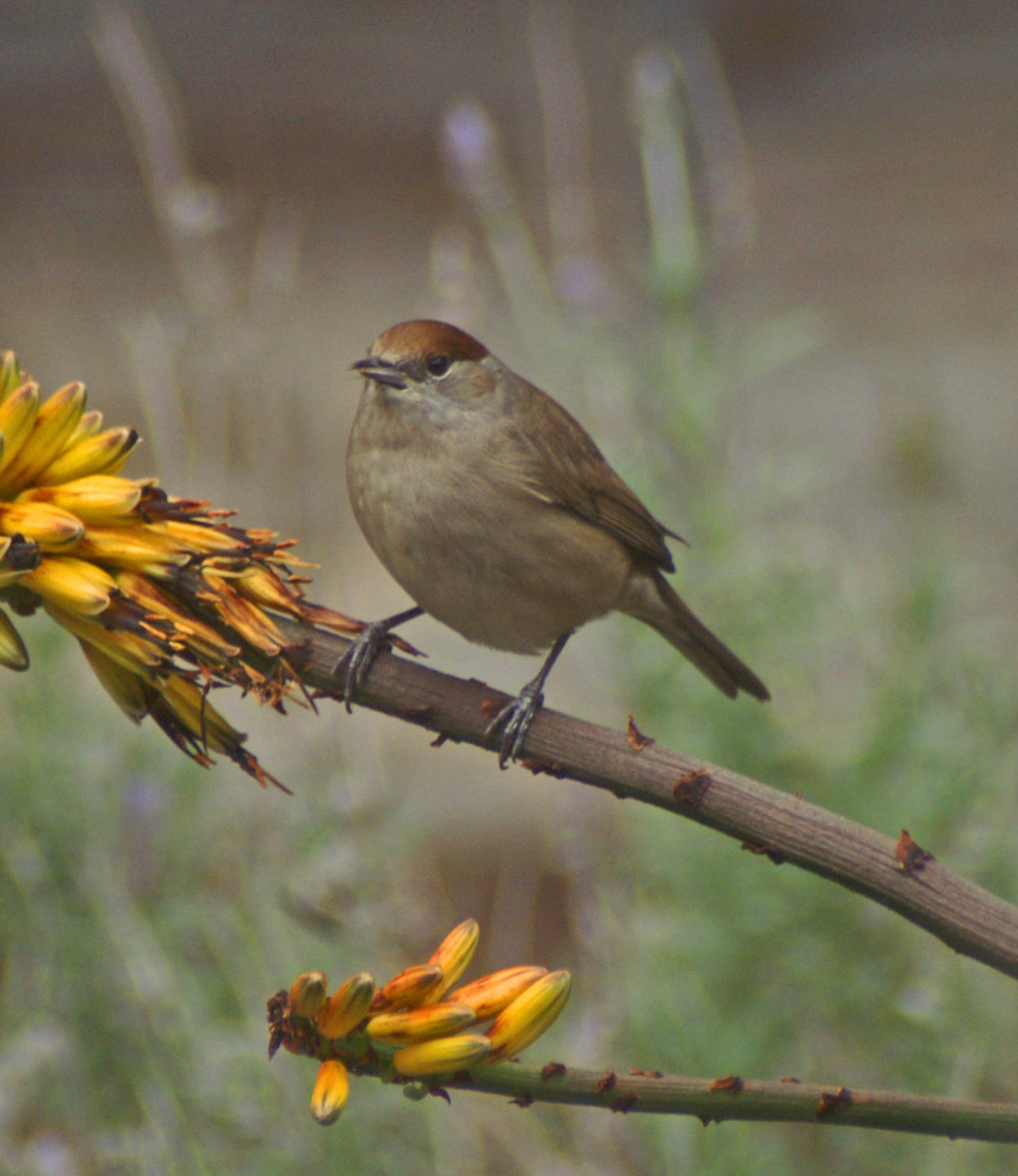
Blackcap pairs are often closely bonded and frequently seen together as they forage for food, but this time it took a few days for the male to follow suit and even then he was much more wary and stayed for shorter lengths of time.


28/2/10- The male Blackcap followed a week or so later
Some birds seem to be strongly attracted to yellow/orange coloured flowers, but I’ve never been sure what they are actually eating; I assume it’s a part of the flower itself, unless they harbour tiny insects. In Wales, every spring House Sparrows always tore my yellow crocuses and berberis flowers to shreds and then returned for the re-hot poker flowers later in the year.
A pair of Sardinian Warblers are also regular visitors to the garden, but usually stay well concealed within the hedges and shrubs. I had some lovely views of the male as he visited the ‘Dama de Noche’ shrub that I can see from the kitchen window. Although his mate was never far away, she preferred to stay out of open view, although she did join him for a bath one morning.
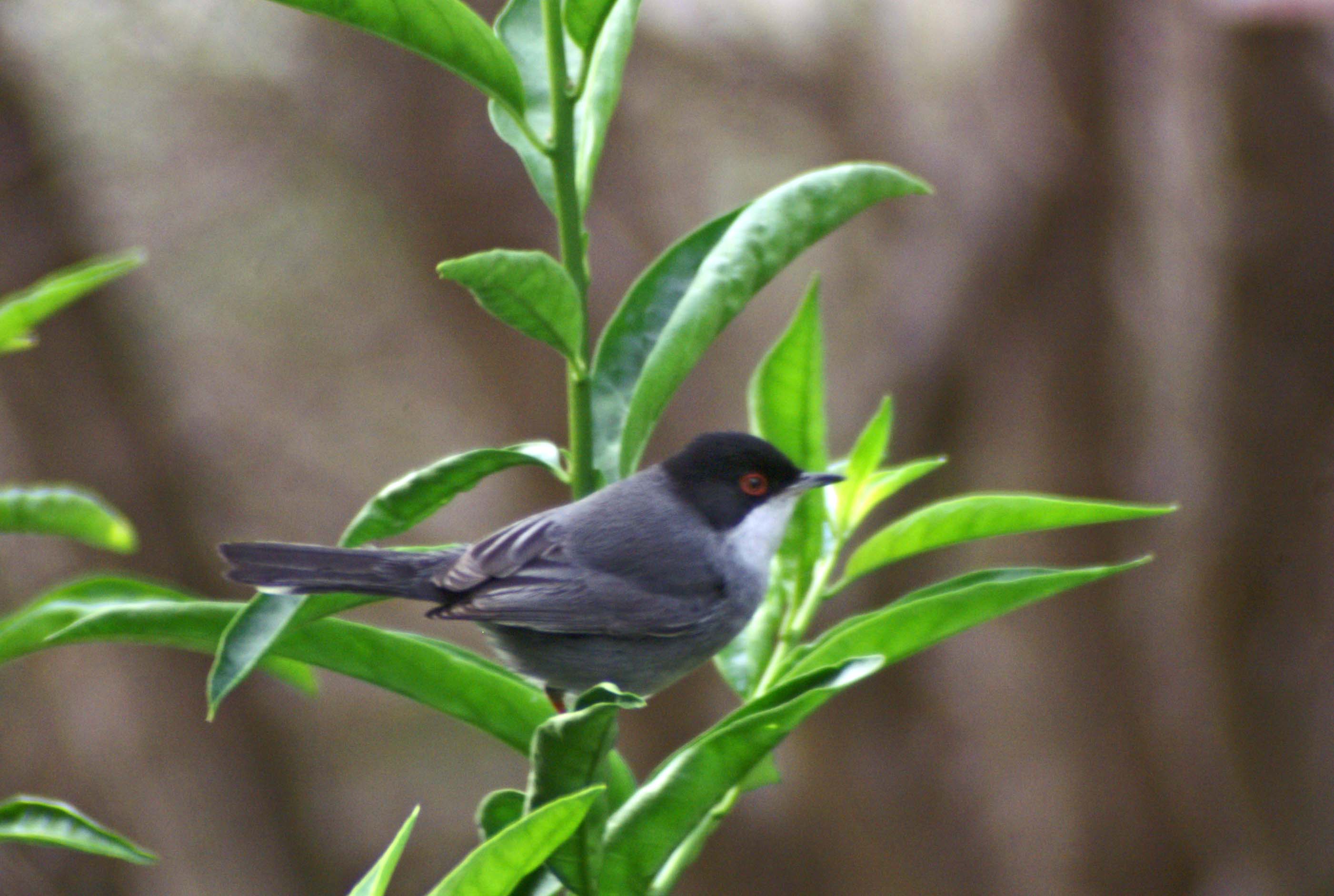
26JAN-Sardinian Warbler (M)
Sardinian Warbler – Sylvia melanocephala SPANISH -Curruca cabacinegra

My ‘bird bath’ is rather makeshift, being nothing more than an upturned flower pot with its saucer balanced on top, but it serves the required purpose and is very well used. I’ve noticed that small birds often bathe together and prefer quite shallow water.








 nightingale trails
