Category Archives: Nature of Southern Spain

Tiny Frogs with Big Voices

The warmer weather has woken up the local Tree Frogs. In terms of volume of croaking, they put me in mind as the wrens of the amphibian world – both creatures produce an astonishing and disproportionate level of sound from tiny bodies. At random times throughout the days I have heard the frogs calling raucously from their arboreal homes, but now they have become active after dark and calling from the vicinity of our swimming pool, (no chemicals, just two-thirds full of rainwater). I have been out with a torch to try to locate them, but they quickly fall silent and dive back under the water. However, I was out this afternoon rescuing large black beetles that had fallen into the pool and noticed what I first thought was a slimy black dead leaf  stuck against the tiles of the pool wall. It was a tiny, very dark coloured Tree Frog all hunched up and sunbathing. The tiles are a good measure of its size as they are 2cm x 2cm square, and the frog hardly stretches to two of them.

6/2/11-A very dark Tree Frog clinging to the side of the pool

It clung there, trying to ignore me taking his photograph, but after a few minutes of me trying to get a good angle, he plopped back into the water. He didn’t go far and stayed close to the surface, giving me a good view of his surprisingly long legs. As I walked around the pool to get nearer to him I spotted another frog  dive down to the bottom as I got close, so he’s not lonely in that huge space.
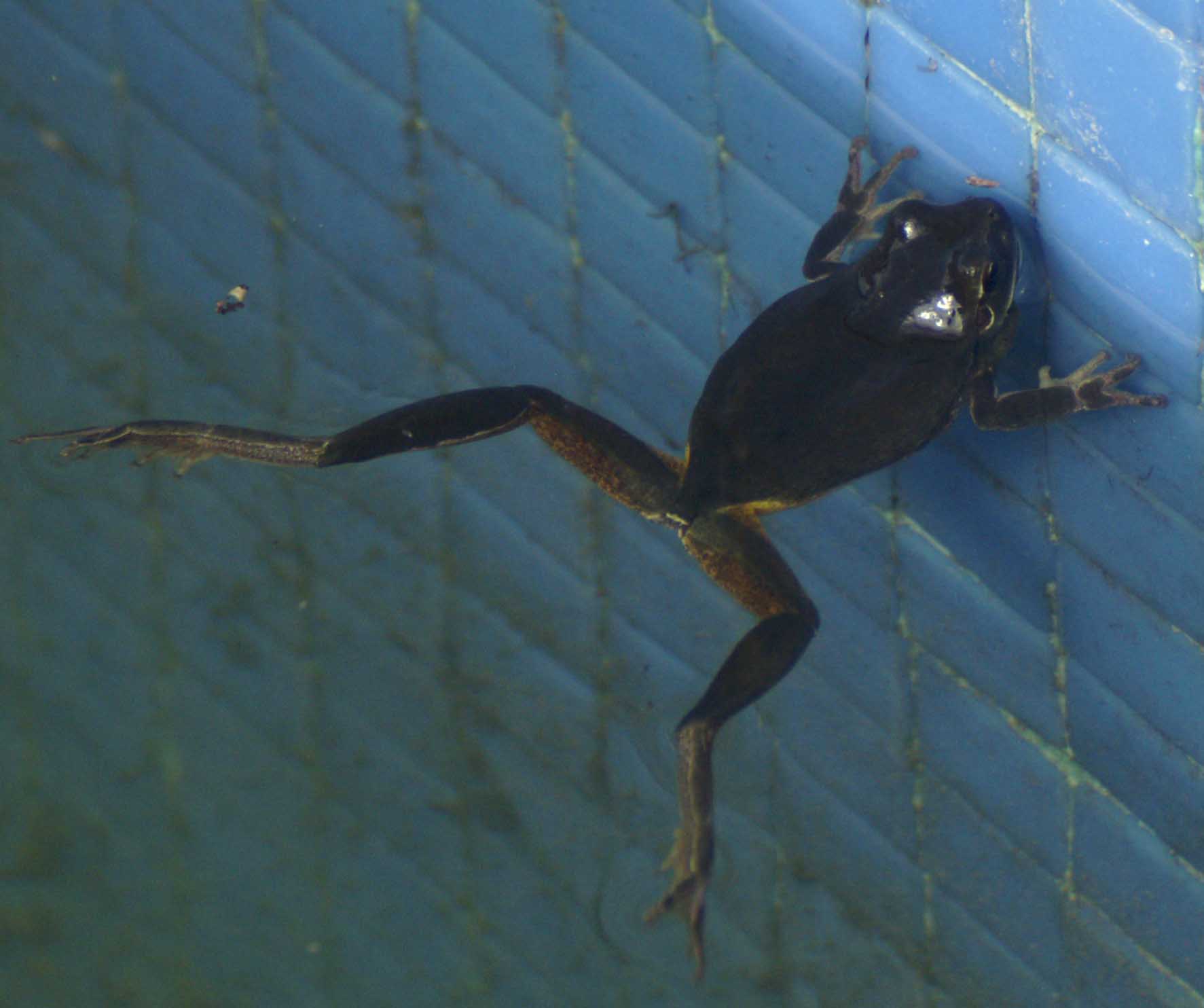
Tree frog displaying his surprisingly long legs

Stripeless Tree Frog Hyla meridionalis (Mediterranean Tree Frog)

Attractive little frogs, about 5cm long. Disc-like suckers on tips of fingers and toes enable them to climb through vegetation easily. Mainly nocturnal, but sometimes discovered sitting in full sun on foliage where they rely on their usually-effective camouflage as protection from predators.

The colouration of the frogs varies considerably and may be adapted according to the habitat. I have seen them in a range of shades from very bright to very dark green, but today’s are definitely the darkest to date.

5/3/07 We came upon this very bright green individual when opening up the table-tennis table, where he may have spent the winter. The photo shows the frog at just about his actual size.

It’s still early days in this year’s Tree frog courtship season, but last year’s, that was based around our pool again and reached its height in late March, was so charming and memorable, I feel it’s definitely worth repeating my journal entries here. It’s a good insight into an aspect of Tree Frog behaviour too:

March 2010

Around the middle of the month our normally peaceful evenings began to be disturbed by some very loud croaking sounds coming from the vicinity of our swimming pool (full of clean winter rainwater since the pump broke down last autumn). The sheer volume led us to believe that the sounds must be emanating from big frogs or toads, but each time we ventured outside to try to spot the croakers the noise stopped and we couldn’t see anything at all. This game of hide-and-seek the frog went on for several nights, then one sunny morning I went out with my camera to tour the garden and was amazed to see a tiny, very green frog sitting on top of the rubber duck that used to hold the floating thermometer. It was such a comical sight I was chuckling to myself for ages, especially as I realised that this tiny creature was probably also one of the participators in the nightly croaking contest. From its size and bright all-over green colour this could only be a Tree Frog, so he must have ventured down from his normal habitat and had staked out the pool as his pitch for attracting a mate.

28/3/10-Tree frog dozing on duck’s back

He was not at all phased by my presence or my photographing him and sat perfectly still, dozing in the warm sunshine for most of the afternoon, no doubt conserving energy for a night of raucous activity tonight.

The defender, vocal sac inflated ready to take on his opponent

That evening, when the cacophony had been underway for a while I went outside with a torch, hoping that now I knew where the sound was  coming from, I may be able to spot the frogs in action. Sure enough , there was ‘our’ little male, still sticking close to his duck ‘island’, his vocal sac inflated to such an extent that it almost doubled his size.

As we watched him we heard more croaking approaching us from the direction of the neighbouring cork oak trees, and then a soft ‘plop’ as a challenger dropped into the water on the opposite side of the pool. Shining the light onto the water we picked him out as he swam across the surface towards our little fellow, vocal sack fully inflated and croaking loudly.

28/3/10-The challenger approaching, fully inflated

A couple of hours later I ventured out for a last quick look and discovered the challenger sitting quietly and I thought, distinctly smugly, upon the duck-throne. That was a surprise, but for them the night was young and there was plenty of time for things to change…

28/3/10- A usurper on the throne

I’m looking forward to this year’s forthcoming events!


Balmy weather and bounty for birds

What a difference a week makes; following two weeks of rainy days and general wintry weather, this first week of February has been sunny and warm, with temperatures of 16ºC or more in sheltered spots, and there is a general sense that spring is on the way. The nights are still chilly, but the drier warmer mornings have coaxed the birds from their recent hiding places and they have been much more active and visible. Some have begun to sing regularly, in particular Wrens, Blue Tits and Serins. Thursday morning was quite magical, the first birds I heard were Jays squawking as they made their way through the cork oaks, and my first sighting was of 3 lovely Goldfinches feeding  on weed seeds and Blue Tits, one exploring the nooks, crannies and plants on the terrace, all the while keeping up contact with another nearby. The regular Blackbirds were about on the grass and a Short-toed Treecreeper arrived to scrutinize the trunks of some of the palm trees.

Goldfinch feeding on the seeds of groundsel

A Blue Tit in a sunny spot in a Cork Oak tree

A Short-toed Treecreeper exploring a palm tree trunk

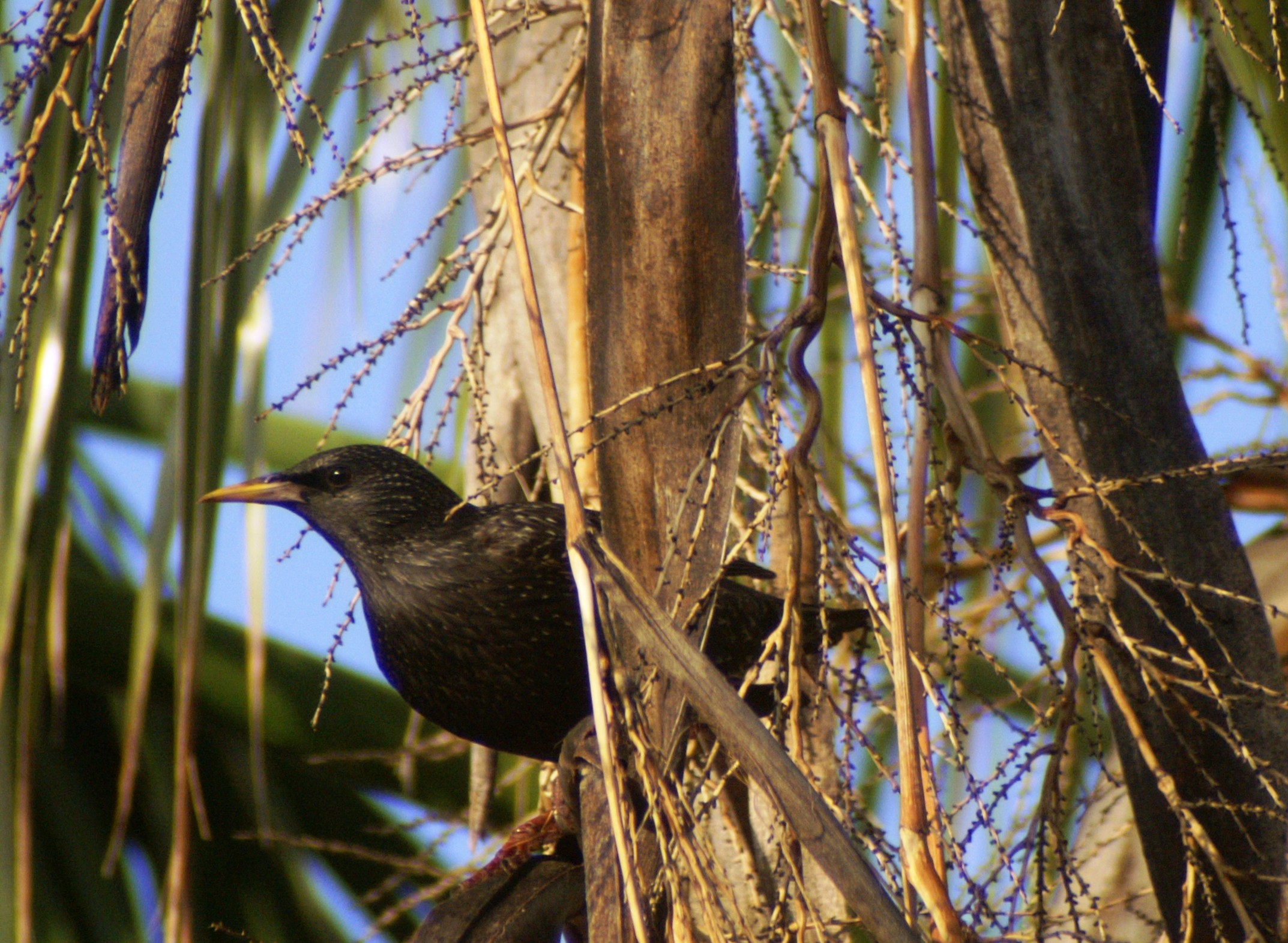
I could hear Spotless Starlings whistling and calling tunefully from high up in the palm trees at the back of the house and watched a Wren, first singing from various spots along the top of the garden wall, then poking about in the foliage growing against it. A very colourful Greenfinch appeared briefly on the fig tree; I haven’t seen one for ages.

Spotless Starling - (this is a young one)

A Wren singing from a shrub growing against the garden wall

Short-toed Treecreeper taking a drink or perhaps looking for insects

From the kitchen window I saw a pair of Blackcaps after the berries on the dama de noche shrub, two Chiffchaffs flitting about, and two female Chaffinches and half a dozen Housesparrows all pecking around on the ground. The Robin was out and about too, again I hadn’t seen one for a while another Treecreeper came in, landed on a yucca tree trunk, then flew across to the birdbath, something I’d not seen one do before. I think it was drinking, but it may have been looking for insects. (My picture was a bit rushed, but the bird was only there for a few seconds and it took me by surprise).

Cultivated garden plant: Night-scented Jessamine– Cestrum nocturnum Spanish: Dama de Noche (Lady of the night)

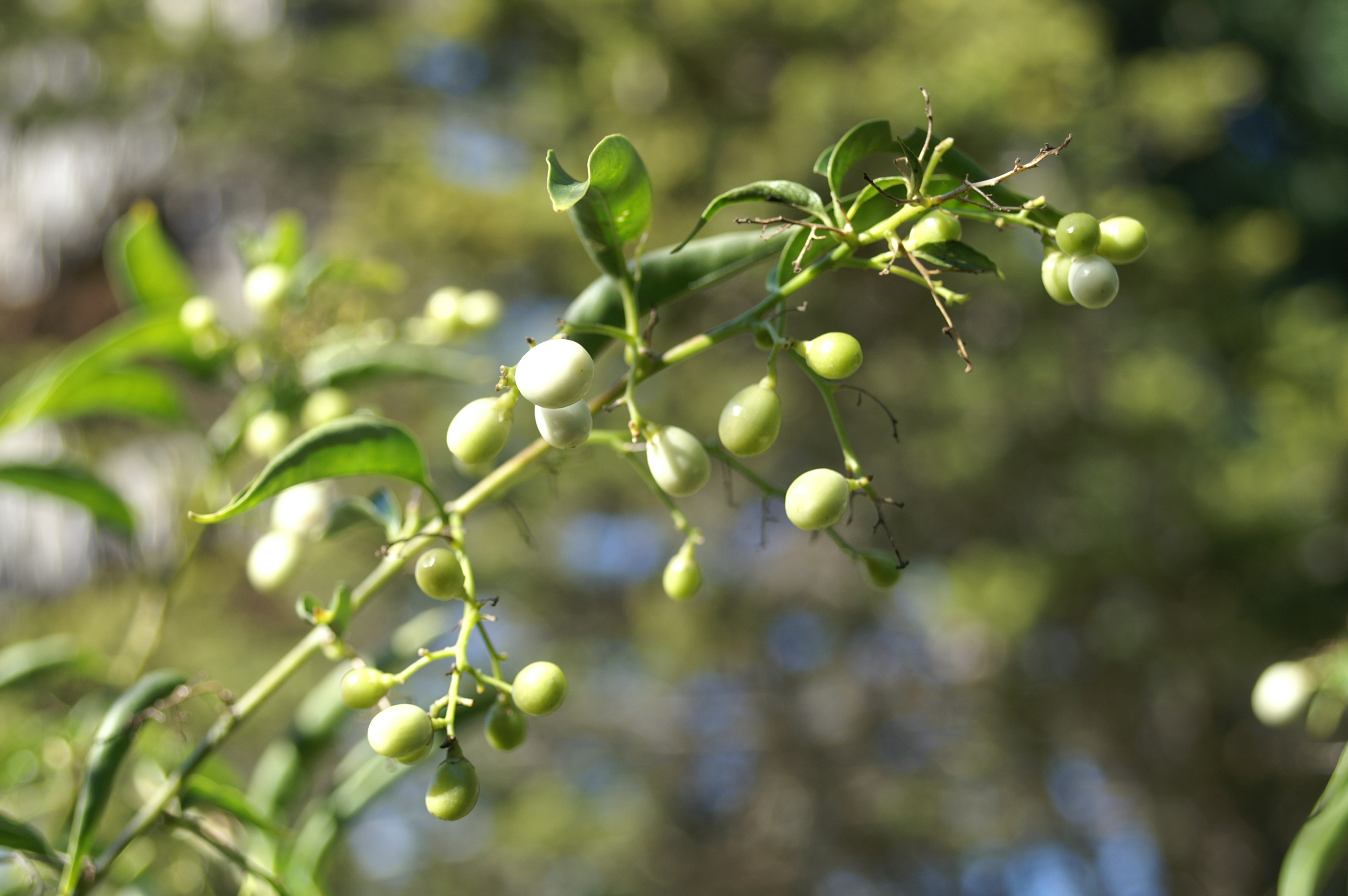
Berries of Dama de noche

A tropical and semi-tropical member of the Cestrum family, this Mediterranean classic is grown for the amazing night-time perfume that on a hot August night permeates the air (and our house) with its almost-overpowering scent. This is why it is grown, certainly not for its beauty; it is generally a leggy, untidy shrub and the flowers are small, lime green and held in clusters that during the day have no perfume. The small white berries appear in the late-autumn winter, which is why I don’t cut my plant back sooner – I wait until the Blackcaps have enjoyed them.

Blackcap enjoying the berry bounty of the 'dama de noche' shrub

Watching beautiful birds the easy way

I love to get out and see and photograph wildlife in a wild habitat, but I am so fortunate with the visitors I get to my own garden that I often get better views and insights into behaviour within the confines of my own garden walls. Last February I had some exceptional views of a variety of birds,  without even having to venture out of the house.

Firstly, at the beginning of February, there was the very handsome male Black Redstart. I happened to catch sight of him as I walked past a downstairs window where he was literally a metre or so away, using the leg of an upturned patio table as a perch from which to spy insects that were around on the grass below him. He must have been finding some as he was there for quite some time, making frequent drops to the floor and flying up again.

4/2/10-Black Redstart in the garden

Black Redstarts are resident all over this area throughout the winter months, arriving from their breeding areas in the mountains and more northerly parts around the middle to the end of October and staying until about the third week of March. Every year we have lived here we have enjoyed the company of a female of the species, who until the territory was claimed by a Robin a couple of years ago, would be seen on various perches in the garden close to the house. Now though, as soon as she appears the ever-vigilant Robin chases her away and she is restricted to sneak visits while he attends to business elsewhere. I love to see the Robin of course, but I miss seeing the little Black Redstart perched on the garden furniture, bobbing and quivering her rusty-red tail.

Female Black Redstarts are not as striking as the males, but have a bright and alert presence

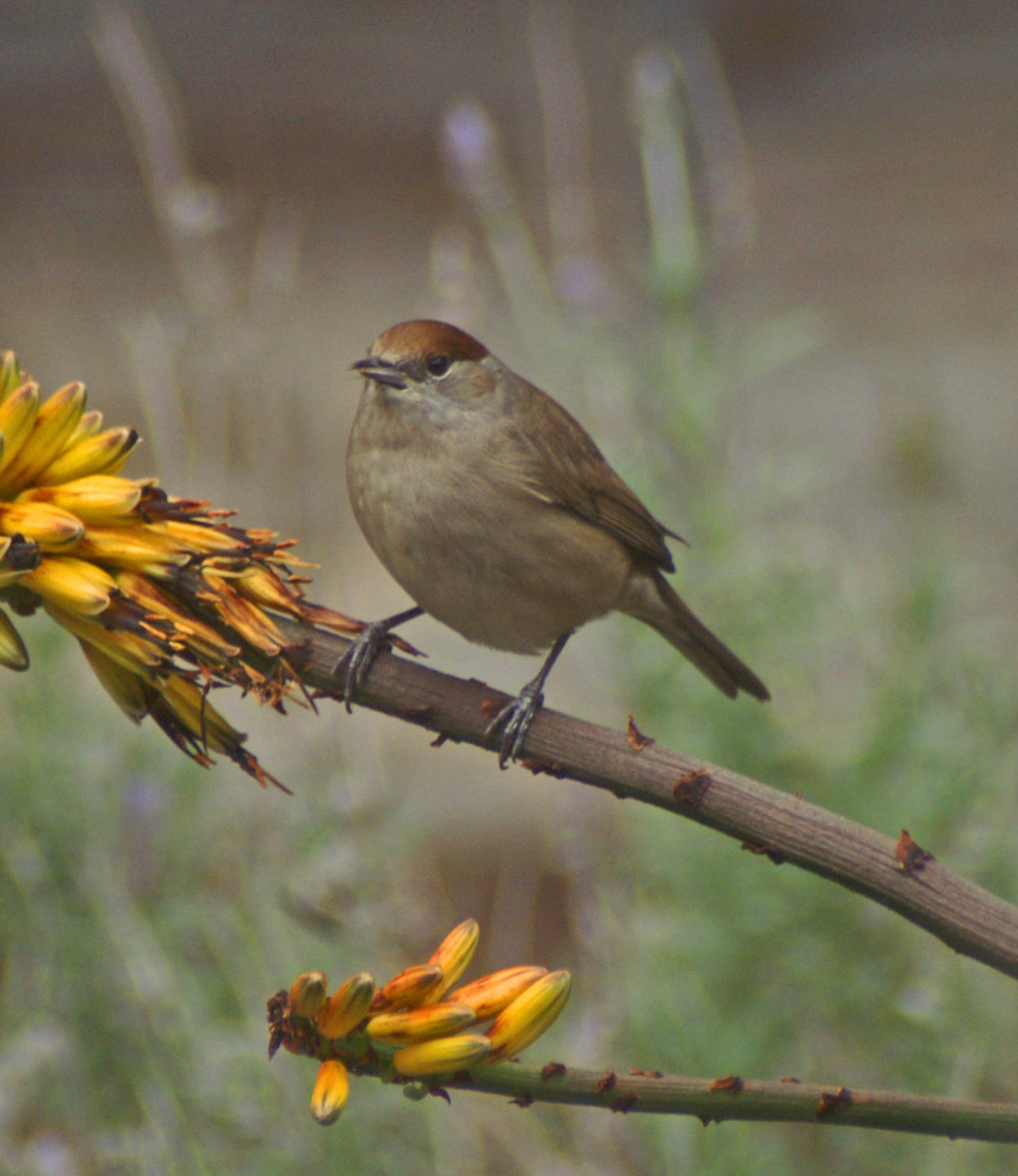
When we moved to Spain from South Wales 81/2 years ago,  I brought with me a smallish aloe cactus in a plant pot. The plant has thrived here outside in the garden and is now quite large, producing its first flower spike in February of last year. It soon attracted the attentions of a female Blackcap who began to visit the flower every day and as the plant is not far from my kitchen window, I had some lovely close views through the window without disturbing her in the least.

20/2/10-Blackcap female probing an aloe flower

Blackcap – Sylvia atricapella SPANISH – Curruca capirotada

Blackcap pairs are often closely bonded and frequently seen together as they forage for food, but this time it took a few days for the male to follow suit and even then he was much more wary and stayed for shorter lengths of time.


28/2/10- The male Blackcap followed a week or so later

Some birds seem to be  strongly attracted to yellow/orange coloured flowers, but I’ve never been sure what they are actually eating; I assume it’s a part of the flower itself, unless they harbour tiny insects. In Wales, every spring House Sparrows always tore my yellow crocuses and berberis flowers to shreds and then returned for the re-hot poker flowers later in the year.

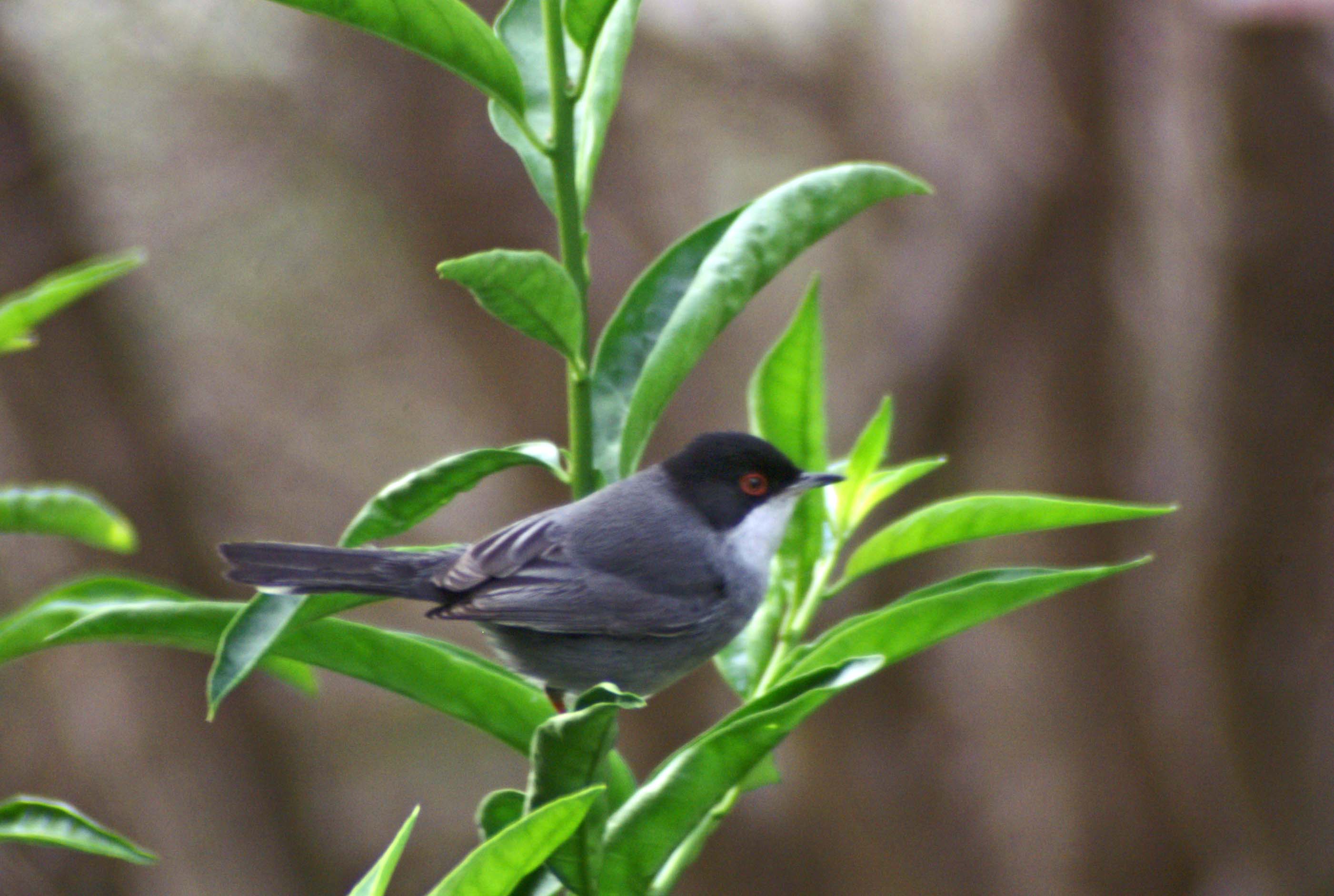
A pair of Sardinian Warblers are also regular visitors to the garden, but usually stay well concealed within the hedges and shrubs. I had some lovely views of the male as he visited the ‘Dama de Noche’ shrub that I can see from the kitchen window. Although his mate was never far away, she preferred to stay out of open view, although she did join him for a bath one morning.

26JAN-Sardinian Warbler (M)

Sardinian Warbler – Sylvia melanocephala  SPANISH -Curruca cabacinegra

My ‘bird bath’ is rather makeshift, being nothing more than an upturned flower pot with its saucer balanced on top, but it serves the required purpose and is very well used. I’ve noticed that small birds often bathe together and prefer quite shallow water.

Orange Season

25th January 2011

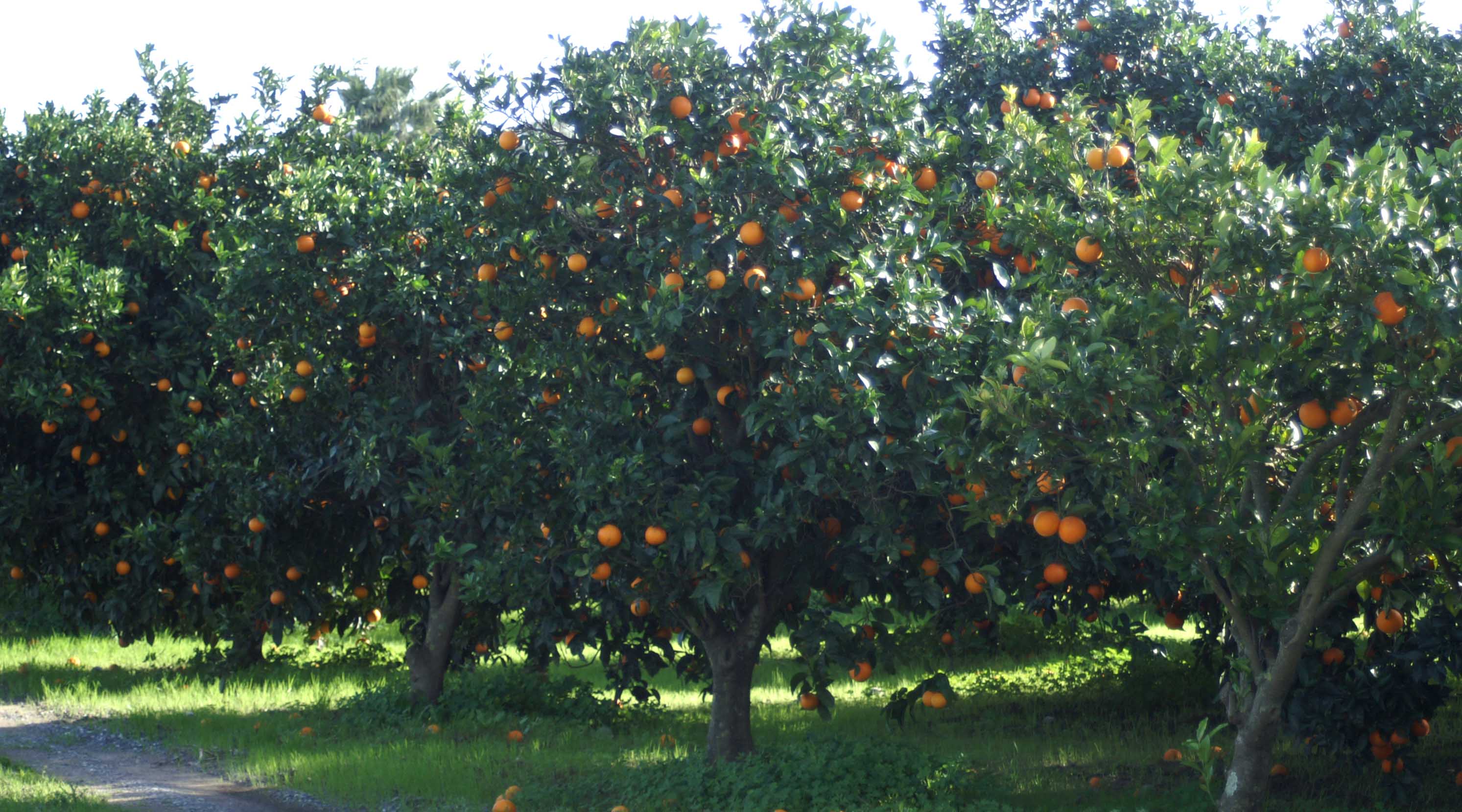
Recent gifts from friends of carrier-bags full of their organic, home-grown oranges, for turning into deliciously sweet juice, has reminded me how significant citrus trees are in the local landscape, particularly now.

Thousands of orange trees line streets, boulevards and the parks  of towns, cities and villages throughout much of Spain. In the winter, from the end of December onwards, the fruits are ripe and deeply coloured, and suspended against their background of dark evergreen leaves they create a rich and colourful display. Those planted thus are known to British ex-pats as ‘Seville’ oranges, traditionally used for making marmalade and taste bitter and sour to eat; a deliberate ploy where the trees are planted for decorative purposes so the fruit is not picked by passers-by.

In many places the fruit continues to ripen and just falls to the ground, but in the larger cities  such as Seville and Malaga, sometime during January or February,the local governments employ people to pick them and they are sold on a commercial scale for making into marmalade, or the extraction of their essential oil to the perfume industry.

___________________________________________________

Out in the countryside the sweet edible oranges are also ripe and ready for harvesting. Most of the oranges grown here are sold for juicing rather than for eating; the bulk of those exported (70%), are grown in the Valencia region. Many supermarkets  buy those produced locally in Spain, and some have juicing machines on the premises to press the fresh fruit for customers on demand. In our local area, in the province of Cadíz, there are many orange groves of varying sizes and growers set up displays of the fruit and other produce they may have, and sell it directly to anyone who wishes to buy it.

Sadly, there are also many groves of fruit that are untended, having been bought up by companies or individuals for the land they stand upon for future development as golf courses, or some other construction. It is sad to see them neglected and to see the fruit fall to the ground and be left to rot, but at least while they remain standing they provide habitat for a variety of small birds and other wildlife.

____________________________________________________

Oranges – A brief History of Cultivation

The Persian orange, grown widely in southern Europe after its introduction to Italy in the 11th century, was bitter. Sweet oranges brought to Europe in the 15th century from India by Portuguese traders quickly displaced the bitter, and are now the most common variety of orange cultivated. The sweet orange will grow to different sizes and colours according to local conditions, most commonly with ten carpels, or segments, inside.

Portuguese, Spanish, Arab, and Dutch sailors planted citrus trees along trade routes to provide fruit as a source of vitamins to prevent scurvy. On his second voyage in 1493, Christopher Columbus brought the seeds of oranges, lemons and citrons to Haiti and the Caribbean. They were introduced in Florida (along with lemons) in 1513 by Spanish explorer Juan Ponce de León, to California by the Franciscans in the 18th century, and were introduced to Hawaii in 1792. (Wikipaedia)

____________________________________________________