Category Archives: Nature

Spring catch-up

17MAR11-A Serin singing

He turns his head to sing out in another direction

Birds are still singing, particularly noticeable at the moment are Serins and Greenfinches; as I walk around the roads of the locality there seem to be Serin’s trilling out from perches or performing their distinctive territorial flights every hundred metres or so.

23MAR11-Greenfinch singing

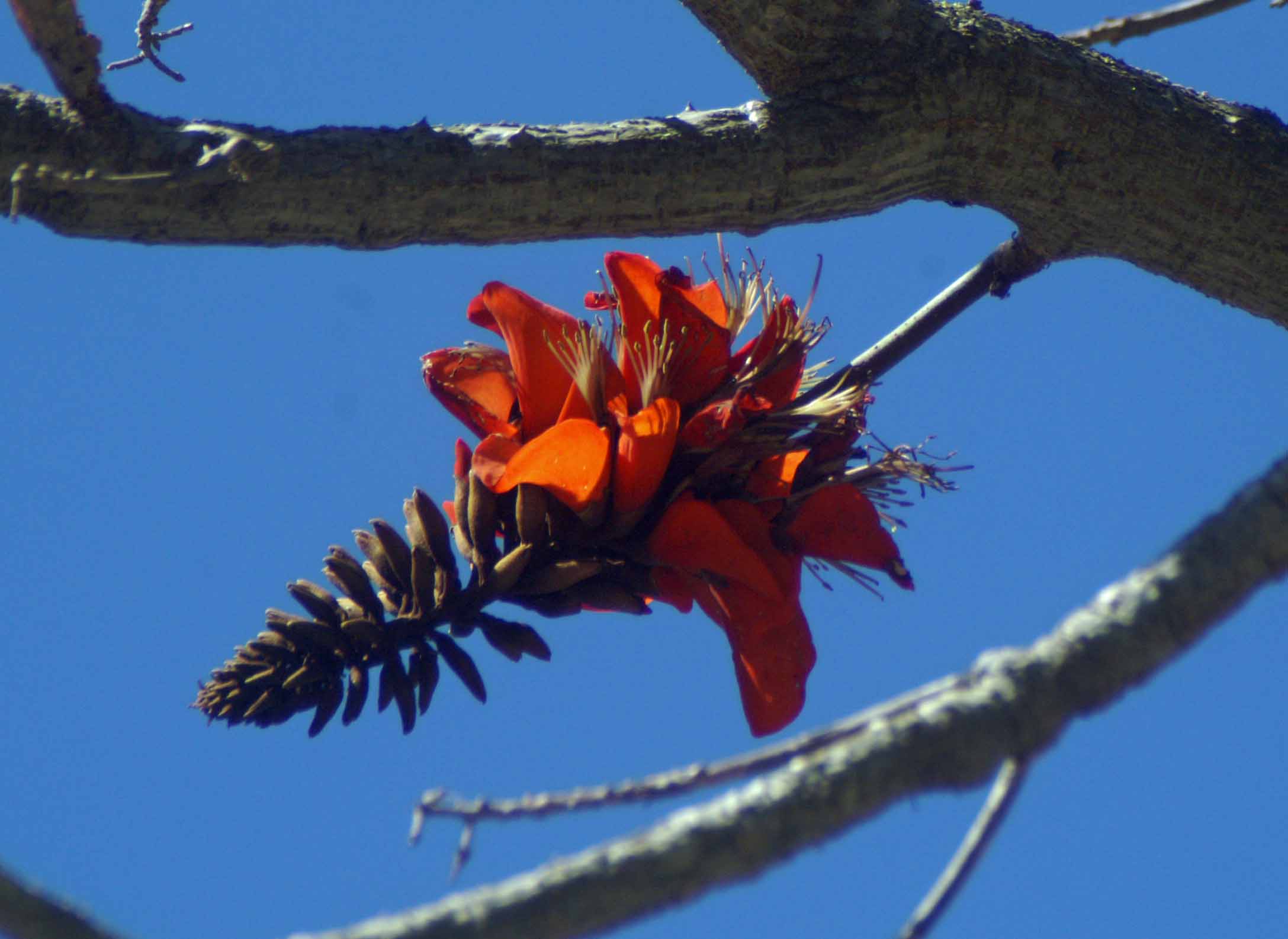
There are some very exotic-looking flowers opening up now; I've tried to find out what this tree is, but no luck so far

Blue Tits seem to be everywhere, I caught sight of one pecking around the orange tree blossom in the photograph, I wasn’t quite quick enough to get the bird in, so I’m afraid you will have to imagine how pretty it would have looked.

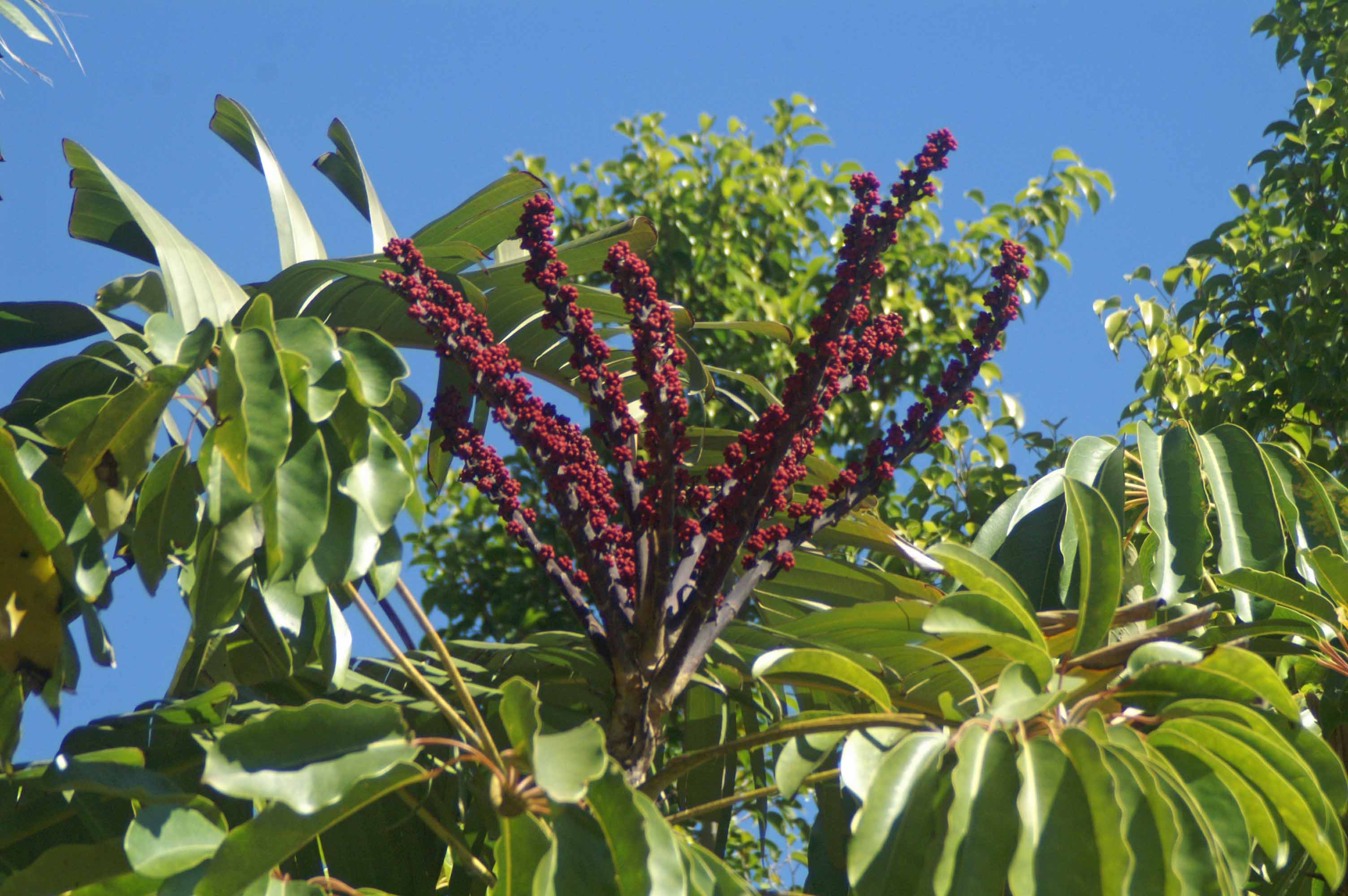
Another exotic flower spike noticed on my rounds

IN THE GARDEN

A pair of  Blackbirds have been very busy for the past ten days or so; I’ve seen them both foraging in the garden so they clearly have a young family to feed. I have resisted clearing away the dry leaves and twiggy bits of tree debris from the edges of the paths so the birds can seek insects there; the Blackbirds characteristically add drama to their searching, showering the paths and themselves with discarded material. They make even more mess, but I love to watch them doing it.

18MARCH -Blackbird foraging, framed by a spiny Aloe plant

23MAR11-The female is more cautious than the male and sticks closer to cover

The weather has been changeable, but with enough sunshine to bring flowers into bloom and insects to pollinate them. I planted a few dark pink osteospermum plants about four years ago that have self-seeded and I now have a large patch of them in all shades of pink from very pale through to very dark. They look very pretty and have been buzzing with all sizes and variations of bees and hoverflies. I have no idea what species most of them belong to, but I photograph them anyway.

A bee I've not noticed before, having a gingery-brown coloured 'furry' appearance

A Large White butterfly on a blue periwinkle flower

There have been a good number of butterflies about, a lot of Large Whites, Red Admirals and one I’d not seen in the garden before – a Moroccan Orange Tip which didn’t find anything to tempt it to stay for long.

A large Egyptian Grasshopper on the trunk of the pomegranate tree. Sometimes mistaken for locusts, the grasshoppers can be identified by their beautiful striped eyes

The clattering sound of Egyptian Grasshoppers on the wing is a familiar sound in and around the garden at this time of year as the big bulky but handsome insects are stirred into action by the warmth. The one in my photograph was big, but only about two-thirds the size of a fully grown adult female, so maybe an adult male or a young female with a couple of morphs still to go through.

Another familiar insect has been on the prowl lately: this is a 'paper wasp' - Polistes gallicus. They resemble the common wasps but do not seek to share our food and will only sting if they are touched or stepped upon.


Lovely weather for frogs – and ducks!

Another week of unsettled weather brought yet more rain and generally stormy weather that has refilled the pool enough to delight the Tree Frogs.

The presence of the water brought me some very exotic visitors on Wednesday morning: glancing through a window as I walked past I made out a large shape on the edge of the pool. My first thought was Cattle Egret, as we do see them in the garden very occasionally, and there are a lot of frogs here at the moment. I ran to grab the camera and peering carefully around the edge of the voile curtain realised there were two ducks there. Sited beneath a major Europe-Africa migration route we do get sightings and the occasional close encounter with some amazing birds, especially when bad weather brings them down, but never before ducks in the garden. I daren’t open the window for fear of alarming them, but had to get some images, whatever the quality, so I focussed through the glass. I was very surprised to see what I was fairly sure were a pair of Mandarin ducks – but where they may have come from I can’t imagine. They are usually kept on lakes and such as ornamentals; in the UK there are escapees living and breeding in the wild in various places, but till now I’ve not seen any since living in Spain.

I saw the male duck first, he was looking down into the pool – the female was in the water

The female appeared, popping out from the water. Much less colourful than her mate but still beautifully made

A slightly better view of the male as he moved away from the pool- what a beautiful bird

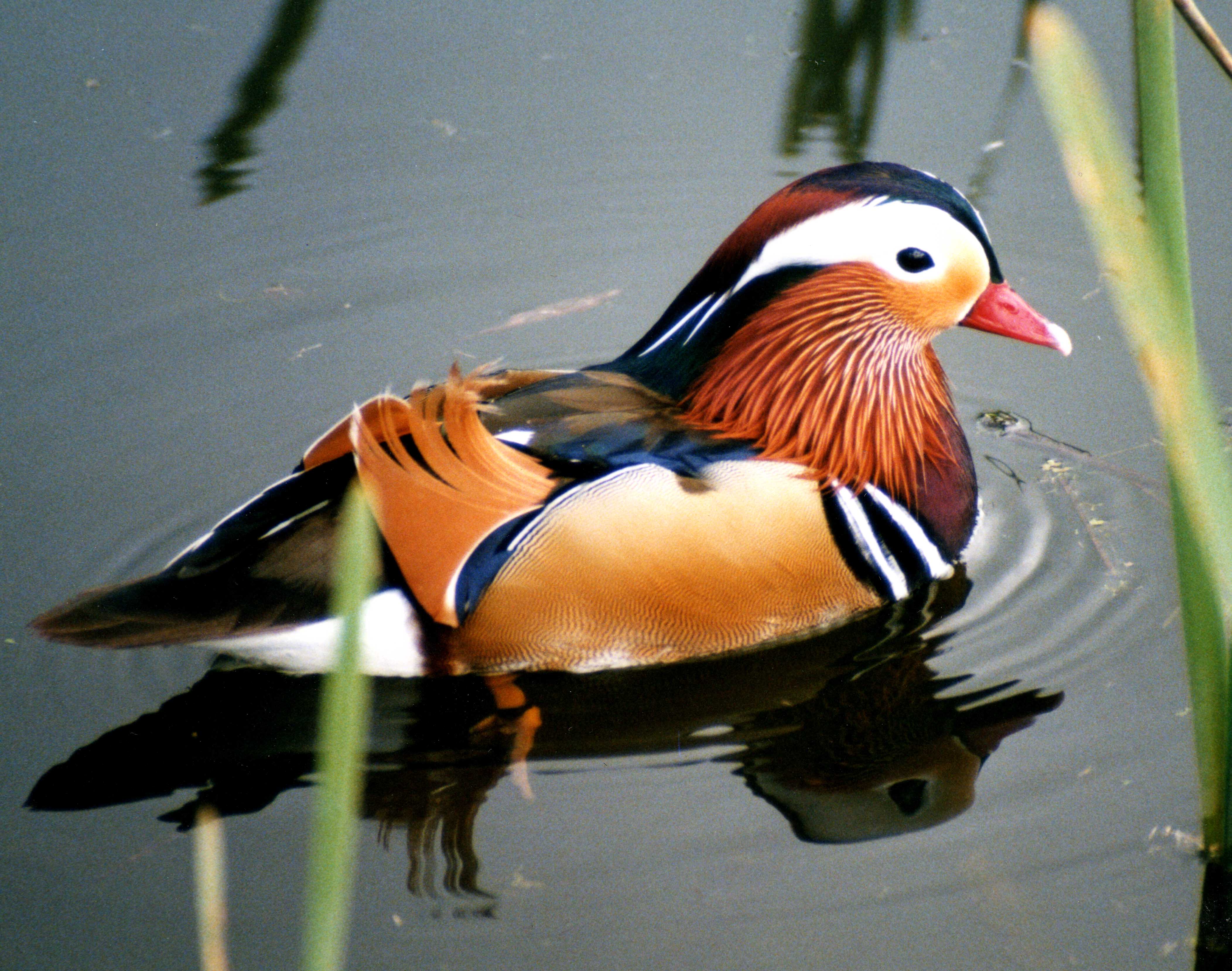
I took the photograph below at the Wildfowl & Wetlands Trust reserve at Llanelli, South-West Wales several years ago and have included it to properly show the gorgeous colours, patterns and textures of the Mandarin duck’s plumage – so much detail on a single creature.

Mandarin duck at Llanelli WWT- a much better view

BACK TO THE TREE FROGS….

The nightly choir gatherings have been reinstated and our original ten or so seem to have invited along all their friends and relatives too – the noise levels have hit an all-time high. A concern of ours had been that the neighbours may start complaining about the racket, but a walk down the road one evening reassured us that they too have their own collections of discordant serenaders.

As a background the massed croaking is just a very loud noise, but if you take a moment, stop thinking about it as simply noise and listen properly, you can pick up differences in the pitch and ‘notes’ of the croaking individuals; one or two are distinctive enough to recognise quite easily.

On Saturday night, when it sounded as though there must be at least fifty frogs croaking, we went out in the dark with a torch to see if we could see any. As soon as they see light, they go quiet, but peering down into the pool with a small and not very bright torch beam, we found quite a few, some demonstrating what all the noise has been about and in the process of mating.

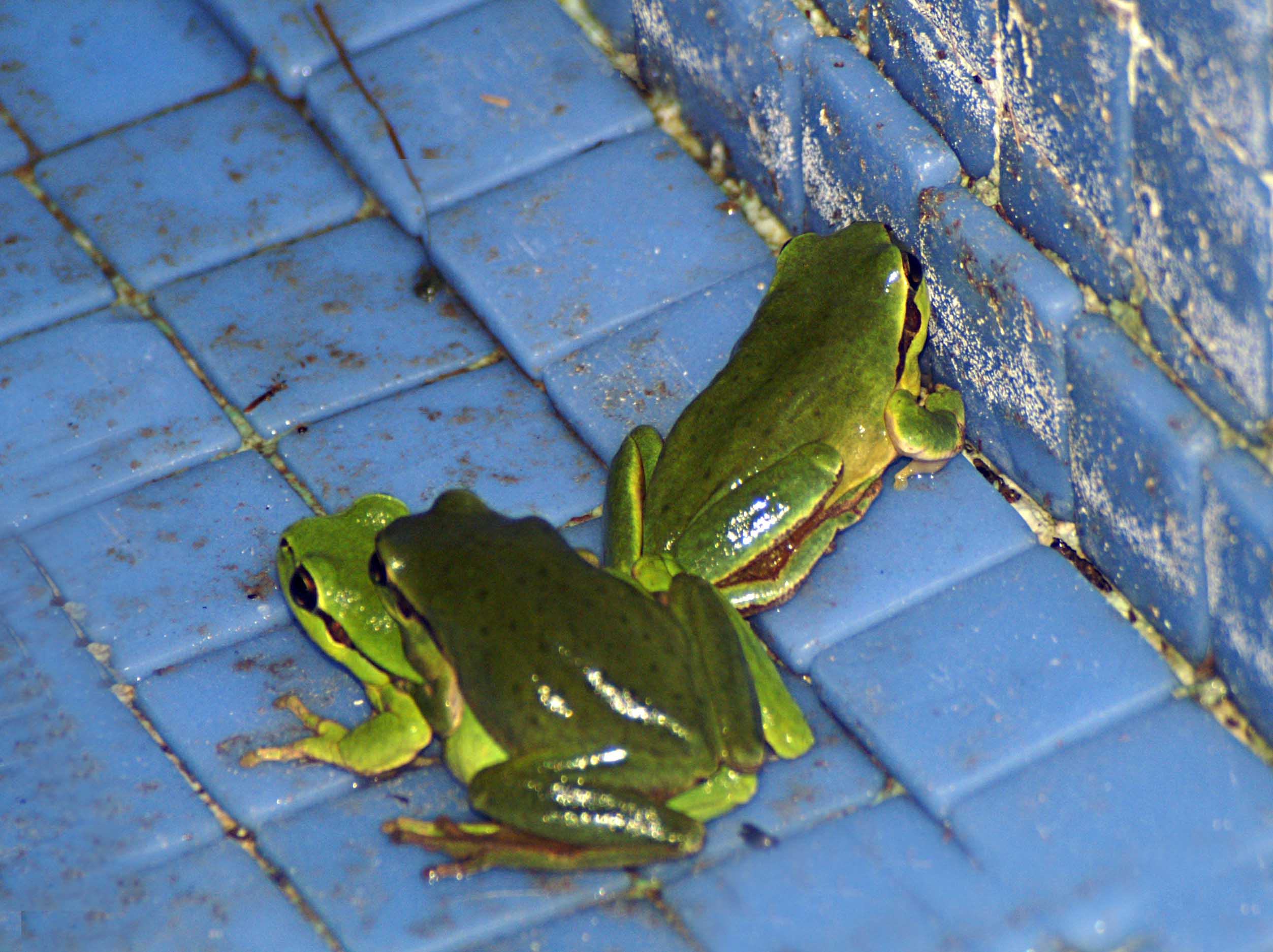
A bright green female and a smaller, darker male

The light from the torch and camera flash did disturb them, but although they moved a little , this pair stayed together.

Very close to the mating pair there was another female

Very close by the couple was another female; perhaps he is one of the alpha males.

On the other side of the pool was another pair, both light bright green

There has undoubtedly been an increase in the local population of these delightful little frogs over the last couple of years, perhaps as a result of the heavy winter rainfalls. If this lot are as successful this year, I’d rather no think about the noise levels next spring.


Glorious spring flora

7th March 2011

Following last Saturday’s high the week’s temperatures rapidly descended back to winter lows and we had rainy days, climaxing over the weekend with torrential downpours and thunderstorms. I have only ventured out for short walks during pleasanter parts of days, so for now I thought I’d do an update on some of the most commonly found plants that are presently flowering throughout the region.

Beautiful flowering shrubs and plants, many of which are widely cultivated and grown, or attempted to be grown in gardens throughout Europe, flourish here in some seemingly inhospitable places. Most thrive in a variety of different habitats, on dry sandy and often stony soils, in salty air by the sea and on rocky slopes. The plants compensate for the lack of available moisture with leaves that help to conserve it, these may be thick and felted, tough and leathery or needle-like. Many also protect themselves from being eaten by grazing animals with sharp spines or by producing chemicals that make them unpalatable. They flower early in the season to allow time to set seed before the summer drought begins.

Shrubs

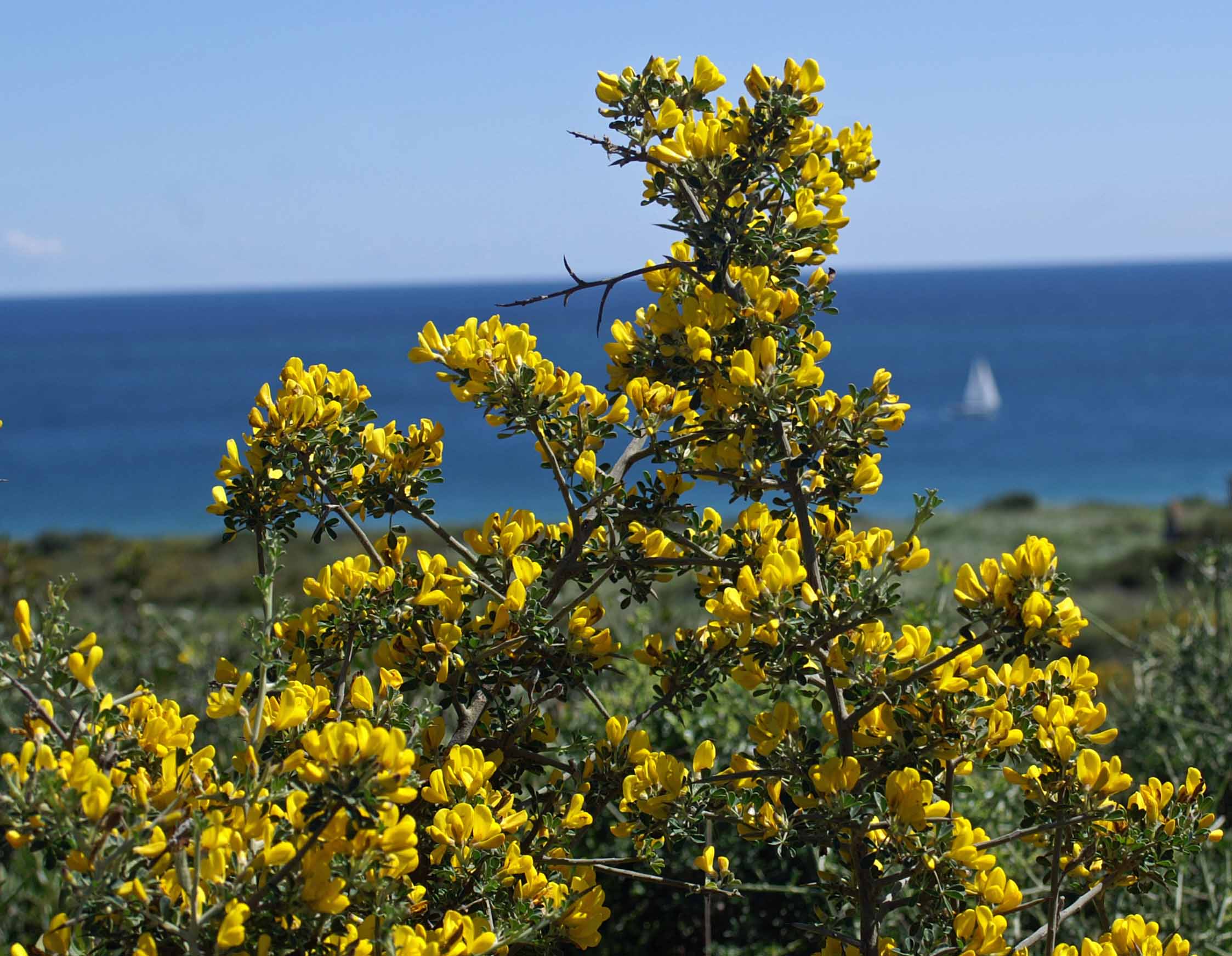
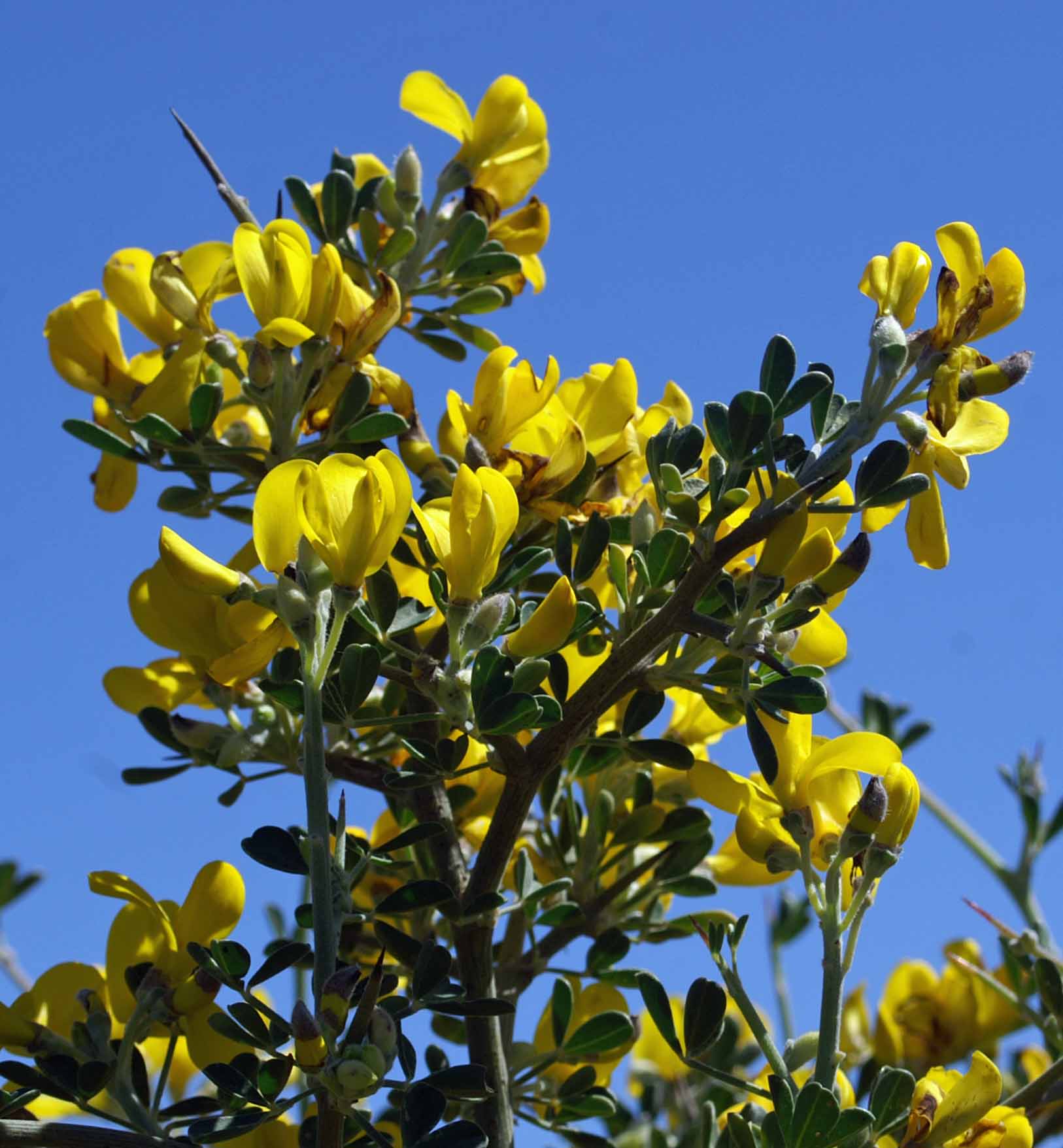
SPINY BROOM – Calicotome villosa
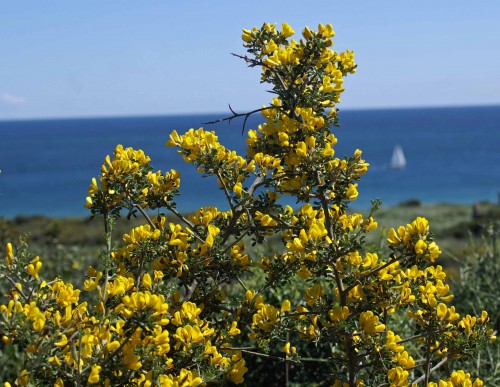
An uplifting sight of bright yellow broom against a blue sky and sea

Shrubs are covered in a profusion of blossom

Flowering: February to April (May)

Habitat: Open spaces, especially dry hillsides with Genista and Gorse bushes and often in coastal places close to the sea.

A very spiny shrub that is often confused with gorse. The flowers are a rich yellow colour, very scented and are so profuse that when they are fully out they hide the leaves. The flowers almost always come out at the same time and a mass of the shrubs growing together is a spectacular sight. The formidable spines are 3-4cm long,  straight and tough, at the tips of the short leafy twigs and remain on dead wood.

*The spiny branches are so complexly interwoven that a stand of the shrubs is almost impenetrable and in the past, goatherds would cut bushes to use as fencing to corral their goats.

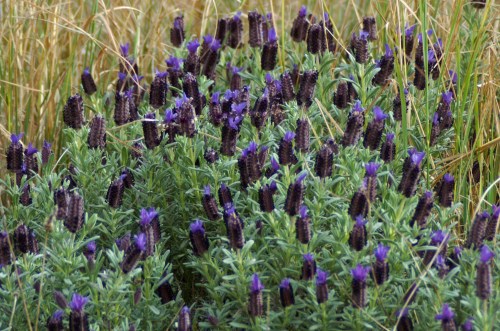
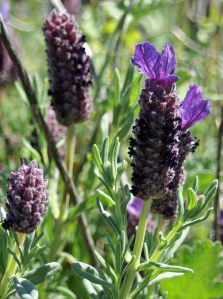
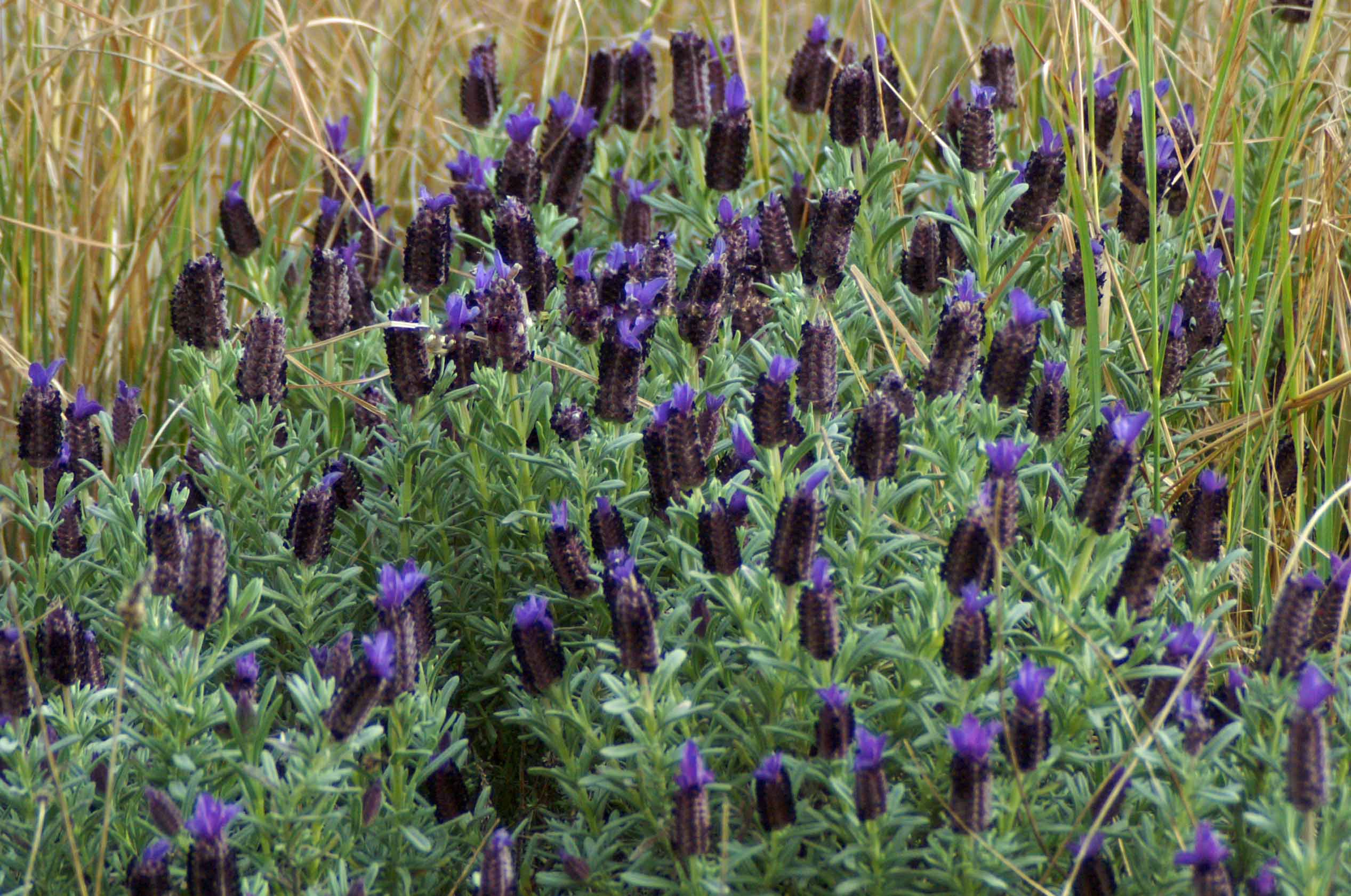
FRENCH LAVENDERLavandula stoechas

French Lavender – Lavandula stoechas

The colourful 'petals' at the top of each flower-head are actually bracts, the flowers are tiny and purple.

Flowering: Nearly all year round, but flowering is most profuse from late February to April/May.
Habitat: I used to struggle to grow this lovely plant in Wales, but here it grows in a wide variety of habitats. It is very common in sandy and acid soils; also in limestone areas, in light woods or in open places amongst open larger shrubs.
French Lavender is  a small woody perennial shrublet : all parts of the plant are slightly aromatic. The leaves are pale to mid grey-green, softly hairy and pointed. The flowers appear in elongated heads that are topped with purple to lilac or pink bracts varying in shape and length from about 1-2.5cm long. The flowers are tiny and usually purple in colour.
*During the intense heat of summer the normally pleasant scent of the plant tends to alter, taking on an almost ‘goaty’ scent. It is a very old medicinal plant and its essential oil was used here as an  antiseptic forwashing wounds.
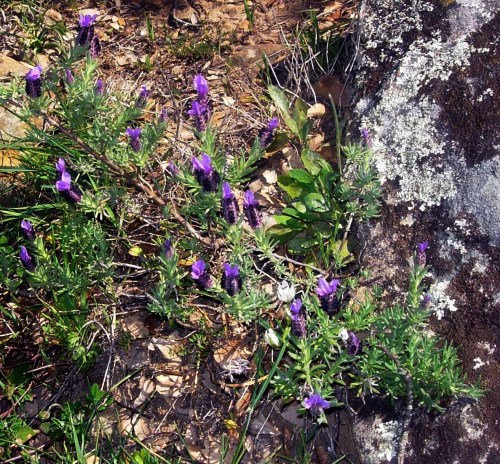
A plant growing in light woodland amongst limestone rocks

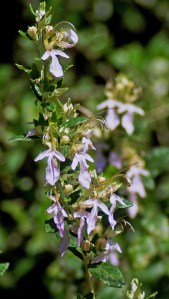
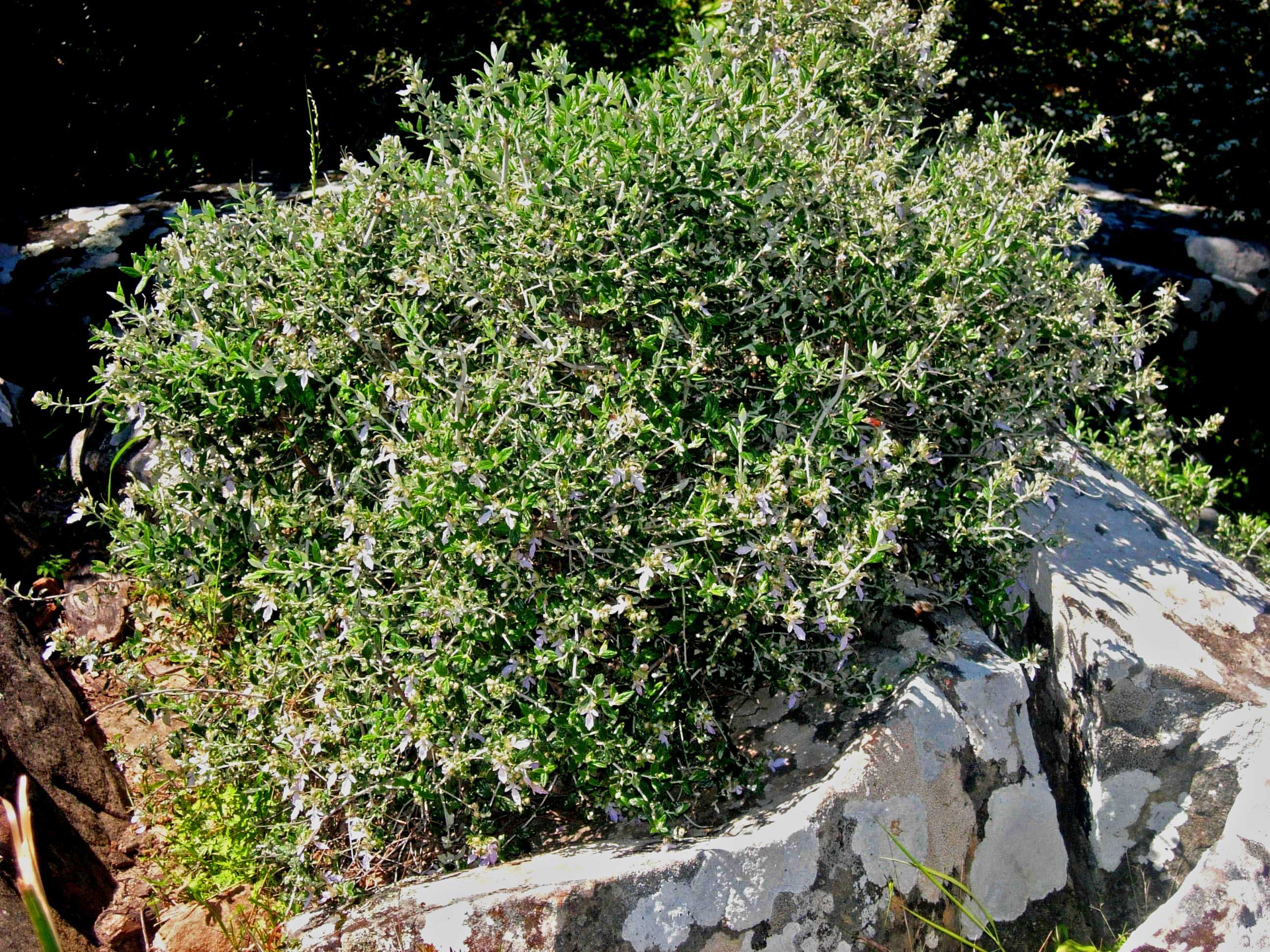
TREE GERMANDER: Teucrium fruticans
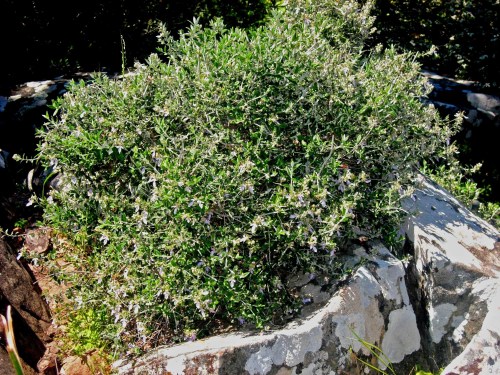
TREE GERMANDER- Teucrium fruticans

Most common colour of this species are very plae lilac and almost white

Flowering: January to June

Habitat: A very common plant in a wide variety of habitats, woods, heaths, thickets, open spaces with other shrubs from the coast to mountains, on any soil type.
Tree Germander is a woody shrub that may reach a height of 2m, but usually much less. The leaves have  short stalks and are arranged in opposite pairs; the upper surfaces of fresher leaves is slightly downy, the undersides white felted.  The flowers are usually out two at a time on a twig end; colour is variable from pure white though pale lilac, pinkish or pale blue-lilac, very rarely dark blue. The plant is frequently cultivated, especially the deep sapphire-blue flowered form which originated in North Africa.
______________________________________________________

Climbers

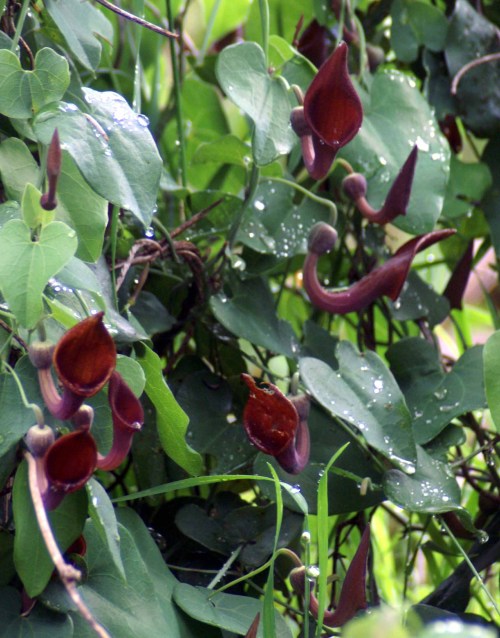
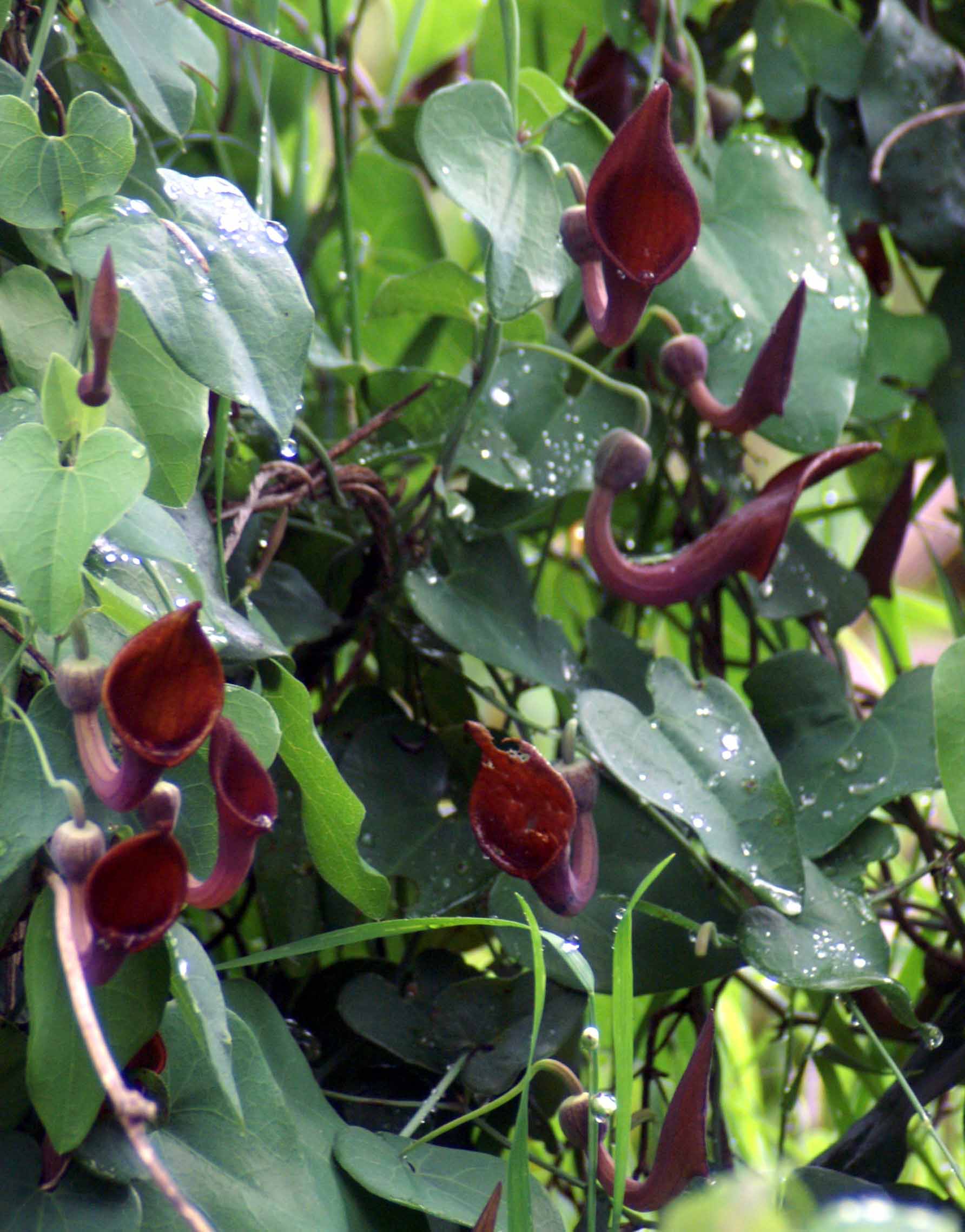
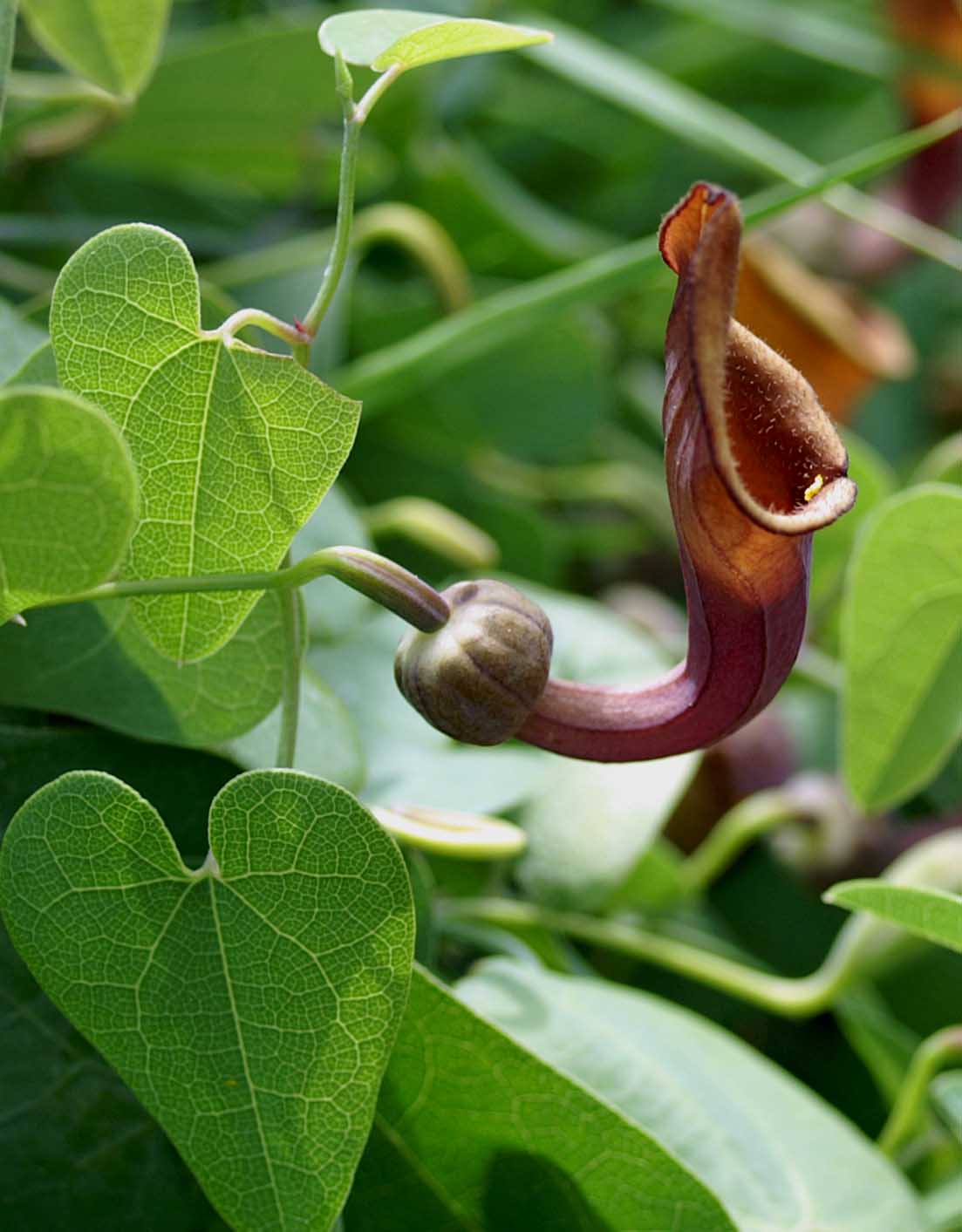
DUTCHMAN’S PIPEAristolochia baetica
 

DUTCHMAN'S PIPE -Aristolochia baetica

FLOWERING: Over a long period from autumn to early spring.
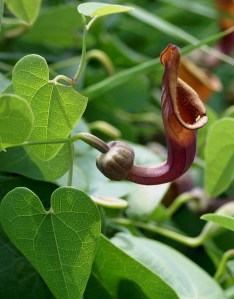
The plant takes its common name from the shape of its flowers

HABITAT: In almost any soil and a wide range of habitats, often in semi-shade on woodland edges, but also in more open places where it has support.

Dutchman’s Pipe is a robust, tall hairless creeping plant that will clamber high into trees, through shrubs or along the ground. The leaves are dull, blue-green and attractively heart-shaped.The flowers are about 7cm long, curved and a dull red-purple to brownish-red in colour: the plant takes its name from their  curious shape that are designed to entice in insects  to pollinate them, holding them captive until the job is done.

*The roots of the plant have been used in Spain since at least the 16th century for reducing fever.

____________________________________________________

Bulbs & corms

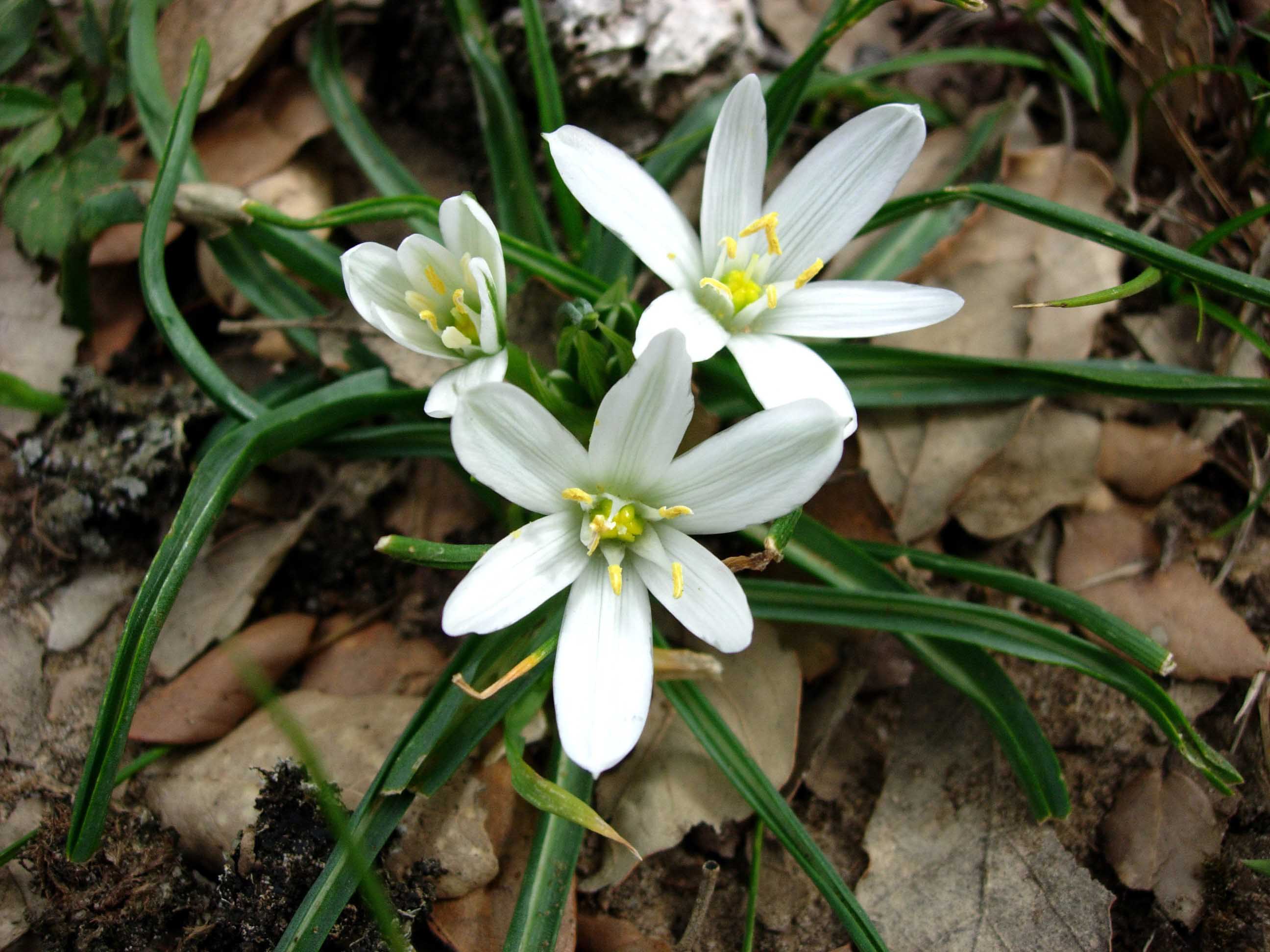
STAR OF BETHLEHEMOrnithogalum orthophyllum (collinum)

STAR OF BETHLEHEM

FLOWERING: Feb/March to April/May

HABITAT: A variety of locations including light woodland, grassy roadsides, rocky ground and sandy coastal places.

A beautiful bulbous perennial with quite large star-shaped white flowers, 30-40mm across. Commonly cultivated.

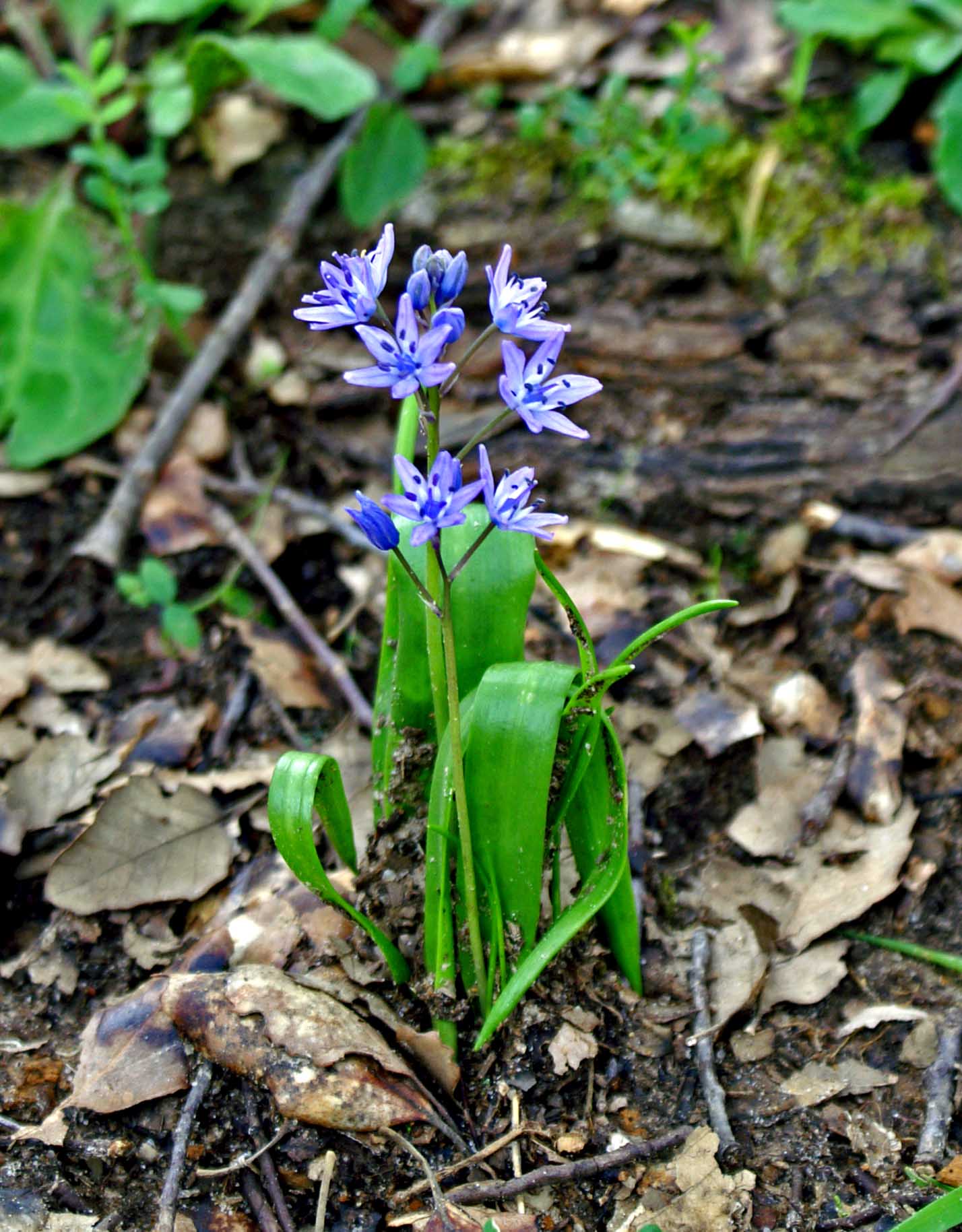
ONE-LEAVED SQUILL, SCILLAScilla monophyllus

FLOWERING: Feb/March to April/ May

HABITAT: Light woodland, sandy and stony places.

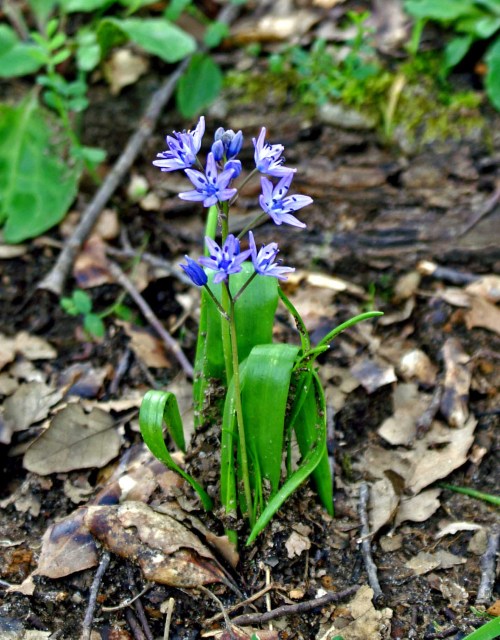
A pretty, delicate-looking small bulbous perennial that produces a single long basal leaf that often bends over from the middle so the tip reaches the ground. The flowers are bright blue and star shaped, 7-9mm across and are held in compact spikes of 1-12 florets.

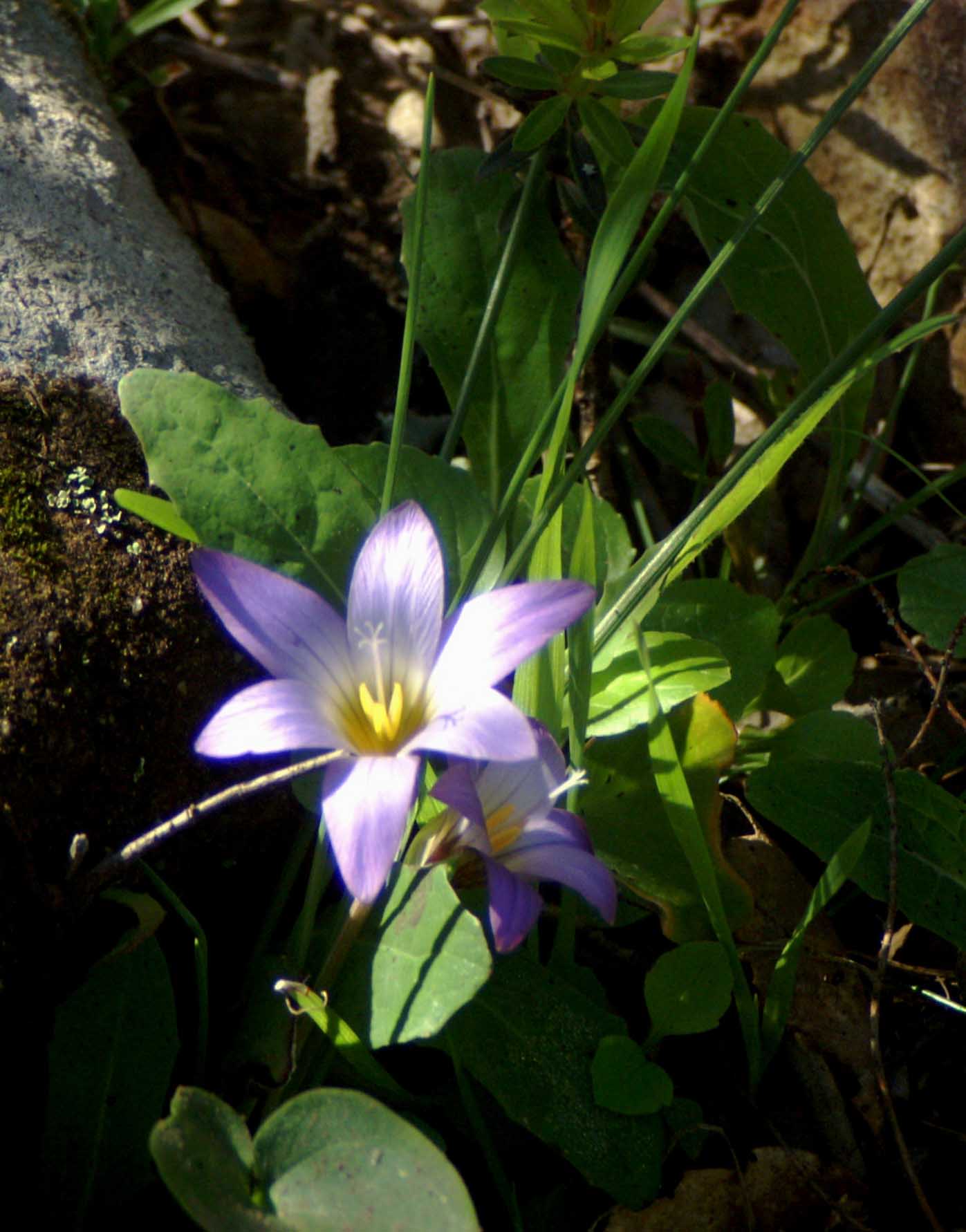
ROMULEA-Romulea bulbicodium
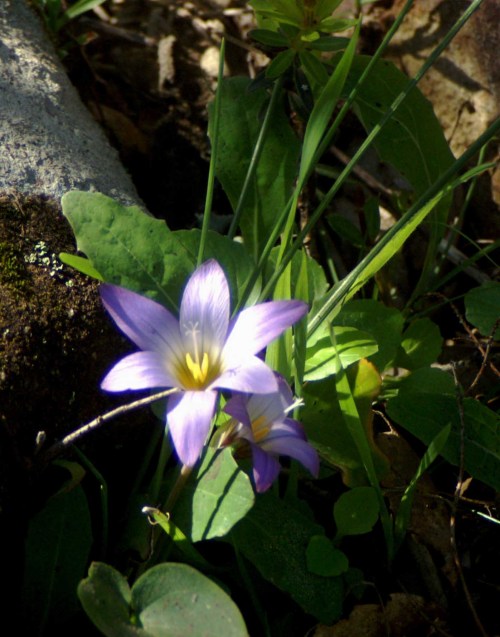
FLOWERING: January to March, April in the hills

HABITAT: Not fussy- sandy, stony or heavy rocky soils, open places or in light woods, coastal; very common.

Small, slender plants growing from corms, resembles a small crocus but does not have the deep green leaves with the central white line. Flowers open in the sun and range in colour from almost-white or pale lilac-pink to deep lilac.

____________________________________________________

Pretty but pestilential

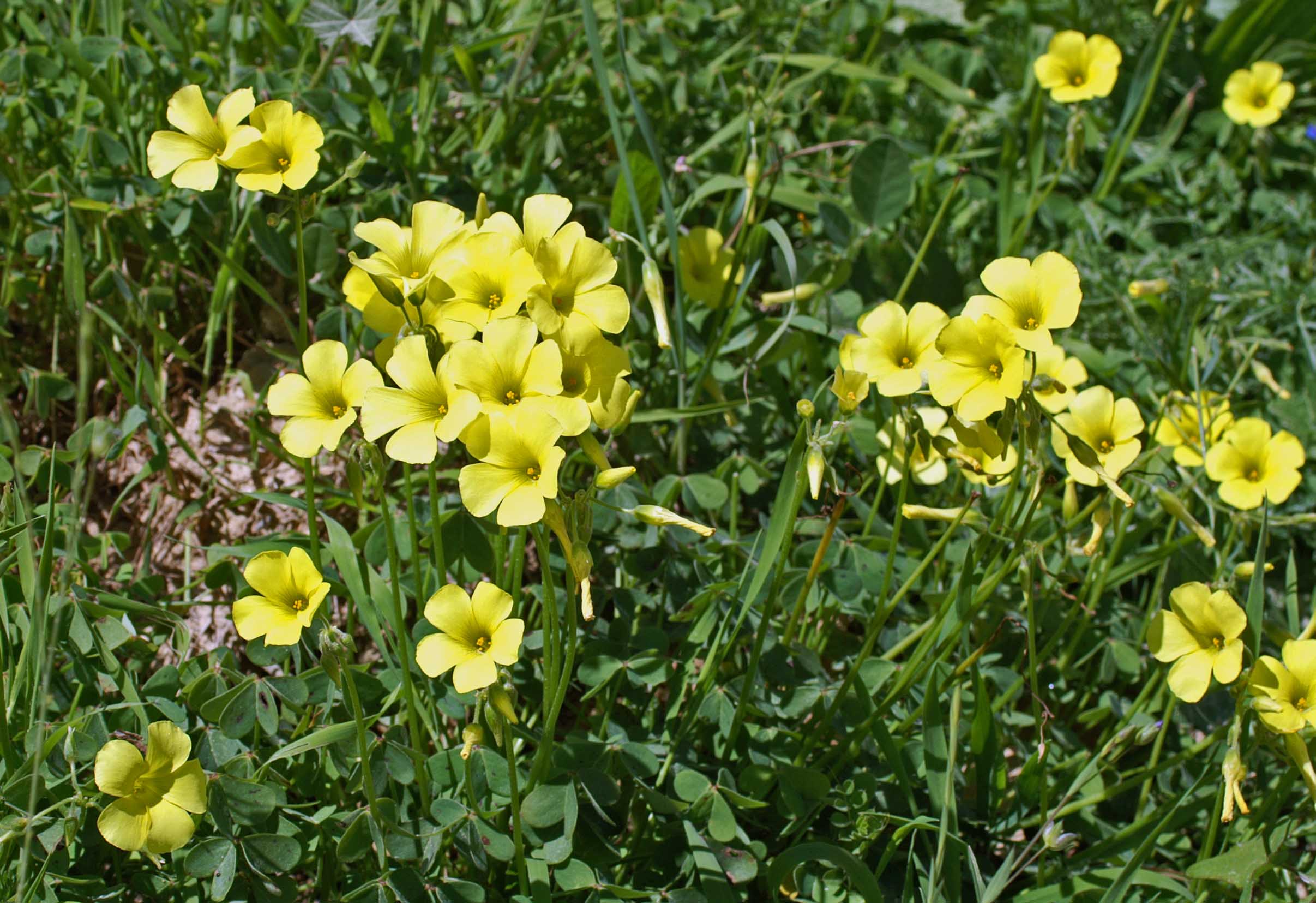
BERMUDA BUTTERCUPOxalis pes-caprae

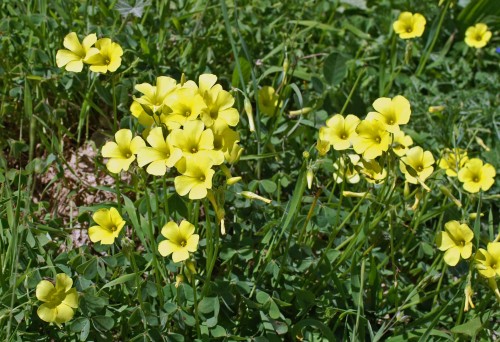
Bermuda Buttercup - Pretty but highly invasive

FLOWERING: December to early May, later in hills.

HABITAT: Nearly everywhere, mainly open places, but can quickly become a pest in gardens too; covering fields and roadsides in vast patches and quick to take hold on disturbed ground. In our area it grows in any soil from the coast to limestone crevices at least to 500m.

This enormously successful plant, (not related to buttercups), is a native of South Africa that has naturalised in most Mediterranean countries, in Portugal, Florida & Bermuda and is ever-increasing its range. It does look pretty when it cloaks fields with its soft primrose-yellow coloured flowers, but it is a serious pest, covering many acres of agricultural land. The plants contain oxalic acid are not eaten by domestic animals. It is seriously difficult to eliminate as it has bulbs deeply buried in the ground, and new methods of controlling it are being sought.

____________________________________________________

Herbaceous plants

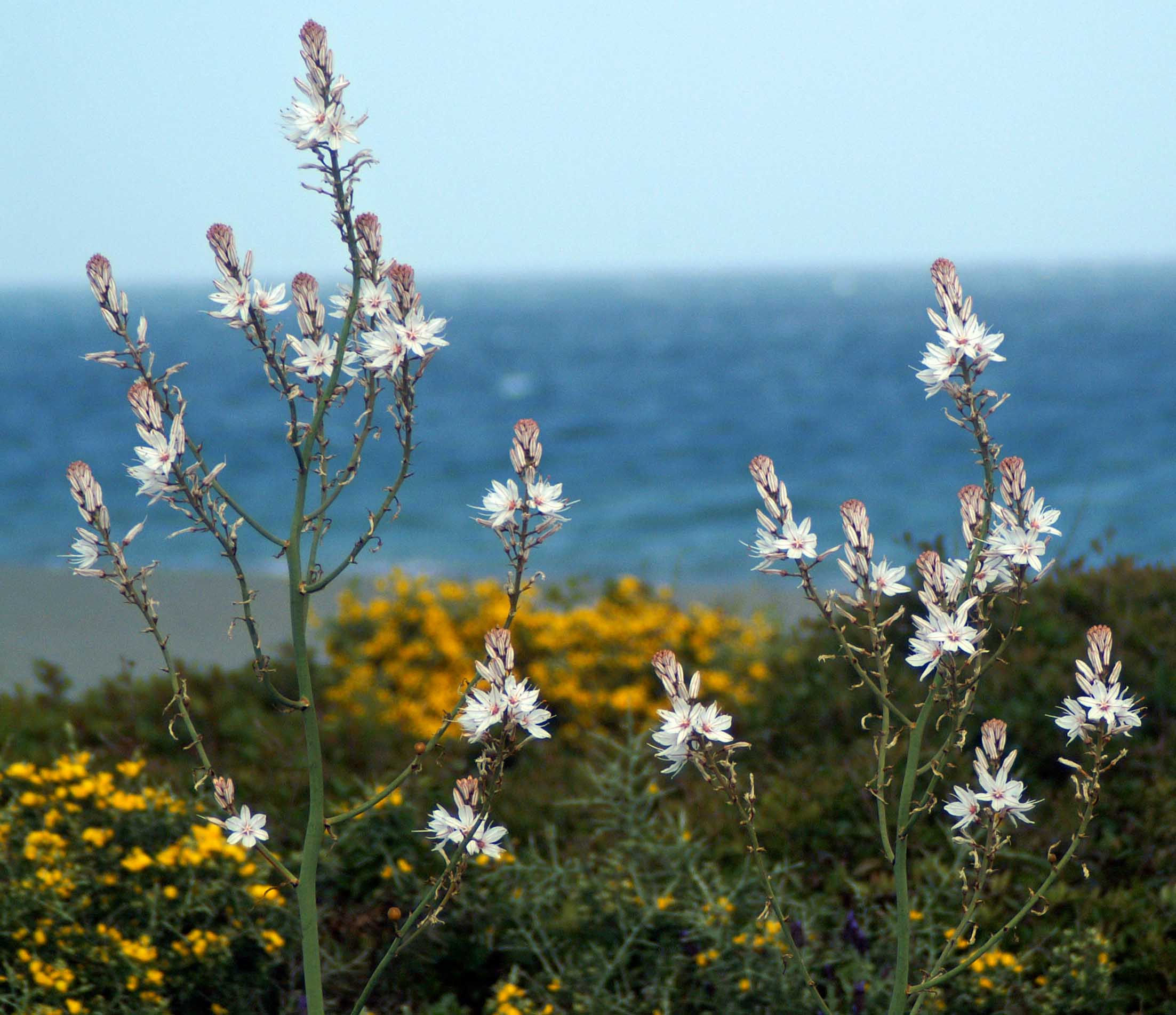
COMMON ASPHODEL- Asphodelus aestivus
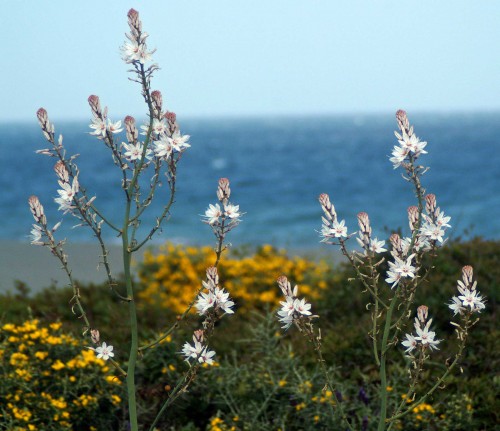
Common Asphodel against a background of Spiny Broom & the sea

Ashphodel with fruits & a visiting Violet Carpenter Bee

FLOWERING: January to March, April

HABITAT: Very common and widespread on rocky slopes, waste ground, woodland clearings, open coastal areas.

A tuberous perennial that often forms extensive colonies as it is unpalatable to grazing animals. (See post -GONHS  trip to La Janda) This is a very robust plant with tall stems that can attain 1.5m or more in height.  The flowers are white, 20-30mm across and the tepals have a pink-brown mid-vein. they are born in a much branched inflorescence that resembles a candelabra.

* The roots bear spindle-shaped tubers that are rich in starch, they are just edible and have been used as food in the past; they were also used to make glue.

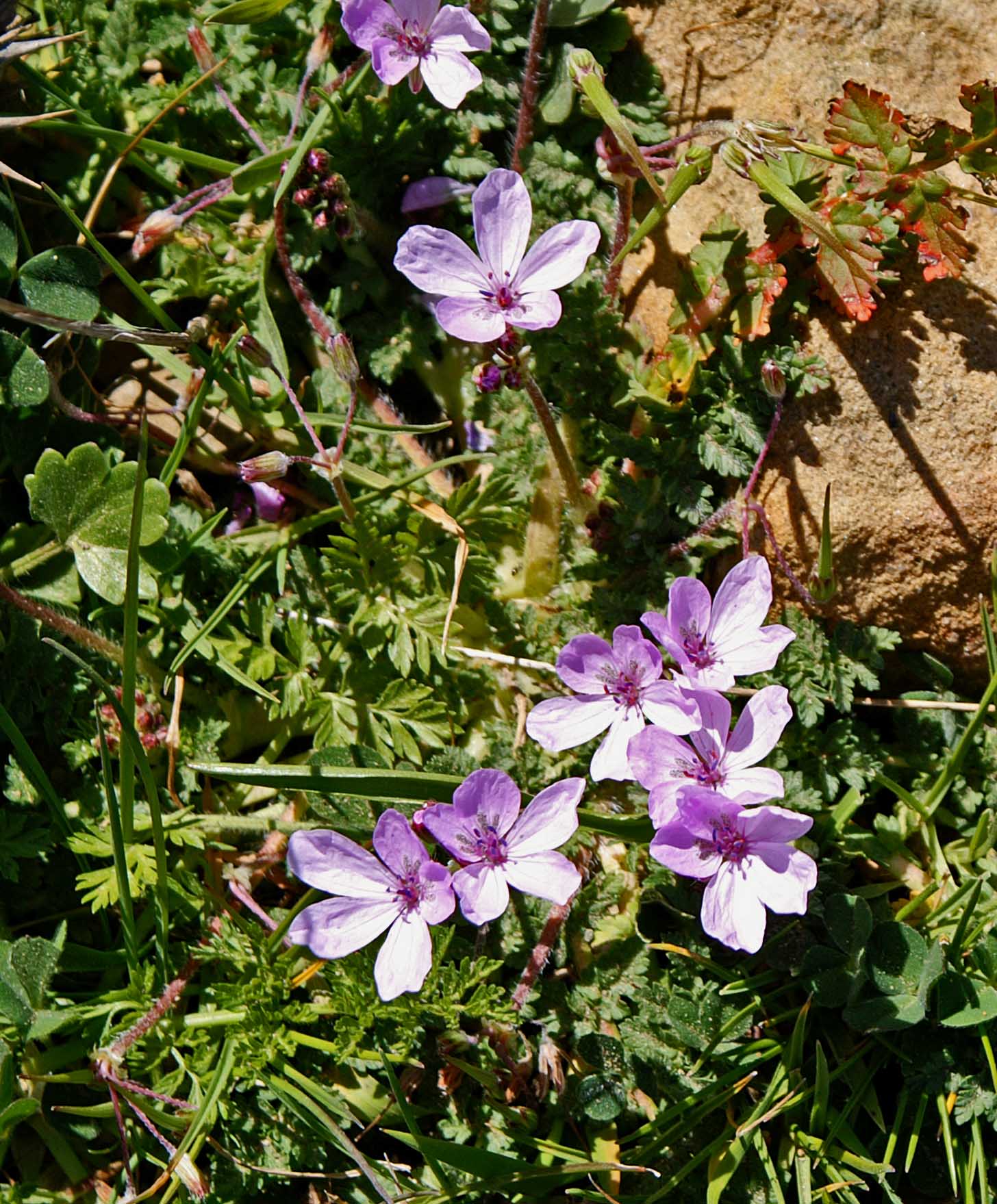
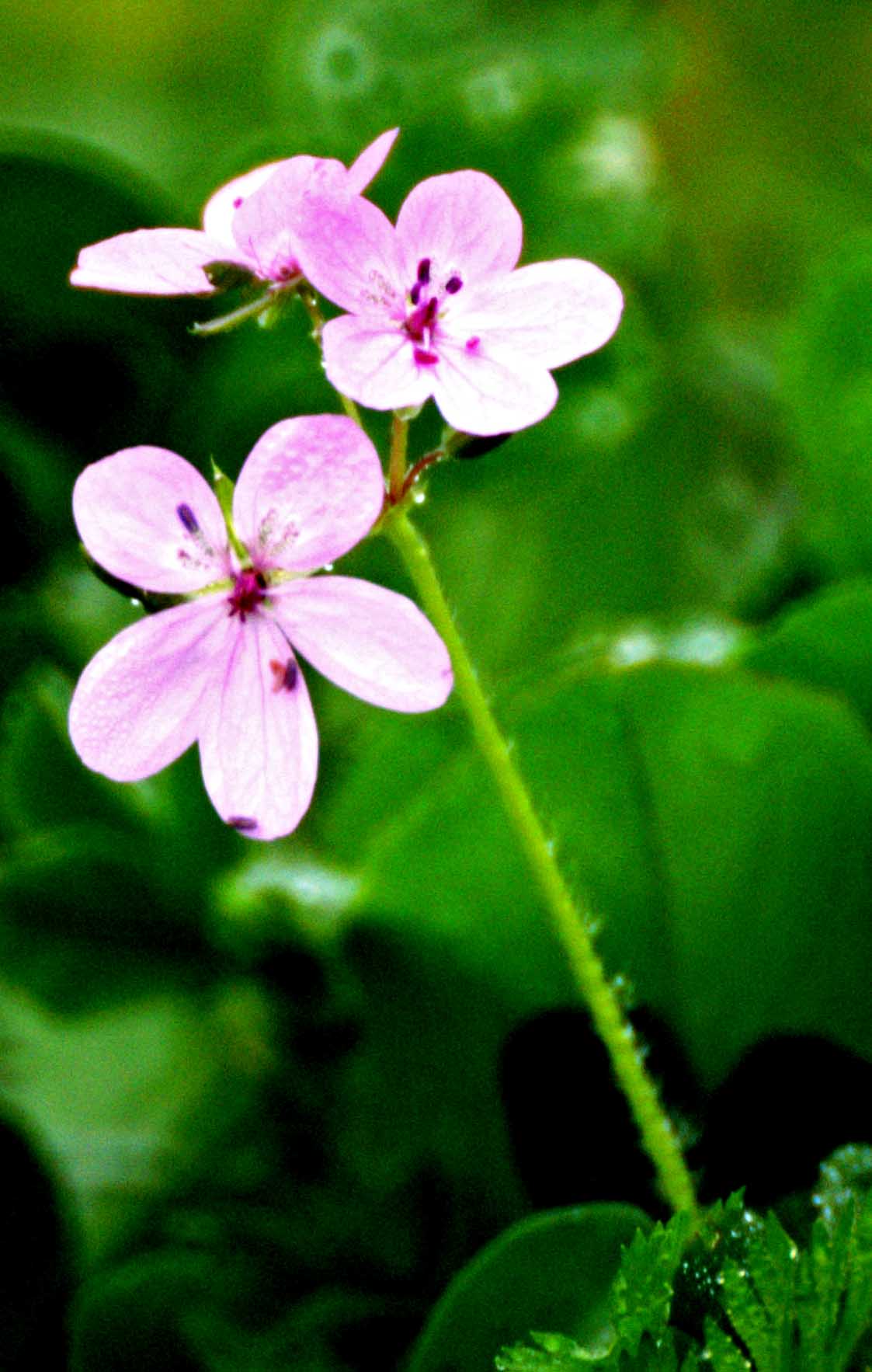
ANDALUZ STORKSBILL – Erodium primulaceum
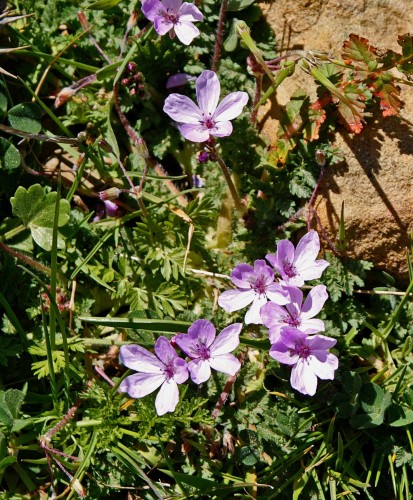
Andaluz Storksbill - one of the prettiest of the early flowers
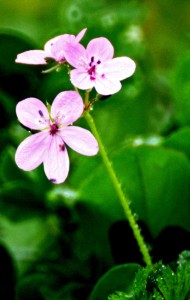
FLOWERING: December to May

HABITAT: Sands, gravel and grassy fields; amongst scrub and in light woods; common across lowlands to hills.

A delightful, small annual plant that may grow to 30cm but is frequently smaller. The leaves are deeply cut and fern-like; the flowers are supported by long thin stalks with 2 to as many as 6 heads to each. Individual flowers are about  2-2.5cm across, with two petals larger than the other three, each having a dark pink mark near its base. The colour of the flowers ranges from pale to mid-pink, occasionally white. In early spring it can be more conspicuous when it forms large patches of pink in fields and on roadsides.

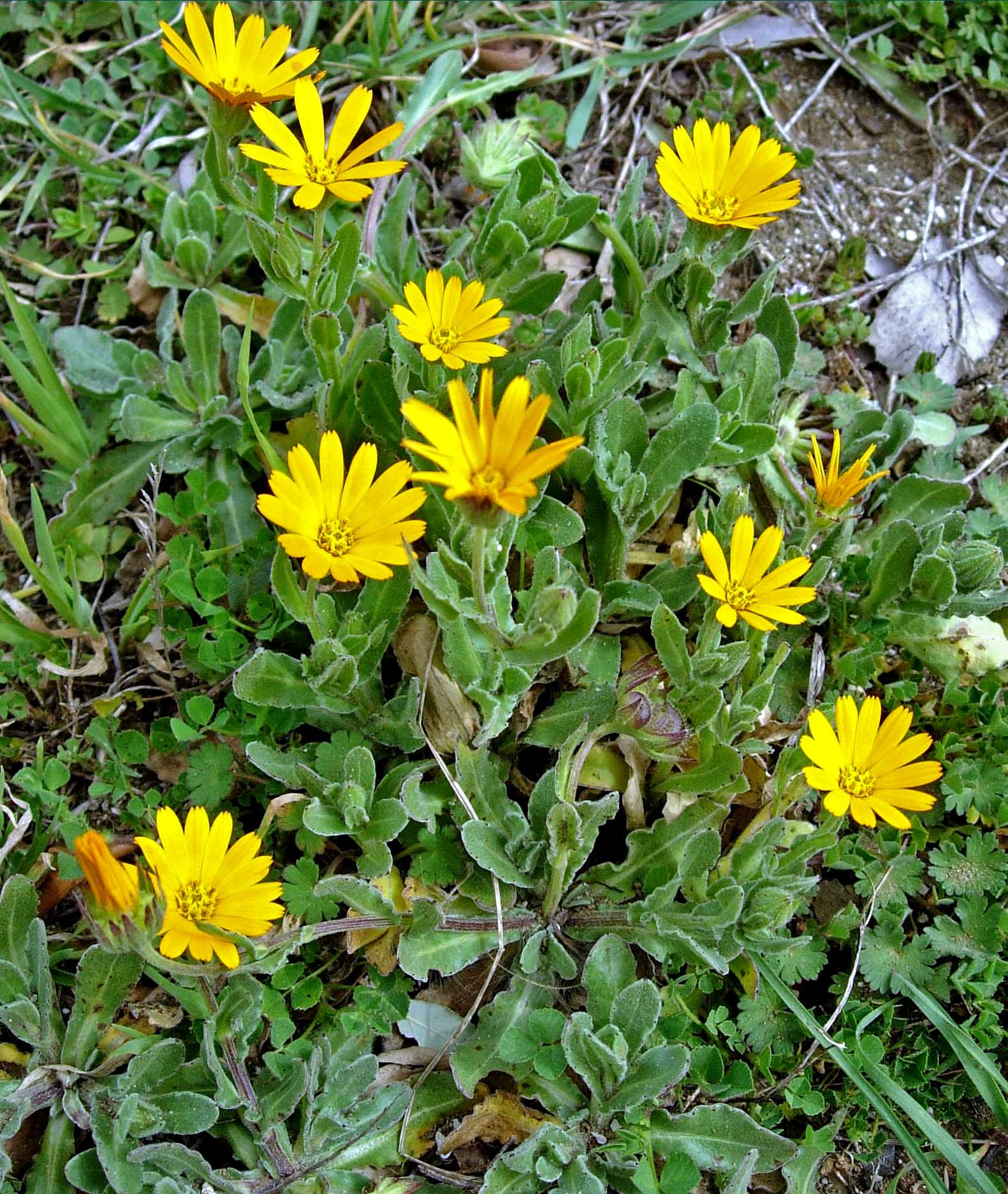
FIELD MARIGOLD – Calendula arvensis

FIELD MARIGOLD -flowers appear in a variety of sizes depending on location

FLOWERING: Almost all year round, but mainlyJanuary to May/June

HABITAT: Sandy, stony soils, often favouring disturbed and cultivated ground. Widespread across the region.

An annual plant with tiny flowers, 1-2cm across that range in colour from bright yellow to orange.

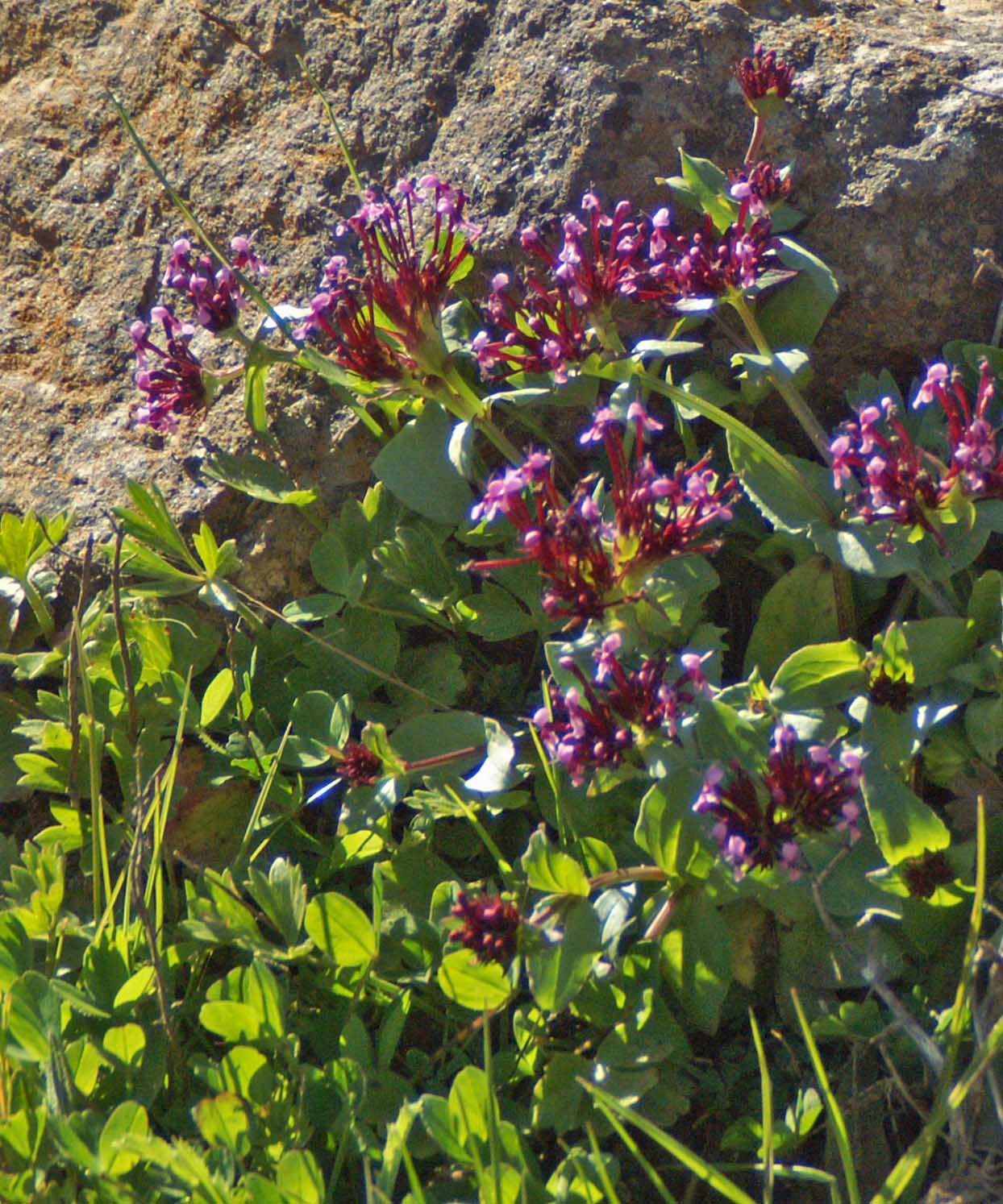
FEDIA – Fedia cornucopiae
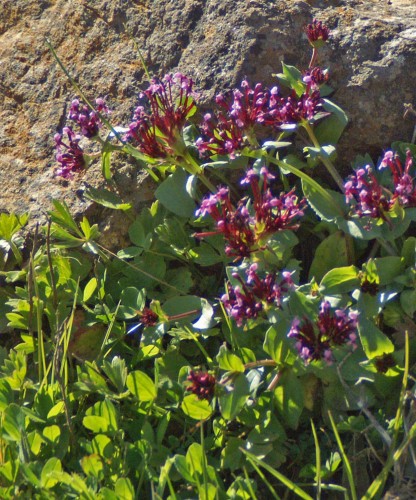
Fedia is very attractive to butterflies and bees

FLOWERING: December right through to April/May

HABITAT: Grassy roadsides, damp pastures and disturbed ground.

A small, low-growing and spreading annual, very common and widespread plant and having a very long flowering period. The leaves are oval, quite a dark green and hairless. Flowers are borne on  stems that branch into two at their end, with two leaf-like bracts at the joint; each stem then bears a densely clustered flower-head. Flowers are about 1.5cm long pink to dark red in colour.

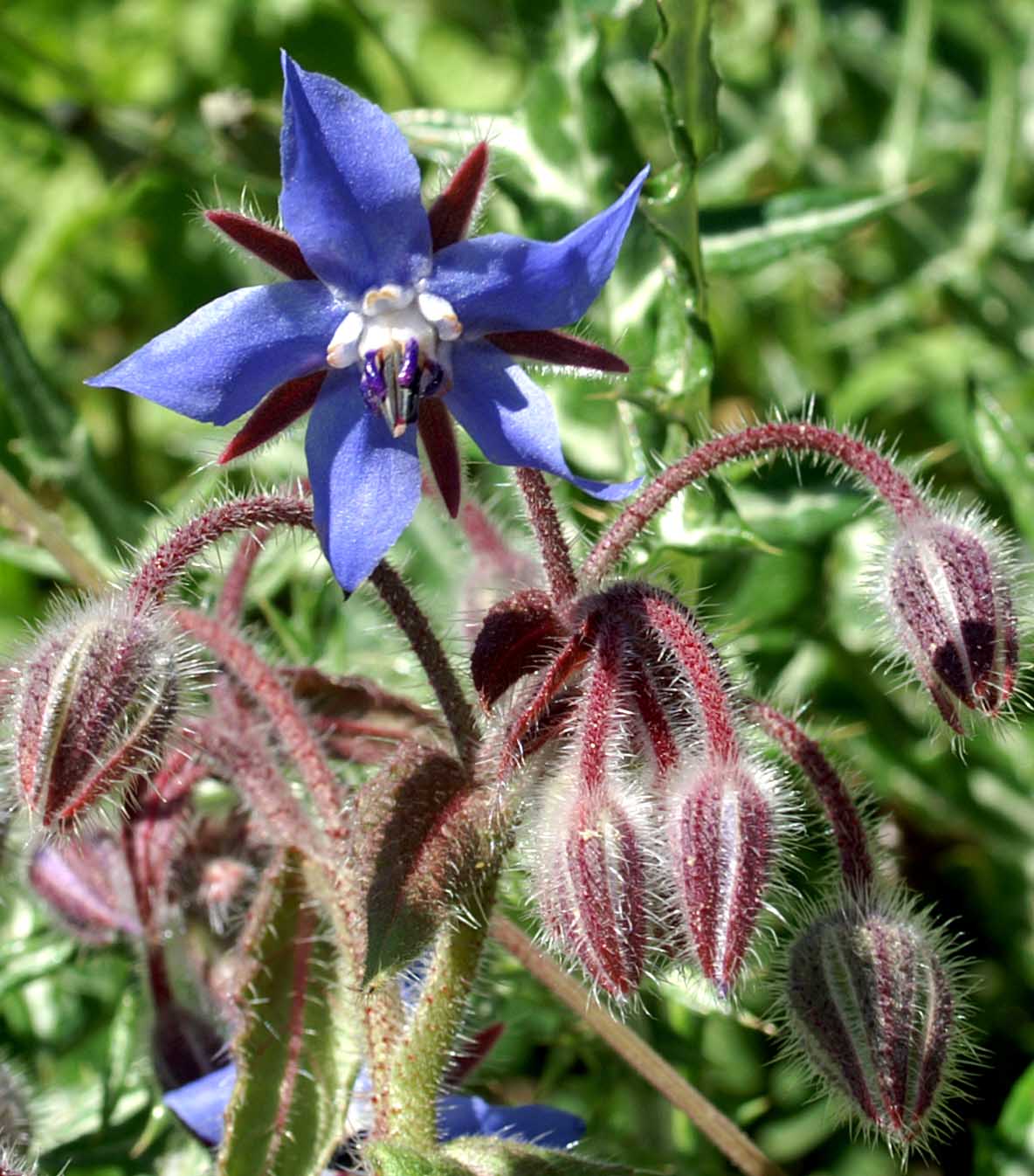
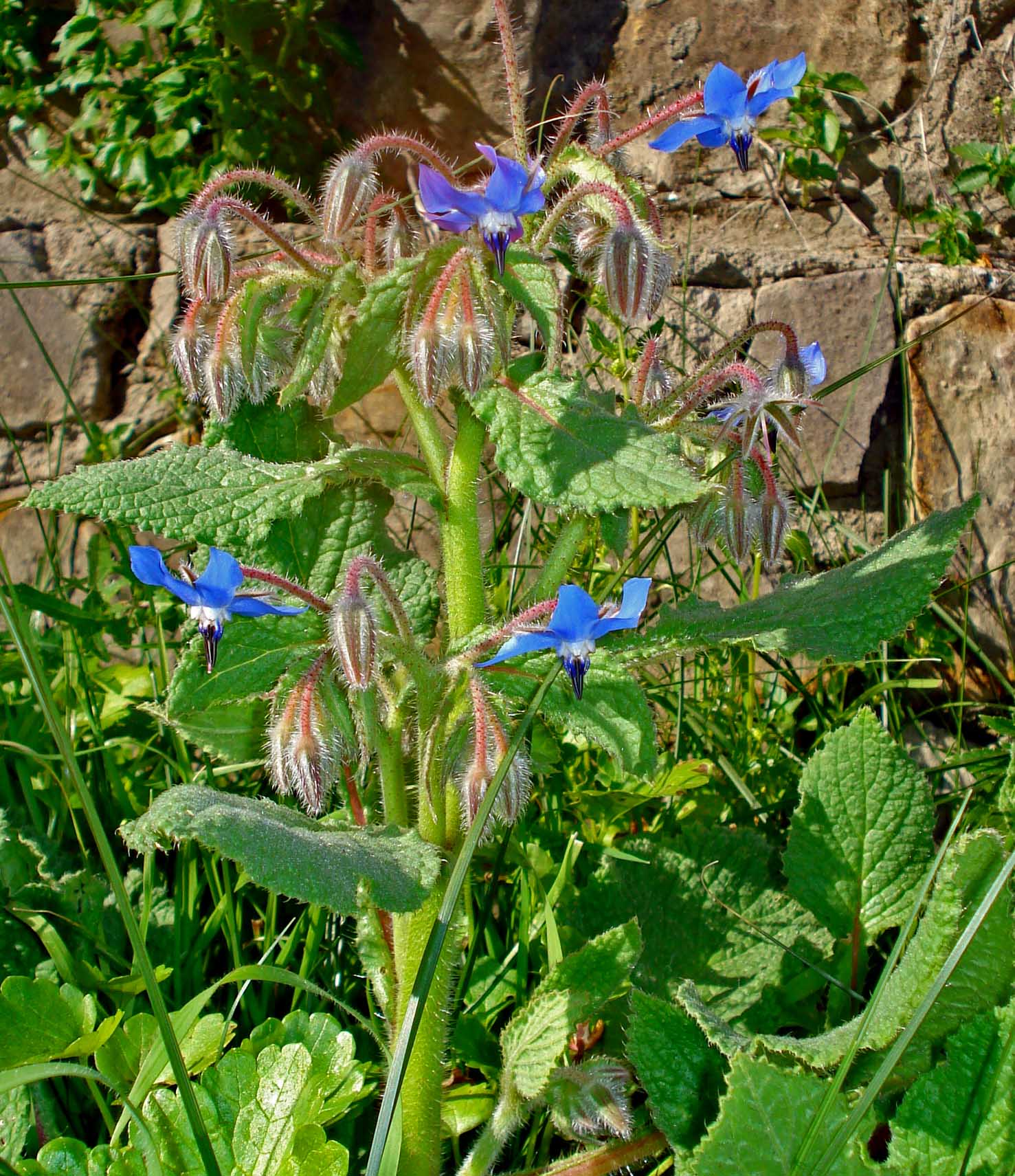
BORAGE-Borago officianalis
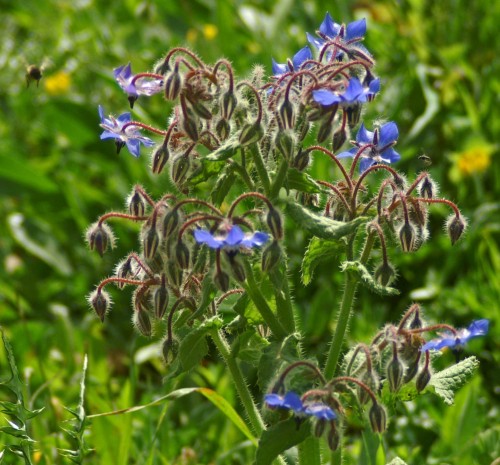
Borage is a good honey plant and is grown as a culinary herb in gardens
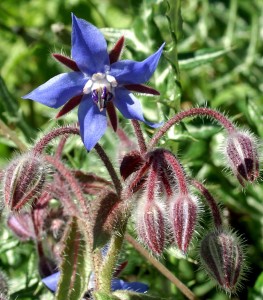
The flowers are gentian blue

FLOWERING: February to May.

HABITAT: Country roadsides, seasonally damp fields in sandy or rubbly soil; often cultivated; mainly located in lowlands.

An annual plant that grows to about 70cm tall, it is much-branched with hollow stems. All parts of the part except the petals are covered with short, sharp and pale-coloured hairs. The leaves have a puckered surface and are variable in size. The deep blue flowers  are held face-down on short bent stalks and are almost scentless, which is a pity as they are quite beautiful.

Jimena river valley walk

26th February 2011

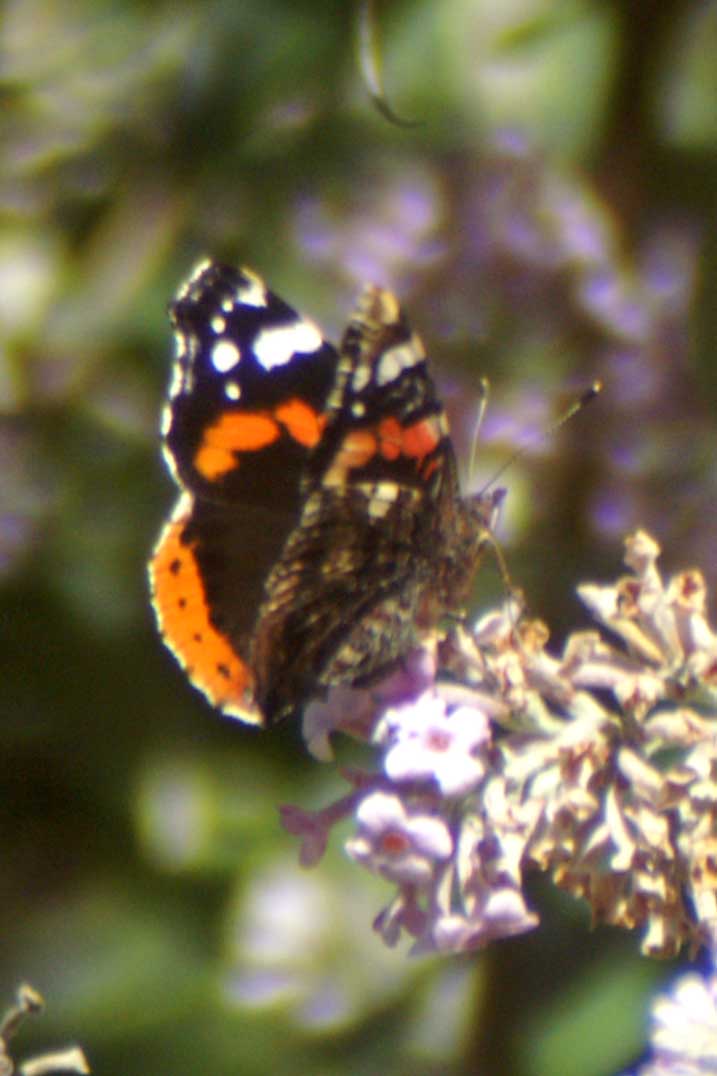
RED ADMIRAL - Vanessa atalanta

A very warm morning had built up to an unseasonably high temperature  by the time I arrived for lunch at my friend’s house at Jimena. Before I even knocked on the door I had the camera out and pointed at butterflies and Violet Carpenter bees that were very strongly drawn to a flowering shrub at the front of the house. There were 2 Red Admirals, several Large Whites and numerous Carpenter bees, but it was also quite windy and very difficult to focus on them swaying around.

Borage in flower along the sides of the road leading down to the river

We had lunch sitting outside in the garden, debating where to head for to walk this afternoon. We settled on a walk along the pathway that follows the río Hozgarganta upstream through the Jimena valley, a walk we have done several times that is always interesting and enjoyable. Whilst eating we kept an eye on the sky; migration has been slow to get under-way this year due to the weather, so on a warm sunny afternoon, although the wind wasn’t blowing in a particularly helpful direction, we thought a few determined birds may make it across. Luckily for us we happened to be looking up as two Egyptian Vultures flew over, low down and in no particular hurry- so a good omen for the afternoon.

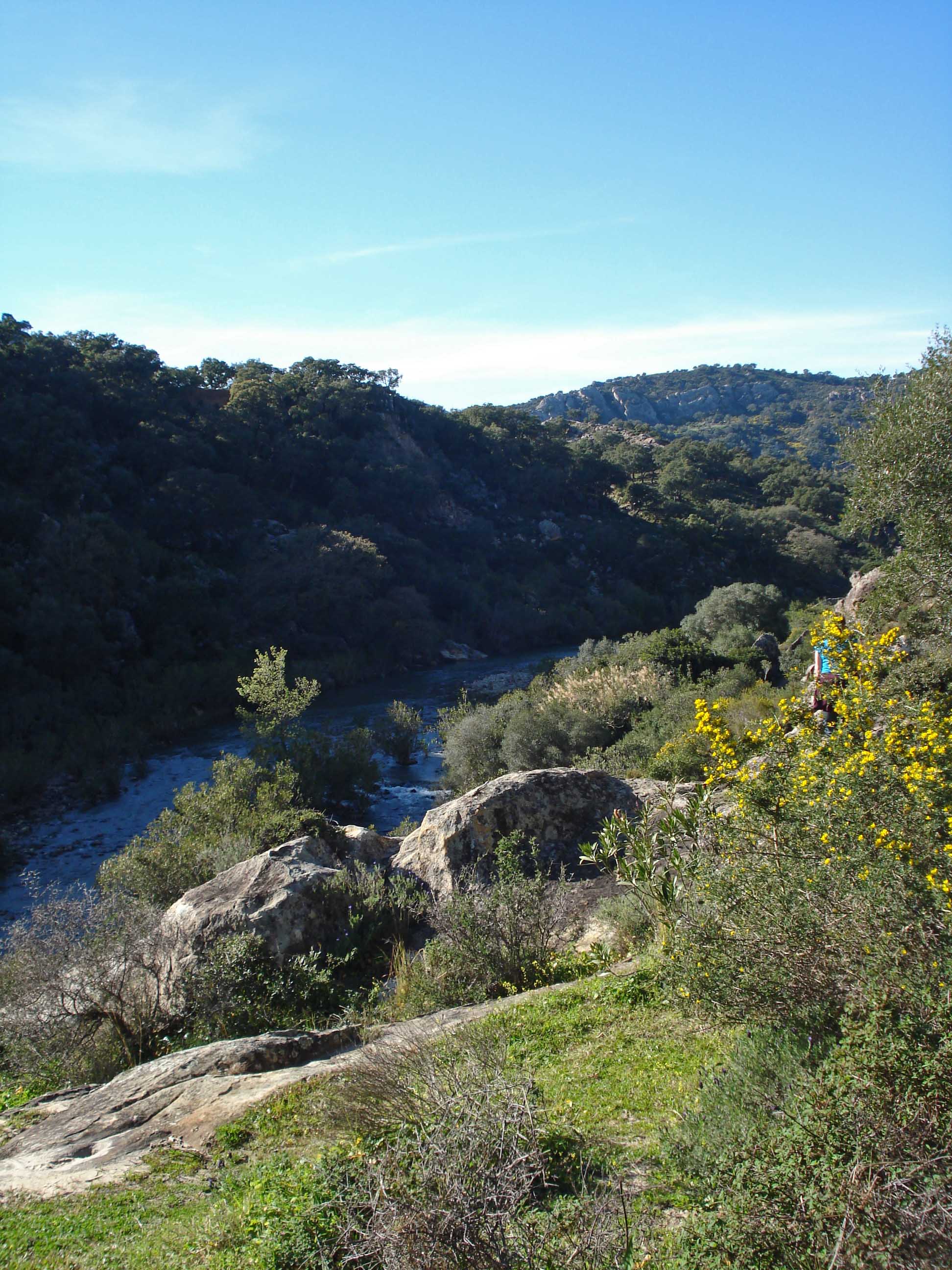
View from the bridge Río Hozgarganta, looking upstream

On the other side of the bridge a large Striped-neck Terrapin was out enjoy the sun

Alder trees growing on the riverbank in fresh foliage

Looking both up and downstream from the bridge there were no signs of any wading birds, but in the alder and other small trees growing in front of the bridge, and in the tangle of  undergrowth below there were a good number of small birds; Blackcaps singing, Greenfinches, a Chiffchaff and a Sardinian Warbler were all there.

A stone outcrop sculpted and scoured clean and smooth, shows how high the river has been

Once past the houses and the domesticated area of the riverbank you can begin to better appreciate the more rugged and natural scenery created by the river, the rock formations and the wild flora. I spotted bright yellow flowers off to the side of the path and headed off  for a closer look. I quickly found myself in a wet, muddy marshy area and was about to turn back, when I noticed little frogs were popping about all around me. The flowers were Lesser Celandines, as I’d hoped.

A little Marsh Frog hoping I hadn't seen him

Leaving the frogs in peace and making my way back to the track, I caught sight of a small Lizard scuttling across a large rock.

A small, nicely patterned Lizard scuttled over a large rock

We hadn’t walked far before spotting another, larger lizard; he had clearly lost the end of his tail at some point and although it had re-grown he will never regain his colourful scales.

A bigger Wall Lizard with a shiny new bald tip to his tail

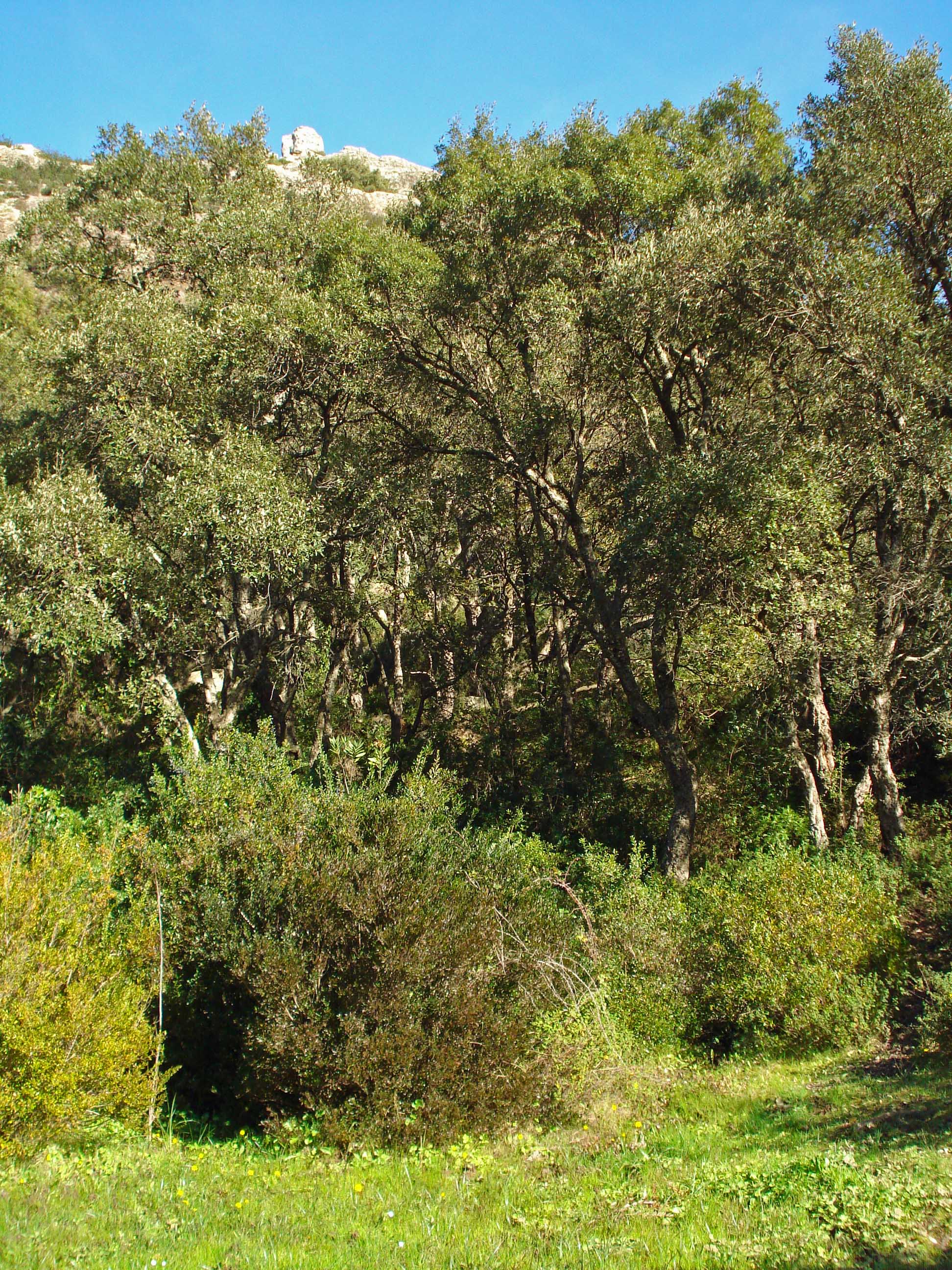
Cork Oaks and shrubbery on the valley sides

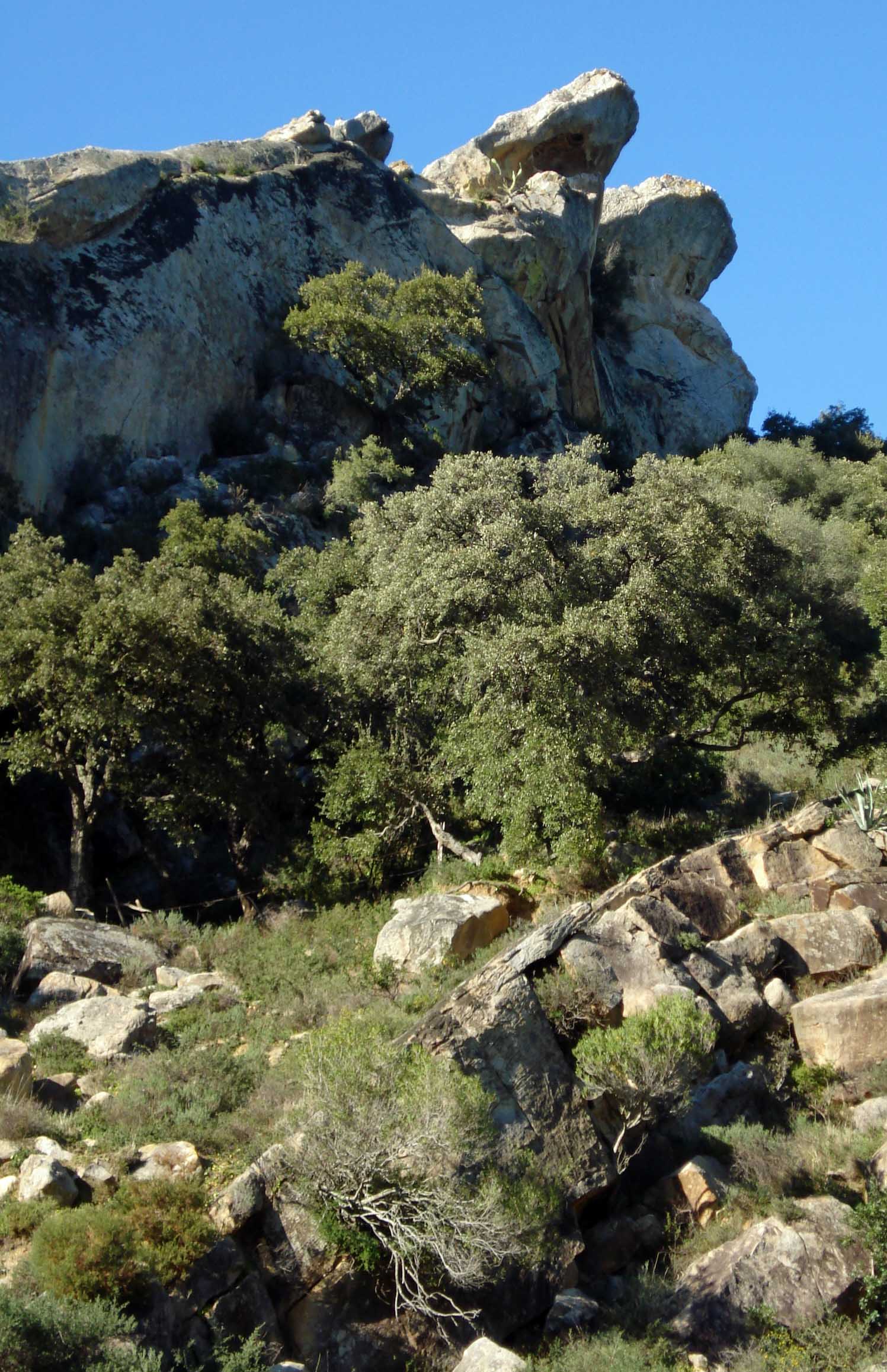
We spotted birds hovering high up  in the sky that we could make out as Kestrels and wondered if they may be Lesser Kestrels as there were two close together. There was still a fairly strong wind blowing and the birds were making good use of it, their wings were extended as though to hover, but holding them still they were able to maintain an almost motionless position for impressively long periods. As we watched one of the birds flew into a hollow in  an outcrop of rock; as it happens this particular rock is one we have often commented on, as its shape and the hollow put us in mind of an animal’s raised head, mouth wide open…? Anyway, inside the hollow is a further smaller cavity and we located the Kestrel sitting on its edge. We continued watching as two more Kestrels appeared that seemed to have gone down on the other side of the outcrop. Now we had seen more than two birds we were happy to conclude that they were indeed Lesser Kestrels and that we had discovered their nesting place.

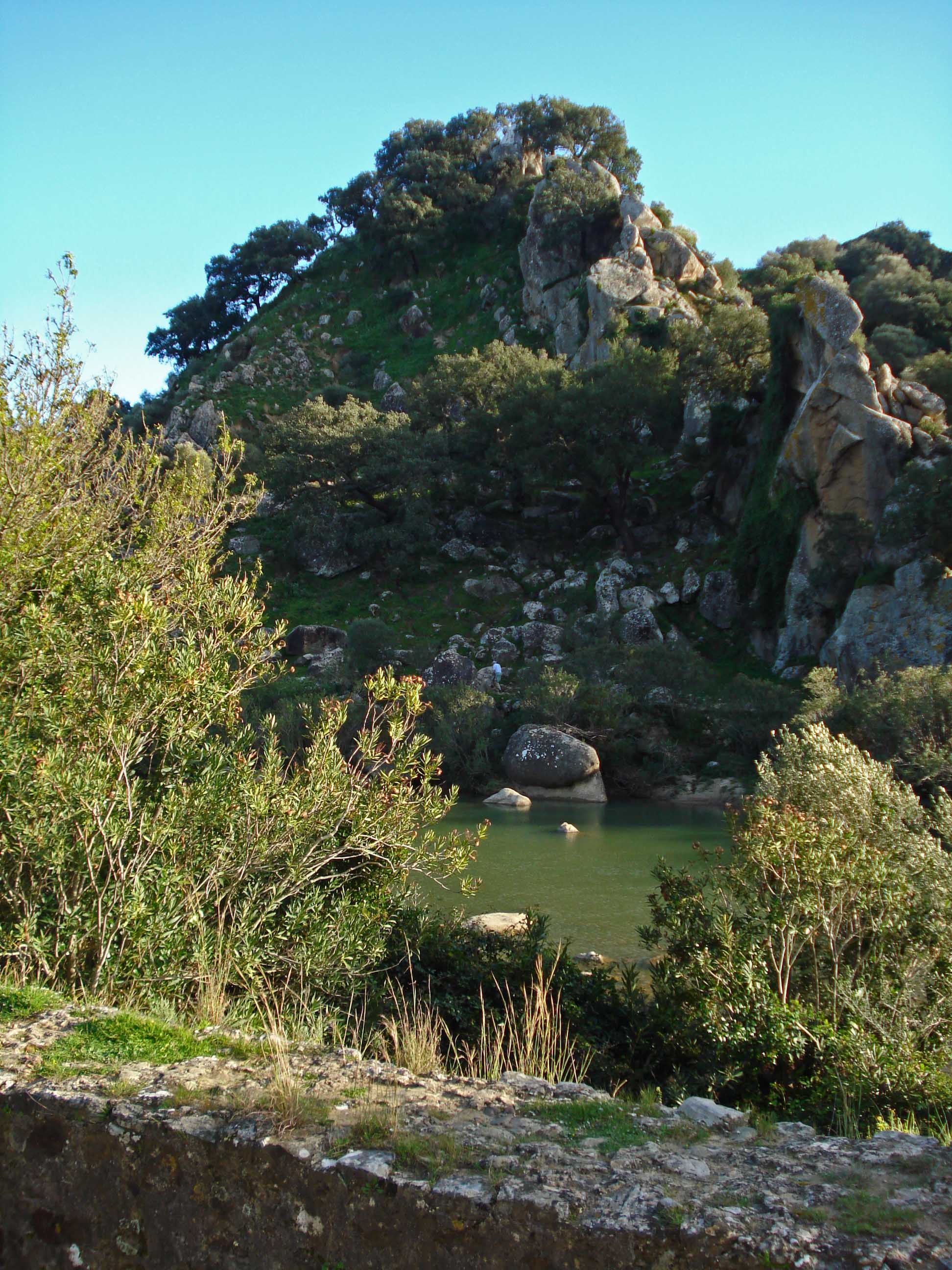
Looking up a rocky slope towards the outcrop where Lesser Kestrels appear to be nesting

Lesser Kestrel

We continued on our walk enjoying the dramatic scenery and the warmth of the sun, until we reached a spot overlooking the river that looked like a pleasant place to sit. It was a good decision to stay still for a while, as it gave us the opportunity to fully appreciate our surroundings and to notice the details of it. We timed our break well too, we spotted raptors flying over, a Booted Eagle (light phase) and a Short-toed Eagle, the first individual of the latter species that either of us had seen so far this year. The  Kestrels were very visible, flying back and forth over the ridge of hills in front of us and close enough for us to identify properly and confirm that they were indeed Lesser Kestrels.

The view upriver from our stopping place

The rocky scene immediately behind us

There were more sightings of a Short-toed Eagle; we thought at first that we were seeing the same bird that was circling around, but then decided that was unlikely and it was more likely to have been three individual birds on passage.

Short-toed Eagle - The views we had today were of birds flying too high for me to photograph effectively, so this is 'one I made earlier'

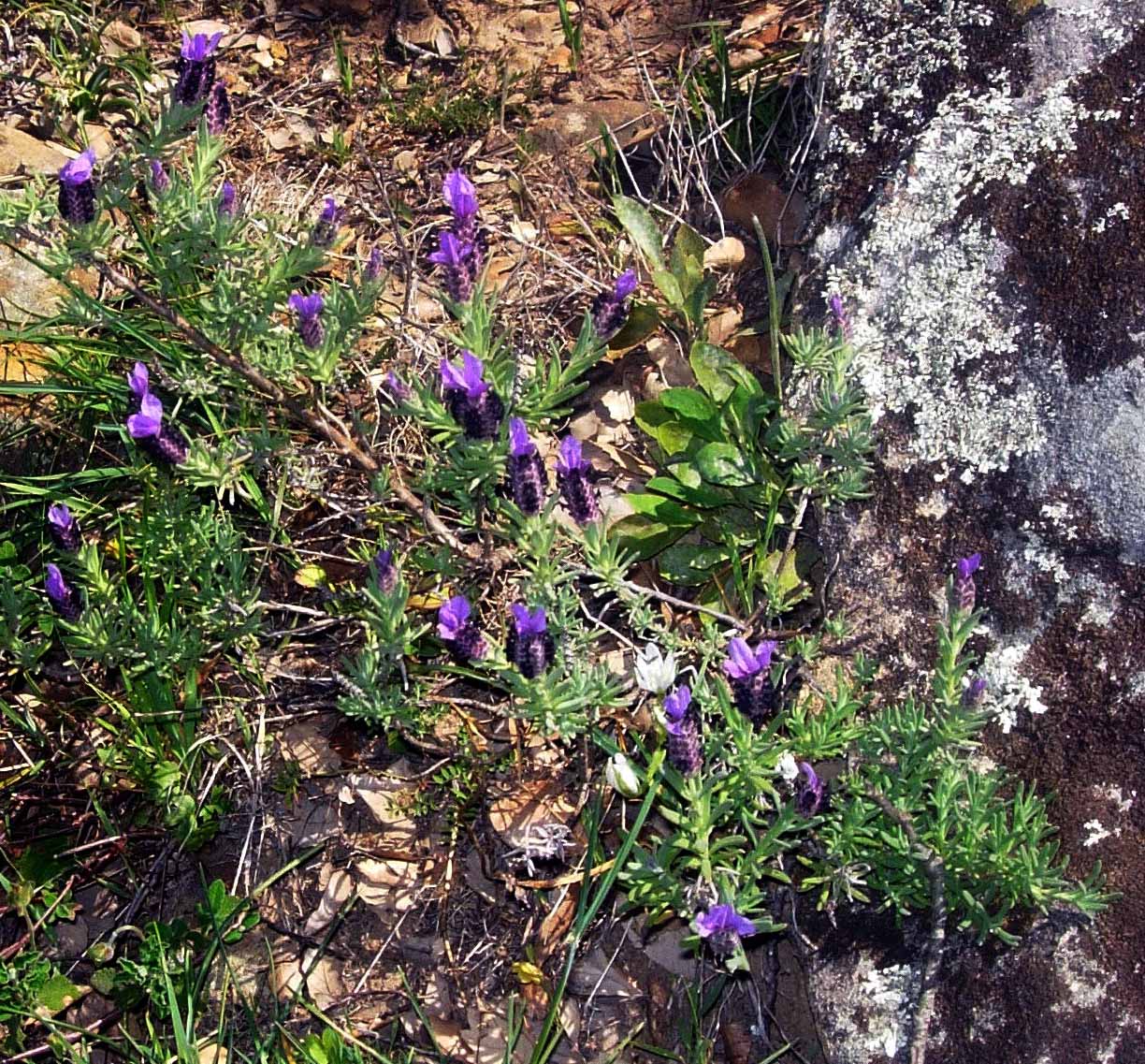
Some plants are flowering now, most abundant was French Lavender growing amongst rocks and bushes of bright yellow broom.

FRENCH LAVENDER-Lavendula stoechas, growing amongst rocks

As we moved off to begin our walk back I spotted a green Tiger Beetle scurrying over a rock. It stopped so I focused the camera on it and realised it was actually two beetles, a mating pair, showing the considerable difference in their sizes, the female being the largest.

Mating Tiger Beetles


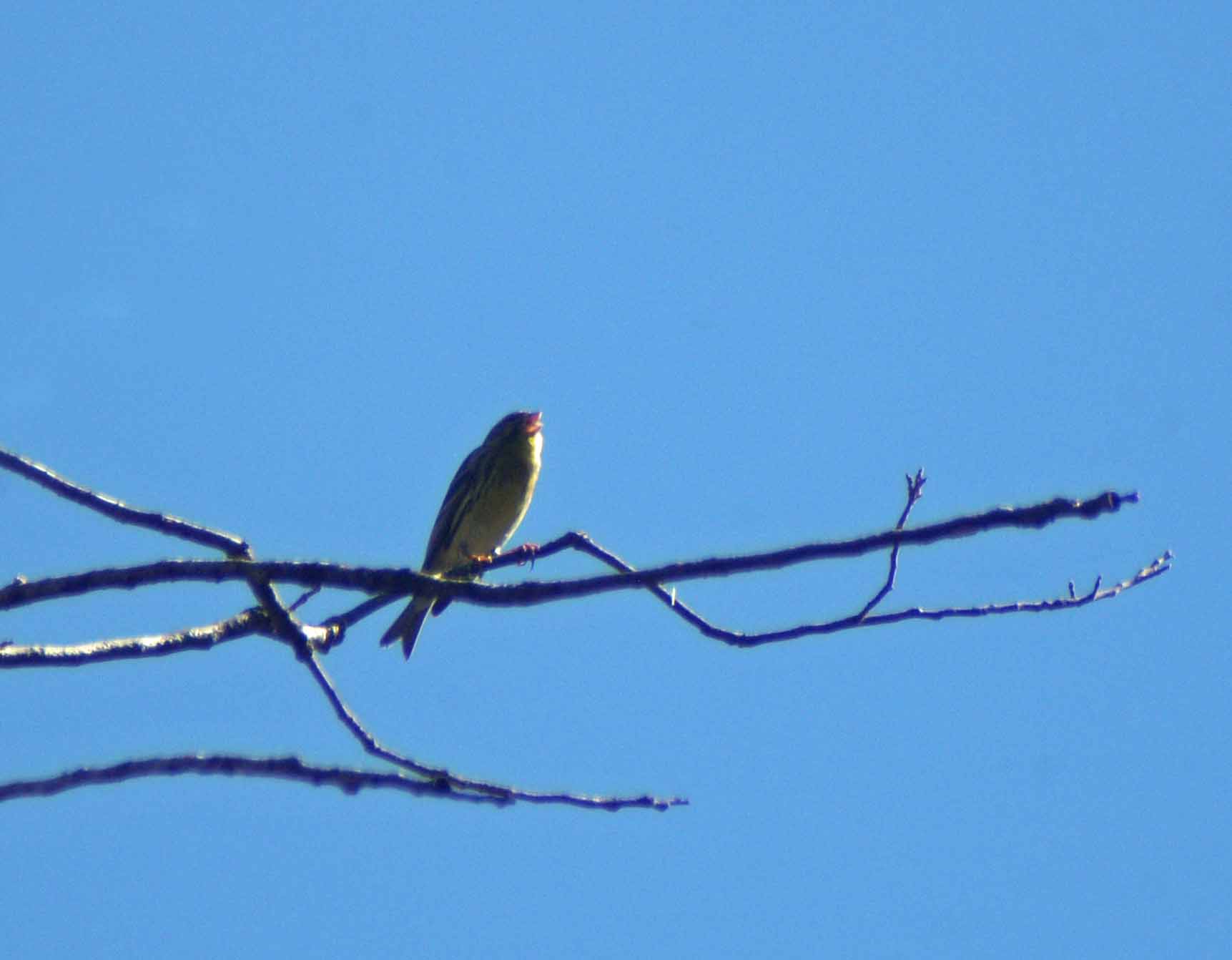
A male Serin singing with gusto

Perhaps my favourite sighting of the day was of this male Serin, singing his socks off from the top of a shrub just a short distance away from us. He was in bright sunlight and very colourful.

Griffon Vulture-Gyps fulvus

You do have to be quite unlucky not to have sightings of Griffon Vultures in this area, but we had especially good views of these magnificent birds today when five of them flew in a straggly line along a low ridge to the side of us. We have no way of knowing whether they were part of the local flock or just passing through, but either way they were, as always a dramatic sight.


A bumper crop of Avocados hanging high above us

Arriving back at where the town meets the river, the wild flora begins to blend into the cultivated and there are fruit trees growing that may once have been in a garden or orchard, but are now untended. This Avocado tree has grown so tall, we only realised what it was because there were fallen fruits beneath it. Looking up we saw a heavily-fruited branch high above us, overhanging the path. They looked perfect, what a shame they’ll probably be wasted.


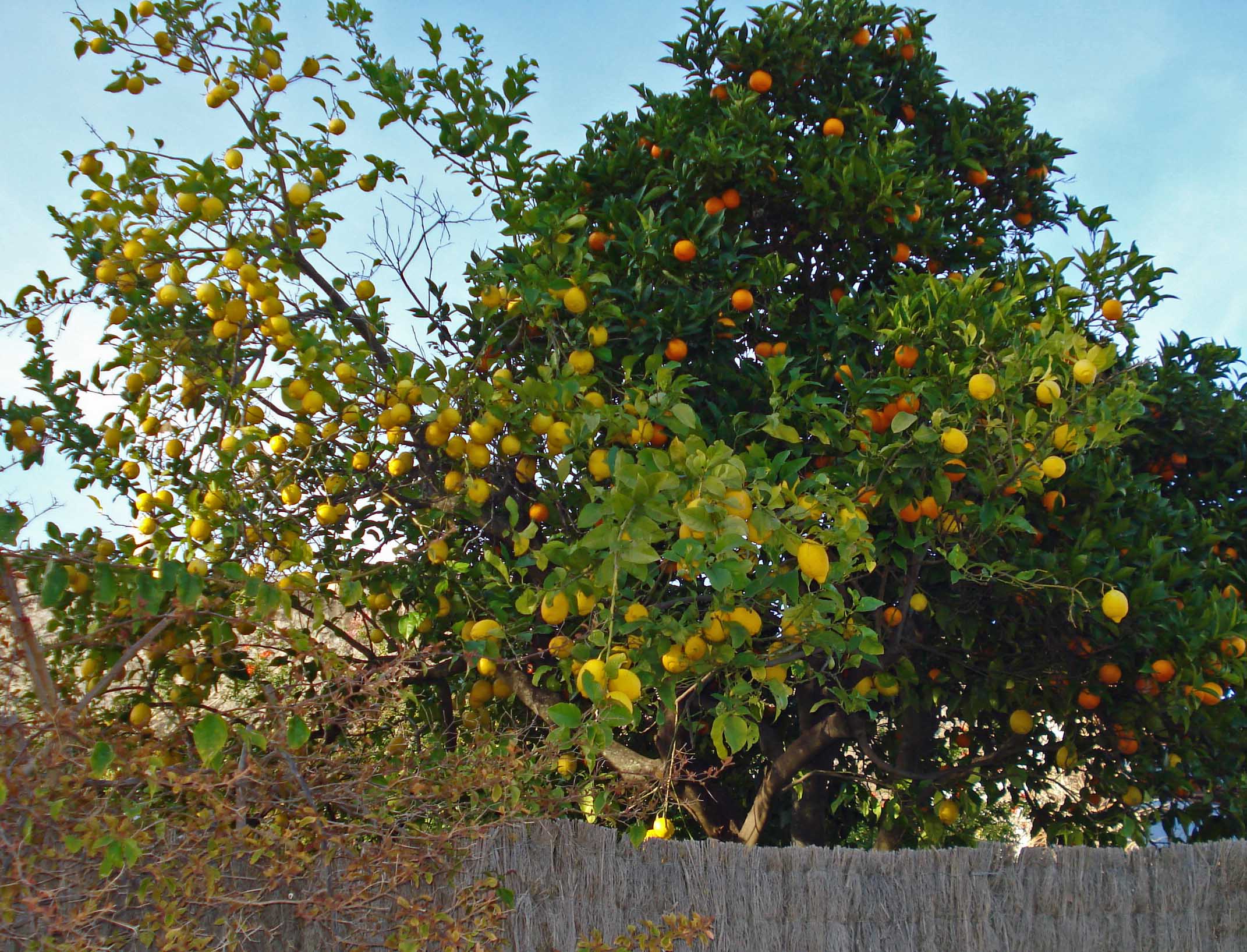
Oranges and lemons growing on the same tree

What appears to be two trees here, an orange and a lemon, is in fact one tree. Apparently it was common practise to graft one of each onto a single rootstock so both could be grown more compactly in a small patio garden. This particular one seems to have got a little out of hand but has produced abundant quantities of fruit.

Apple of Sodom plant with Jimena castle in the background

On the subject of fruit, this one is definitely one never to be eaten; it is the Apple of Sodom – Solanum sodomeum, a member of the Nightshade family and a fairly common plant on disturbed earth and waste spaces. The fruit looks attractive, but like all parts of the plant are very poisonous.

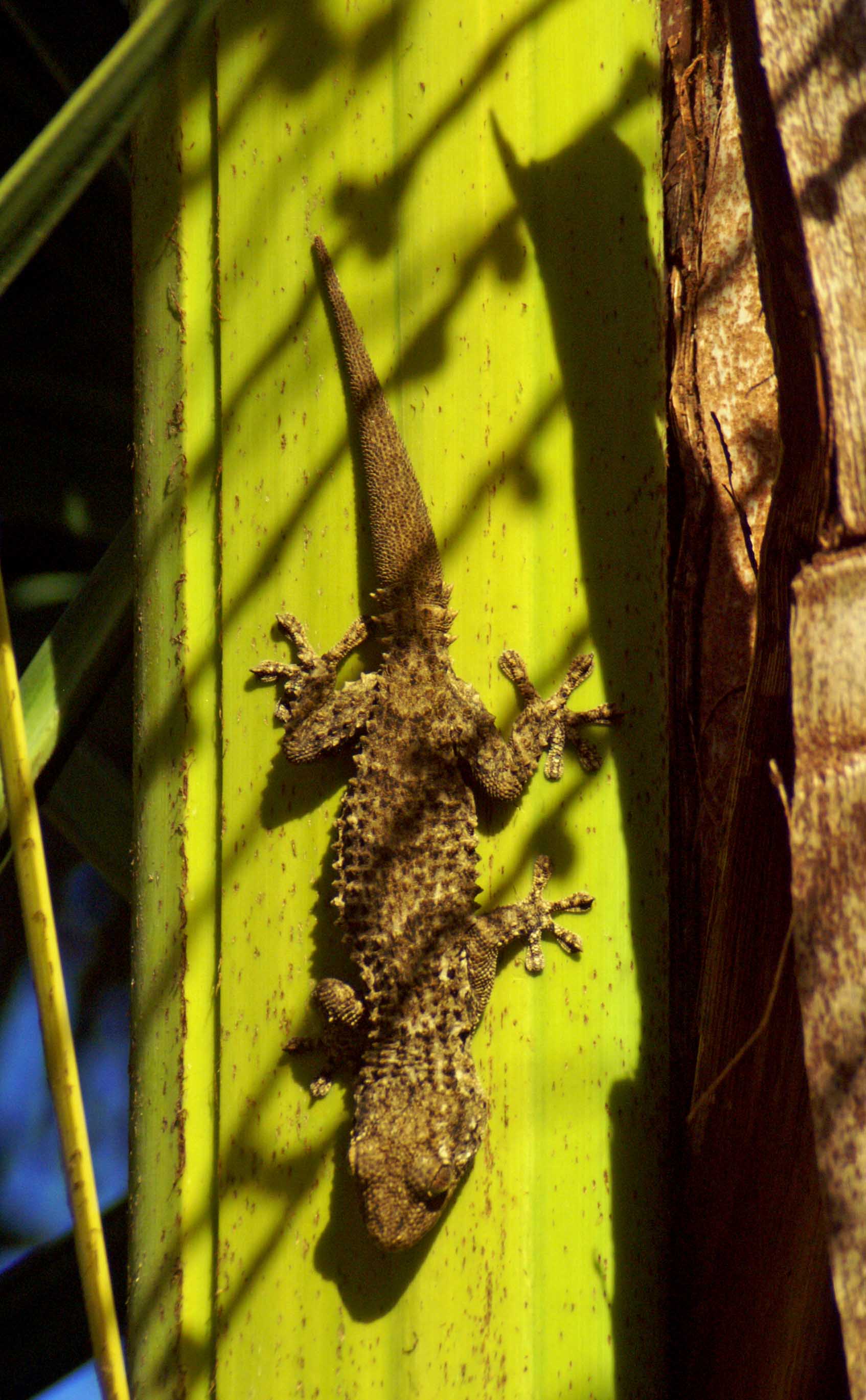
Back at the house, a lovely, very large Moorish Gecko sunbathed on the stem of a palm frond. Looks more like a baby alligator.

We got back to the house at about 6pm, admired the big gecko on the palm tree then took another cup of tea out into the garden. It was still very warm, the outside thermometer reading 19°C, 2° more than inside – Spanish houses are built to stay cool, even in the winter. Collared Doves, currently nesting in a tall cypress tree were very noisy and active, and there were a good few Barn Swallows flying around. Then the Cattle Egrets, having spent the day hunting in the nearby fields, began to pass overhead on their way to their night-time roost. There must have been at least a hundred of them, in parties of varying numbers and they were very close overhead. They looked so pretty, white birds tinted faintly pink by the lowering sun, against a still-blue   sky. Last treat of the day was a Buzzard, flying so low it almost skimmed the roof.

Birds are singing, frogs are croaking

At the beginning of the week it seemed as though the total local Tree Frog population had converged upon our pool. Endearing as they are in the daytime when spotted out sunbathing, stuck to the sides of the pool like bath toys,  as soon as the sun has set and they begin their croak-off contests, necessitating turning up the volume on your TV, you can go off them a bit. It wouldn’t be so bad if they got tired after an hour or two and quietened down, but the tiny creatures have enormous stamina and I’ve heard them still at it at 2am. The morning following a particularly noisy night session I discovered the reason for the increased volume; I counted no less than ten of them in a variety of sizes and shades of green in various spots around the pool.

Four of the ten tree frogs in the pool today. This image shows them at more or less their actual very tiny sizes. Males are smaller than females.

A grass-green individual

I probably would have put up with the din so I could indulge in a bit more frog-watching, but my long-suffering other half had reached his tolerance limit and decided at least some of them had to move on, or back to where they’d come from. So the pool was drained to leave about half a metre or so depth at the ‘deep end’. We found some interesting stuff in there, including tadpoles of various sizes and some large dragonfly larvae. I was worried then that the tadpoles would get eaten, so we put a bit more water in to give them more chance to escape. It’s a situation that reminded me of a quote I remember which simply says ‘Nature quietly finds her way back into places we think of as ours…’ which is sort of what has happened here, although in this case maybe not so quietly.

A Serin singing his heart out

My little dog is happy that the pleasanter weather has put more regular walks back on the agenda, although he gets a little bit frustrated with the frequent stops we make as I spot photo opportunities or something interesting to watch. This week there have been so many birds about that our normal 20 minutes ’round the block’ have been taking at least twice as long. I have seen more Robins than usual and think  perhaps some are migrants; there are Blue Tits everywhere and Serins singing their tinkling songs from tree perches almost within sight of one another. They become more visible than usual at this time as they make display flights, shooting up from their perches then spreading their wings wide and fluttering and falling back down while still singing. Although seeming to be fully occupied by the effort they put into singing, they are still quite wary and easily disturbed, hence my best photo to date being a back view; it does show the yellow rump though. There are still nothing like the full number of House Martins and Barn Swallows back yet, but it’s been good to see a few in our patch of sky again. No sign of any Swifts yet.

A Collared Dove keeping a wary eye on me and the dog

There are dozens of Collared Doves around and I often come across single ones, or at the moment pairs, walking about on the roads. I know they’re common, but I like them, they look soft and gentle, which of course I know they’re not particularly.

A large flock of Siskins pecking around on the road

One morning l spotted a little flock of twenty or so small birds pecking around on the road beneath a tree. The bright dappled sunlight made it difficult to see them well and I thought at first they may be Serins, but their reluctance to move until I was quite close brought to mind Siskins, which is what they turned out to be. They didn’t move far, the majority just going up into the tree above, but then a man got into the car that was parked just behind them and they all disappeared. I’ve looked for them several times since, but have only managed one or two; I would imagine they have moved on by now.

A Robin in a rubber tree- about to fly off

It still feels quite odd to see Robins here in Spain, especially this far south, and their strong association with our British Christmas traditions makes it even more odd to see them perched on ‘exotic’ plants such as cacti and as in this picture, a rubber tree. Their behaviour is quite different here too, they are much more wary of people and although they are present in our gardens, they are reserved and keep close to cover.

A White Wagtail strutted about on the road, oblivious to being watched with interest by a nearby cat

I’ve been trying to spot a Chaffinch singing with not much luck so far, but I got some lovely views of a beautiful male as he came down from his tree to feed on the nuts of a crushed pine cone on the road beneath.

Chaffinches are quick to take advantage of car-crushed cones and acorns etc

The male Chaffinch is a beautiful bird

He even looks handsome from the back

Birds spotted singing, displaying or otherwise expressing themselves this week:

Blue Tits and Great Tits, Blackbirds – I watched a female gathering leaves on Tuesday morning, Spotless Starlings, Chaffinches, Goldfinches and Greenfinches all singing, Serins singing and displaying, Wrens in several different locations, Robin, Blackcaps, House Sparrows, Collared Doves, Short-toed Treecreeper who doesn’t have much of a song but keeps up his soft whistle for longer lengths of time.

Cormorants on display at the Estuary

Sunday 20th February 2011

A sunny day, clear blue sky, bit of a breeze but warm enough to head down to the Reserve and Estuary to see what was happening there.

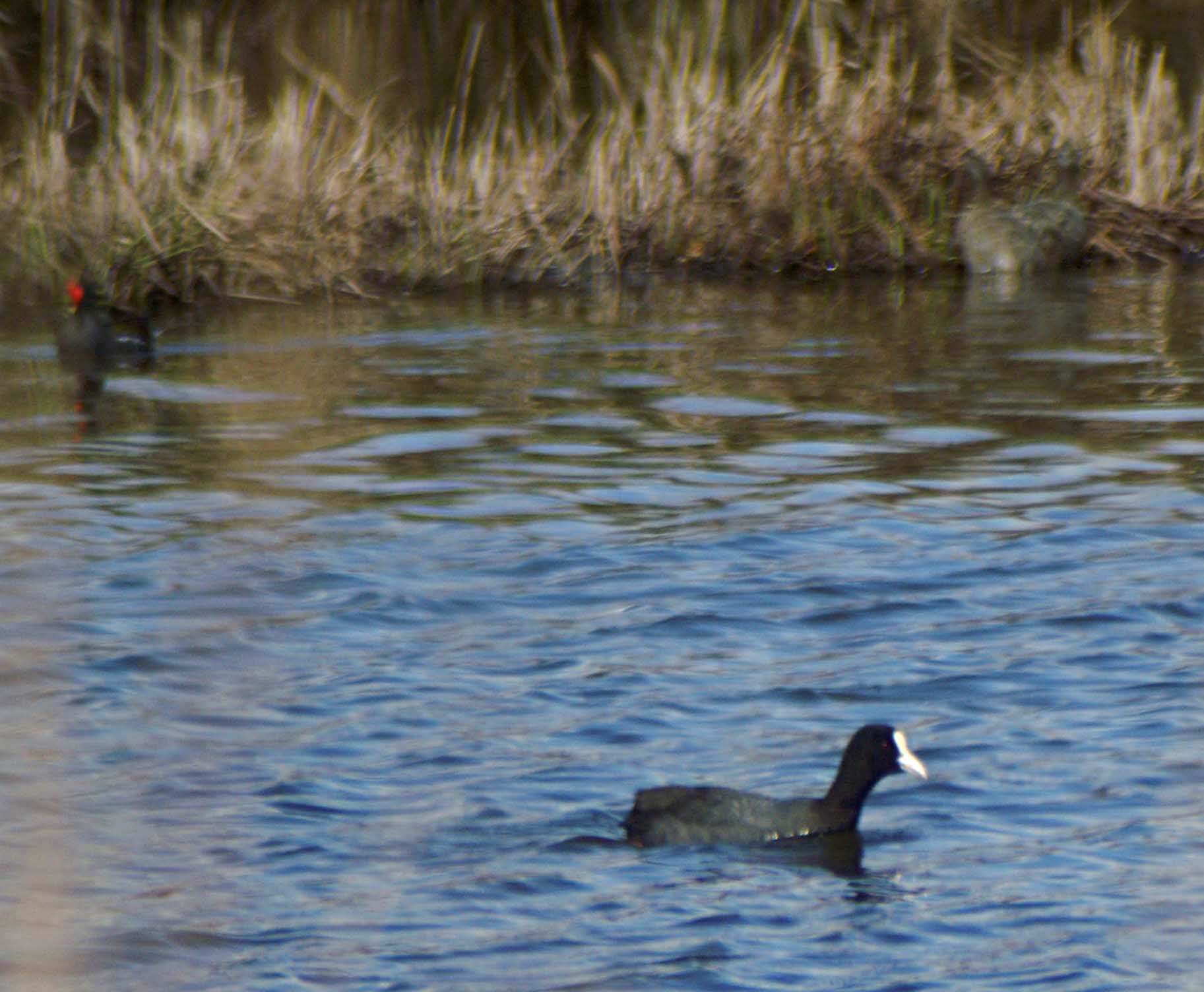
At the Reserve there were butterflies, a Holly Blue, Speckled Wood and Large and Small Whites; there were also Violet Carpenter Bees zooming about. The water level of the lagoon was high, but there was very little to see – a Coot, a Moorhen and a couple of stacks of Terrapins hauled out on the reeds, which are beginning to green up.

The lagoon was quiet, just a Coot, a Moorhen & terrapins to be seen

Arriving at the beach I saw I had it to myself, so I stood for a while gazing out over the unbelievably blue-green toned sea, its surface ruffled slightly by the breeze and with a white – sailed yacht strategically placed on the horizon against the clear blue sky. Peace, quiet and beauty, just for me.

Now this is how the Mediterranean Sea is meant to look!

The beach was littered with bamboo stems from the reeds and of course a sprinkling of oranges brought down by the rivers, as always following stormy weather.

There were Yellow-legged Gulls flying around, some of them circling up so high in the sky that I first though they were something more interesting.

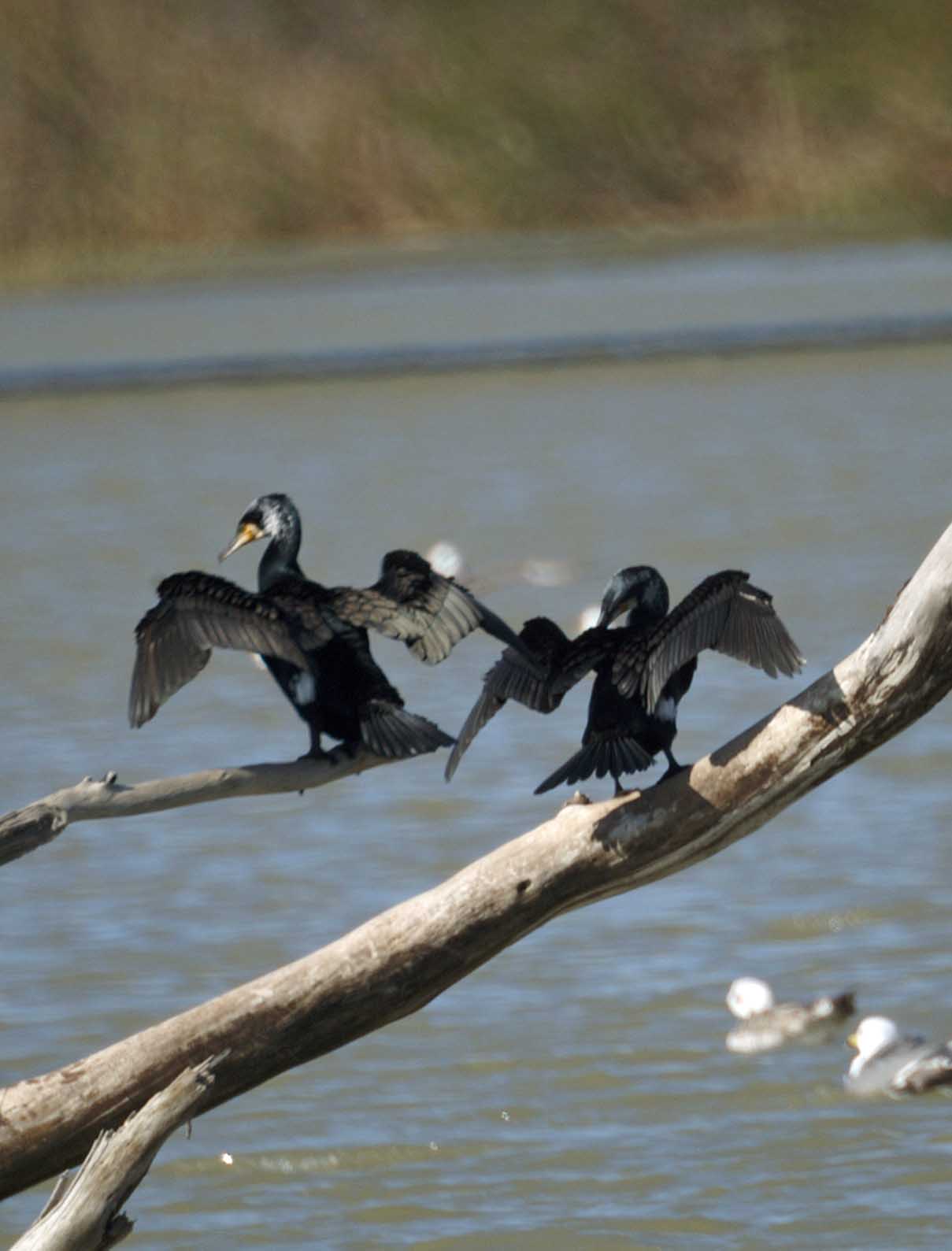
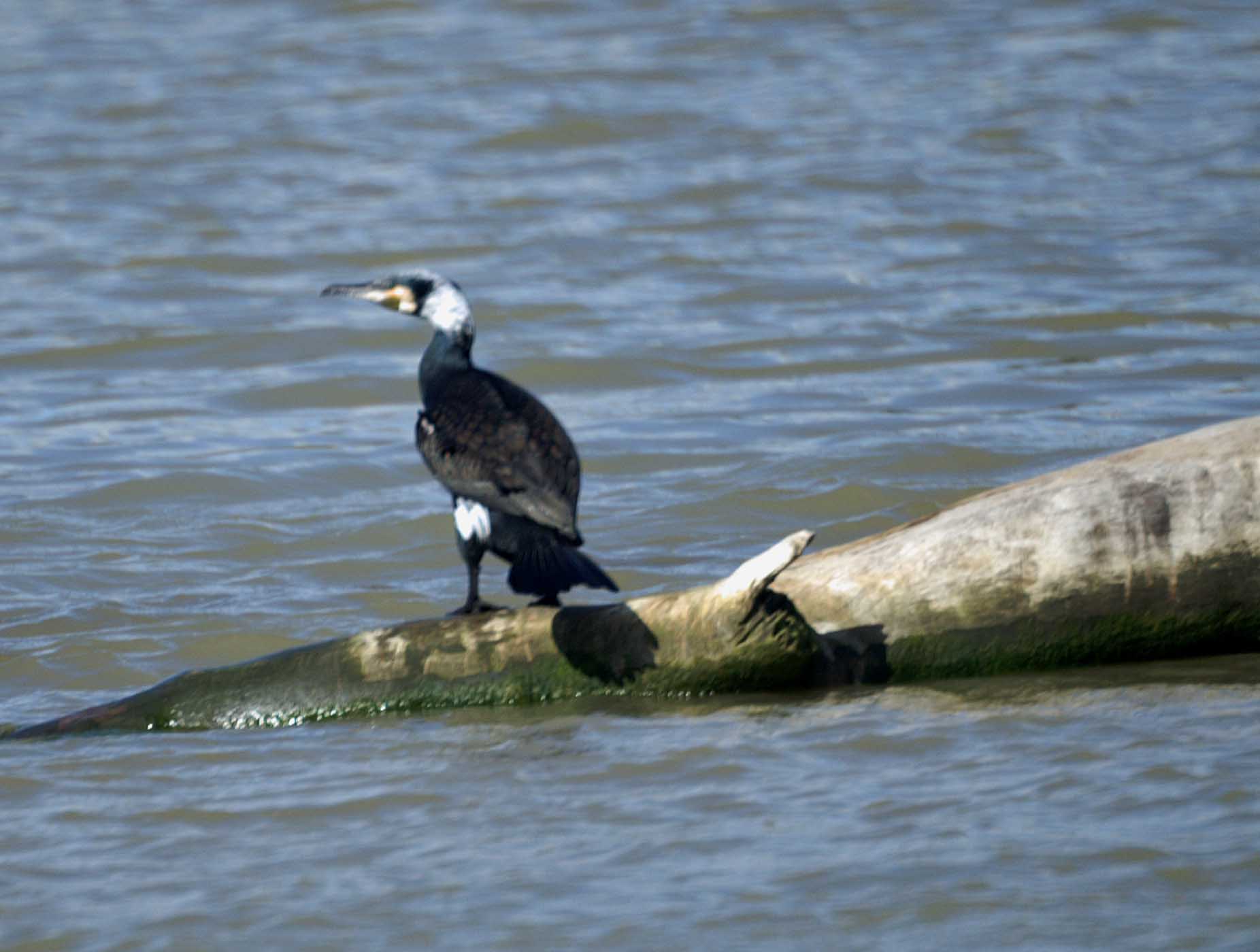
Reaching the Estuary I saw immediately that once again Cormorants were going to be today’s main event.They are looking at their very best now and perched up on the branches of the fallen tree parts, plumage gleaming in the sun, very photogenic.

Two elegantly posed birds, one in almost complete breeding plumage and the other showing signs

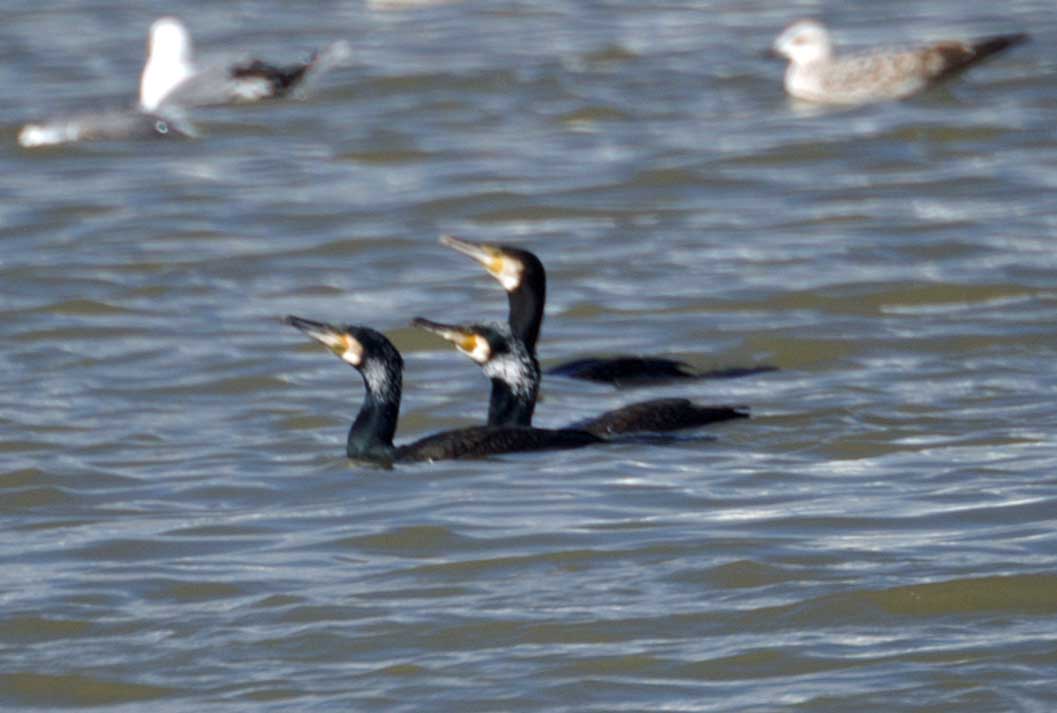
The birds (and I), were disturbed for a while as some over-excited children with a large dog arrived and began splashing about in the water, but the birds soon returned once the children had left. Some of them flew back directly to perch while some landed on the water and sailed in, as the three in the picture below. I love this image and it brings so many possible captions to mind it makes me smile every time I see it. Little things please little minds…

Three Cormorants sailing by, heads up, eyes front

The Cormorant's flight is fast, powerful & purposeful, a striking sight

A glorious adult in full breeding colours


Another view of the glorious bird showing off its glossy purple and green highlights

One last view of the back of the head and those amazing wings

Apart from the Comorants and the mass of gulls there were few other birds around the estuary area. In the tamarisk shrubbery I did see a Great Tit, a couple of House Sparrows and a Crested Lark that flew out to the debris at the side of the water and I heard a Cetti’s Wabler several times. Walking back I caught glimpses of Stonechats that perched briefly on reed stems or the tops of shrubbery, saw a couple of Blackbirds and heard Sardinian Warblers.
 

A Violet Carpenter Bee on the thatch of the hide roof

The last thing I stopped to watch before leaving was a Violet Carpenter bee that was flying around the roof of the hide. This is pretty much always a reliable place to see these lovely giant bees; on a sunny January day last year I arrived here in time to see twenty or so of them around an old decomposing tree stump, probably recently emerged from a nest there.


Impact of heavy rainfall on wading bird numbers

22nd February 2011

Last week we had a lot of rain, high winds and some very dramatic thunderstorms. I’ve commented in recent posts on the noticeable effect this winter’s heavy rains have had on the water levels of the Guadarranque and Barbate reservoirs and a visit to the estuary and lagoon here in Sotogrande at the weekend confirmed there to be high water levels there too. It was interesting then to come across this article in this week’s  ‘Sur in English’ newspaper on the  effects of  the exceptional rainfall levels on the wintering wading bird populations. Although the article quotes numbers of birds and species counted in the neighbouring province of Malaga, I’m sure similar patterns will have occurred here in Cadíz too.

bird numbers in malaga’s wetlands have doubled this year due to heavy rainfall

Figures show an increase in the number of aquatic birds this winter in Malaga province. But at what cost to other species?
22.02.11 – 12:26 – George Prior |Axarquía
Malaga province’s unusually high level of rainfall this winter has meant the numbers of aquatic birds have soared to figures not seen since 1998, according to the Junta de Andalucía.
Remedios Martel, the Junta’s Head of Environment, reports that water levels at the majority of the province’s 28 wetlands are at a ten-year highs and there are more than 60,000 bird wintering in these areas. The census registers 53 different species which is also the highest in a decade.
The investigation shows that more than 60 per cent, or some 37,000 birds, are at Spain’s largest lake in Fuente de la Piedra, including 6,500 flamingos, a particularly high volume for this time of year.
Bob Wright, founder of the association, Birding Axarquía (birdingaxarquia.blogspot.com), says the weather has been a boon for the area’s aquatic birdlife.
“The wet winter we’ve had has certainly attracted water birds. Recently, for example, there were thousands and thousands of Mediterranean gulls on Lake Viñuela; and everything suggests it will be a good season for the breeding pairs of flamingos over the next few weeks too,” explains Bob.
“We’ve registered at least a dozen White-headed Ducks, which are one of Spain’s native, endangered species; it’s a good sign as at one time there were only 11 pairs left in Andalucía. There has also been a significant number of sightings of coots as well as diving birds such as cormorants, as the water is so deep.”
On the flip side, the bird enthusiast warns the picture is not as rosy for other species.
“The Junta de Andalucía is right in its findings that there are significantly more water birds this winter due to heavy rain and high water levels in the marsh and wetlands; but it needs to be stressed that this has also been to the detriment of other species.
“High levels of water in lakes, streams and rivers have meant there are not as many small waders, such as the Common Sandpiper, as there should be, as they feed off small invertebrates and insects in the mud or exposed soil at the edge of a river or lake. Larger waders like storks and herons, are more numerous in comparison this year,” he confirms.
Temperatures
Not only has the winter been wetter, it has also been averagely two degrees colder than the norm. This too has had a knock-on effect for the province’s birds.
“The cooler temperature have prevented many of the migratory birds coming back to this part of Spain,” says Bob Wright.
“We are only just beginning to register species like House Martins and Swallows, which we’ve starting to see again over the last few days; last weekend we also noticed the first Grey Wagtail. But it’s probably still too cold to see swifts just yet though.
“It’s an exciting, if not crucial, time of year for the native and visiting birds of southern Spain. And the latest figures highlight what a huge impact weather patterns have on our wildlife.”

Jay antics

11th February 2011

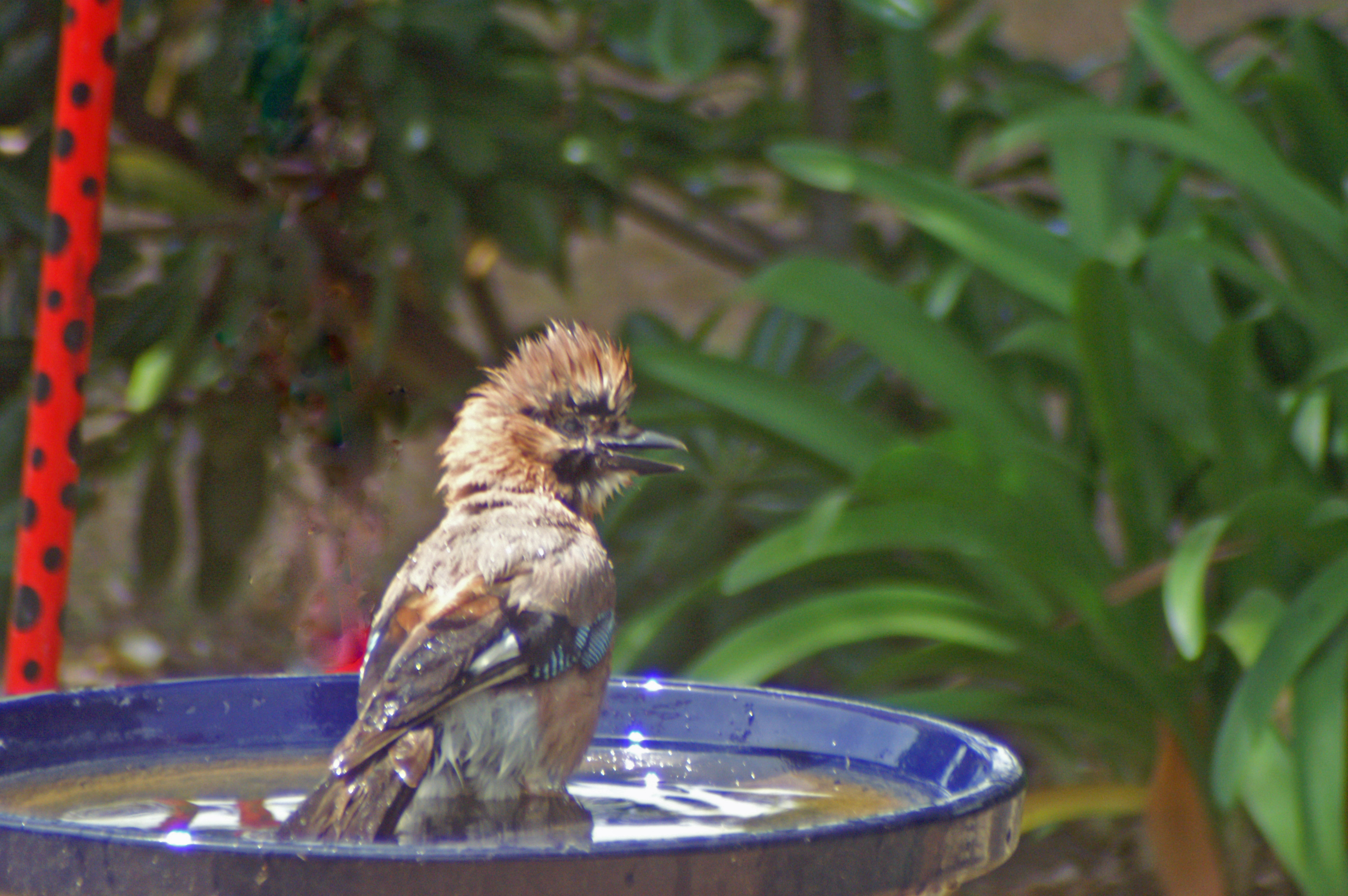
I hear Jays most mornings as they make their way around the neighbouring trees calling noisily to one another, and although I’ve had glimpses of them I haven’t had a really good view of one for ages, so I was very happy to see one call in for a quick drink at the bird bath this morning. They are such beautifully marked birds and are intelligent and full of character, it’s a pity they have the cannibalistic trait that make them a threat to the smaller birds.

A very handsome Jay taking a drink

JAYGarrulus glandarius-SPANISH:  Arrendajo Común

Occasionally a Jay will stay to bathe and turns a visit into a proper spectacle, it is such an amusing sight to behold that I’m putting in some pictures I’ve taken before when I’ve caught them in the act.

A Jay creating a maelstrom

A refreshed Jay with a new punk hairstyle

Tiny Frogs with Big Voices

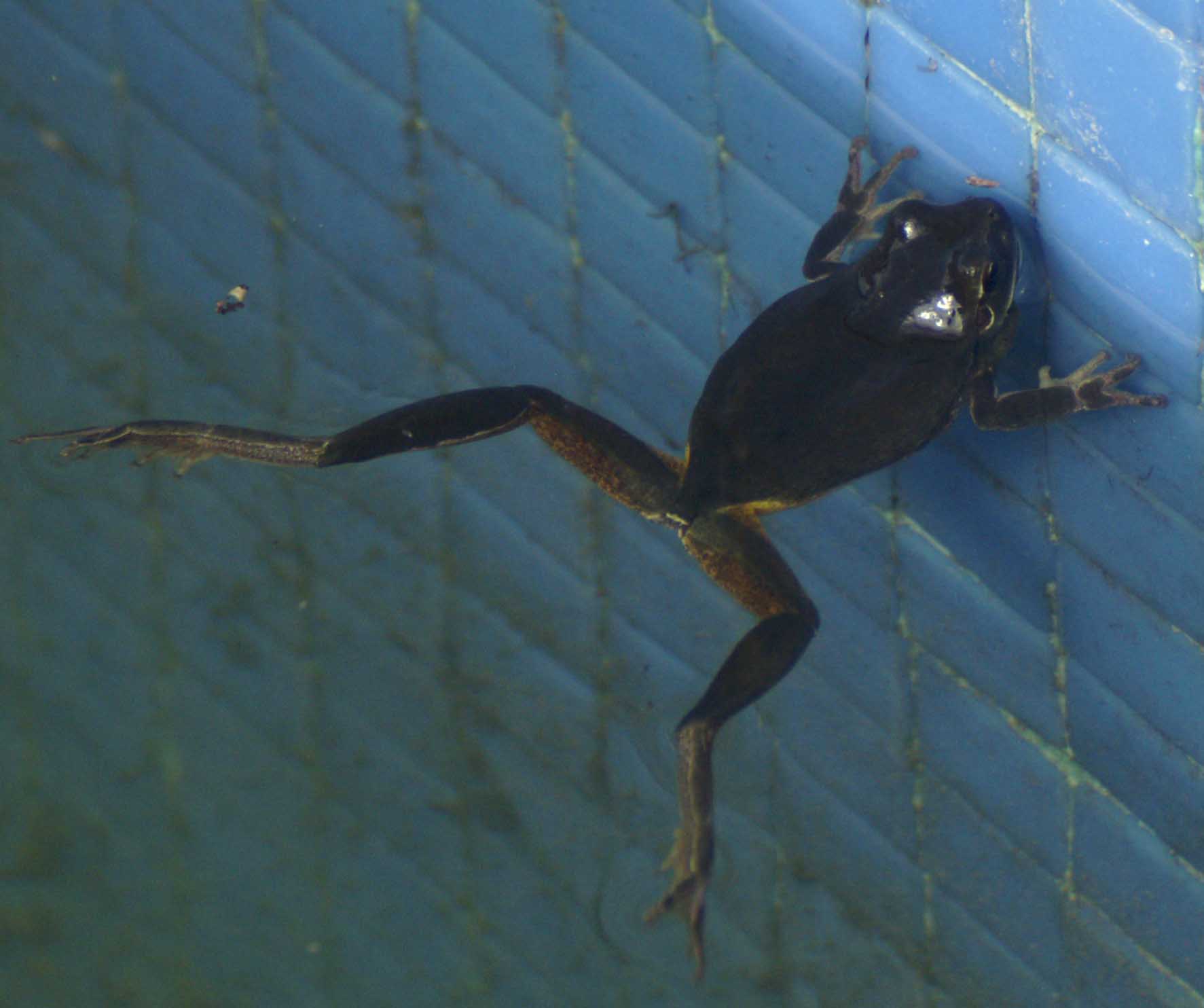
The warmer weather has woken up the local Tree Frogs. In terms of volume of croaking, they put me in mind as the wrens of the amphibian world – both creatures produce an astonishing and disproportionate level of sound from tiny bodies. At random times throughout the days I have heard the frogs calling raucously from their arboreal homes, but now they have become active after dark and calling from the vicinity of our swimming pool, (no chemicals, just two-thirds full of rainwater). I have been out with a torch to try to locate them, but they quickly fall silent and dive back under the water. However, I was out this afternoon rescuing large black beetles that had fallen into the pool and noticed what I first thought was a slimy black dead leaf  stuck against the tiles of the pool wall. It was a tiny, very dark coloured Tree Frog all hunched up and sunbathing. The tiles are a good measure of its size as they are 2cm x 2cm square, and the frog hardly stretches to two of them.

6/2/11-A very dark Tree Frog clinging to the side of the pool

It clung there, trying to ignore me taking his photograph, but after a few minutes of me trying to get a good angle, he plopped back into the water. He didn’t go far and stayed close to the surface, giving me a good view of his surprisingly long legs. As I walked around the pool to get nearer to him I spotted another frog  dive down to the bottom as I got close, so he’s not lonely in that huge space.

Tree frog displaying his surprisingly long legs

Stripeless Tree Frog Hyla meridionalis (Mediterranean Tree Frog)

Attractive little frogs, about 5cm long. Disc-like suckers on tips of fingers and toes enable them to climb through vegetation easily. Mainly nocturnal, but sometimes discovered sitting in full sun on foliage where they rely on their usually-effective camouflage as protection from predators.

The colouration of the frogs varies considerably and may be adapted according to the habitat. I have seen them in a range of shades from very bright to very dark green, but today’s are definitely the darkest to date.

5/3/07 We came upon this very bright green individual when opening up the table-tennis table, where he may have spent the winter. The photo shows the frog at just about his actual size.

It’s still early days in this year’s Tree frog courtship season, but last year’s, that was based around our pool again and reached its height in late March, was so charming and memorable, I feel it’s definitely worth repeating my journal entries here. It’s a good insight into an aspect of Tree Frog behaviour too:

March 2010

Around the middle of the month our normally peaceful evenings began to be disturbed by some very loud croaking sounds coming from the vicinity of our swimming pool (full of clean winter rainwater since the pump broke down last autumn). The sheer volume led us to believe that the sounds must be emanating from big frogs or toads, but each time we ventured outside to try to spot the croakers the noise stopped and we couldn’t see anything at all. This game of hide-and-seek the frog went on for several nights, then one sunny morning I went out with my camera to tour the garden and was amazed to see a tiny, very green frog sitting on top of the rubber duck that used to hold the floating thermometer. It was such a comical sight I was chuckling to myself for ages, especially as I realised that this tiny creature was probably also one of the participators in the nightly croaking contest. From its size and bright all-over green colour this could only be a Tree Frog, so he must have ventured down from his normal habitat and had staked out the pool as his pitch for attracting a mate.

28/3/10-Tree frog dozing on duck’s back

He was not at all phased by my presence or my photographing him and sat perfectly still, dozing in the warm sunshine for most of the afternoon, no doubt conserving energy for a night of raucous activity tonight.

The defender, vocal sac inflated ready to take on his opponent

That evening, when the cacophony had been underway for a while I went outside with a torch, hoping that now I knew where the sound was  coming from, I may be able to spot the frogs in action. Sure enough , there was ‘our’ little male, still sticking close to his duck ‘island’, his vocal sac inflated to such an extent that it almost doubled his size.

As we watched him we heard more croaking approaching us from the direction of the neighbouring cork oak trees, and then a soft ‘plop’ as a challenger dropped into the water on the opposite side of the pool. Shining the light onto the water we picked him out as he swam across the surface towards our little fellow, vocal sack fully inflated and croaking loudly.

28/3/10-The challenger approaching, fully inflated

A couple of hours later I ventured out for a last quick look and discovered the challenger sitting quietly and I thought, distinctly smugly, upon the duck-throne. That was a surprise, but for them the night was young and there was plenty of time for things to change…

28/3/10- A usurper on the throne

I’m looking forward to this year’s forthcoming events!


Balmy weather and bounty for birds

What a difference a week makes; following two weeks of rainy days and general wintry weather, this first week of February has been sunny and warm, with temperatures of 16ºC or more in sheltered spots, and there is a general sense that spring is on the way. The nights are still chilly, but the drier warmer mornings have coaxed the birds from their recent hiding places and they have been much more active and visible. Some have begun to sing regularly, in particular Wrens, Blue Tits and Serins. Thursday morning was quite magical, the first birds I heard were Jays squawking as they made their way through the cork oaks, and my first sighting was of 3 lovely Goldfinches feeding  on weed seeds and Blue Tits, one exploring the nooks, crannies and plants on the terrace, all the while keeping up contact with another nearby. The regular Blackbirds were about on the grass and a Short-toed Treecreeper arrived to scrutinize the trunks of some of the palm trees.

Goldfinch feeding on the seeds of groundsel

A Blue Tit in a sunny spot in a Cork Oak tree

A Short-toed Treecreeper exploring a palm tree trunk

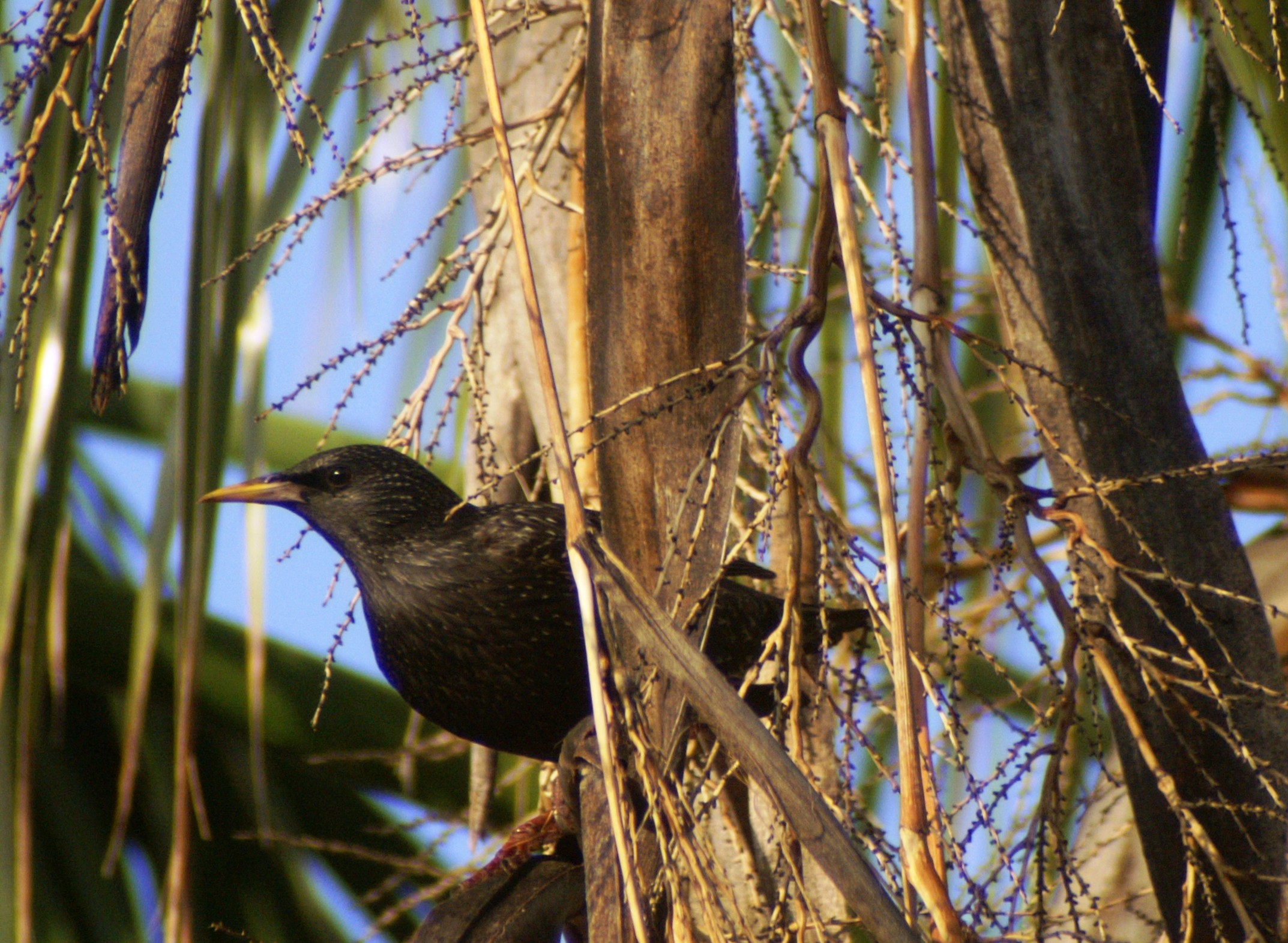
I could hear Spotless Starlings whistling and calling tunefully from high up in the palm trees at the back of the house and watched a Wren, first singing from various spots along the top of the garden wall, then poking about in the foliage growing against it. A very colourful Greenfinch appeared briefly on the fig tree; I haven’t seen one for ages.

Spotless Starling - (this is a young one)

A Wren singing from a shrub growing against the garden wall

Short-toed Treecreeper taking a drink or perhaps looking for insects

From the kitchen window I saw a pair of Blackcaps after the berries on the dama de noche shrub, two Chiffchaffs flitting about, and two female Chaffinches and half a dozen Housesparrows all pecking around on the ground. The Robin was out and about too, again I hadn’t seen one for a while another Treecreeper came in, landed on a yucca tree trunk, then flew across to the birdbath, something I’d not seen one do before. I think it was drinking, but it may have been looking for insects. (My picture was a bit rushed, but the bird was only there for a few seconds and it took me by surprise).

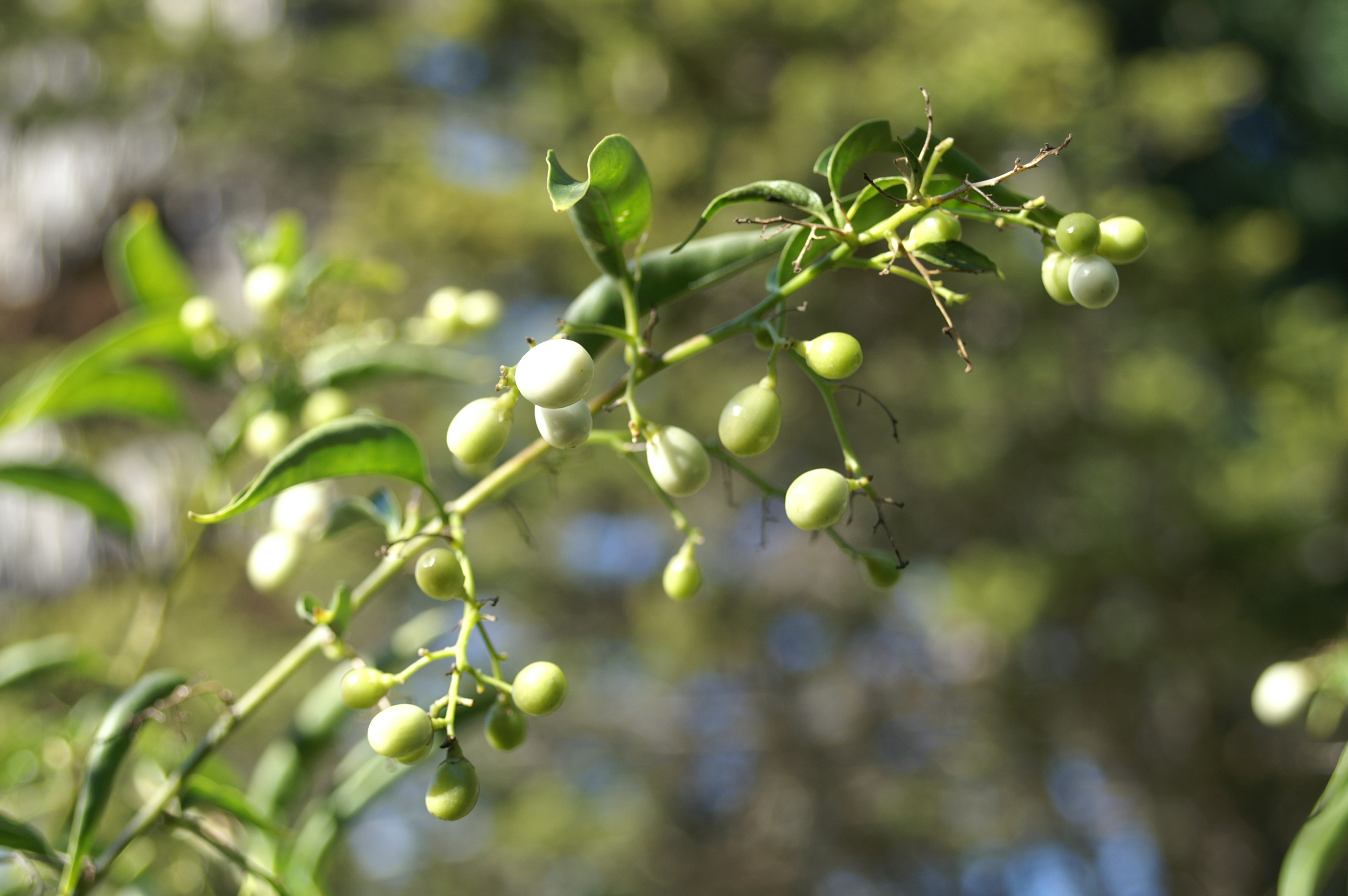
Cultivated garden plant: Night-scented Jessamine– Cestrum nocturnum Spanish: Dama de Noche (Lady of the night)

Berries of Dama de noche

A tropical and semi-tropical member of the Cestrum family, this Mediterranean classic is grown for the amazing night-time perfume that on a hot August night permeates the air (and our house) with its almost-overpowering scent. This is why it is grown, certainly not for its beauty; it is generally a leggy, untidy shrub and the flowers are small, lime green and held in clusters that during the day have no perfume. The small white berries appear in the late-autumn winter, which is why I don’t cut my plant back sooner – I wait until the Blackcaps have enjoyed them.

Blackcap enjoying the berry bounty of the 'dama de noche' shrub