Impact of heavy rainfall on wading bird numbers

22nd February 2011

Last week we had a lot of rain, high winds and some very dramatic thunderstorms. I’ve commented in recent posts on the noticeable effect this winter’s heavy rains have had on the water levels of the Guadarranque and Barbate reservoirs and a visit to the estuary and lagoon here in Sotogrande at the weekend confirmed there to be high water levels there too. It was interesting then to come across this article in this week’s  ‘Sur in English’ newspaper on the  effects of  the exceptional rainfall levels on the wintering wading bird populations. Although the article quotes numbers of birds and species counted in the neighbouring province of Malaga, I’m sure similar patterns will have occurred here in Cadíz too.

bird numbers in malaga’s wetlands have doubled this year due to heavy rainfall

Figures show an increase in the number of aquatic birds this winter in Malaga province. But at what cost to other species?
22.02.11 – 12:26 – George Prior |Axarquía
Malaga province’s unusually high level of rainfall this winter has meant the numbers of aquatic birds have soared to figures not seen since 1998, according to the Junta de Andalucía.
Remedios Martel, the Junta’s Head of Environment, reports that water levels at the majority of the province’s 28 wetlands are at a ten-year highs and there are more than 60,000 bird wintering in these areas. The census registers 53 different species which is also the highest in a decade.
The investigation shows that more than 60 per cent, or some 37,000 birds, are at Spain’s largest lake in Fuente de la Piedra, including 6,500 flamingos, a particularly high volume for this time of year.
Bob Wright, founder of the association, Birding Axarquía (birdingaxarquia.blogspot.com), says the weather has been a boon for the area’s aquatic birdlife.
“The wet winter we’ve had has certainly attracted water birds. Recently, for example, there were thousands and thousands of Mediterranean gulls on Lake Viñuela; and everything suggests it will be a good season for the breeding pairs of flamingos over the next few weeks too,” explains Bob.
“We’ve registered at least a dozen White-headed Ducks, which are one of Spain’s native, endangered species; it’s a good sign as at one time there were only 11 pairs left in Andalucía. There has also been a significant number of sightings of coots as well as diving birds such as cormorants, as the water is so deep.”
On the flip side, the bird enthusiast warns the picture is not as rosy for other species.
“The Junta de Andalucía is right in its findings that there are significantly more water birds this winter due to heavy rain and high water levels in the marsh and wetlands; but it needs to be stressed that this has also been to the detriment of other species.
“High levels of water in lakes, streams and rivers have meant there are not as many small waders, such as the Common Sandpiper, as there should be, as they feed off small invertebrates and insects in the mud or exposed soil at the edge of a river or lake. Larger waders like storks and herons, are more numerous in comparison this year,” he confirms.
Temperatures
Not only has the winter been wetter, it has also been averagely two degrees colder than the norm. This too has had a knock-on effect for the province’s birds.
“The cooler temperature have prevented many of the migratory birds coming back to this part of Spain,” says Bob Wright.
“We are only just beginning to register species like House Martins and Swallows, which we’ve starting to see again over the last few days; last weekend we also noticed the first Grey Wagtail. But it’s probably still too cold to see swifts just yet though.
“It’s an exciting, if not crucial, time of year for the native and visiting birds of southern Spain. And the latest figures highlight what a huge impact weather patterns have on our wildlife.”

Are nesting wading birds killing Cork Oak trees?

My Dad mentioned an article he had read recently about birds killing off Cork Oak trees and I meant to research it earlier, but forgot about it. I don’t know what triggered the recollection this morning, but whatever it was led me to find this article on what seems to be an interesting website, new to me, that is produced by the Natural Research Environment Council and titled Planet Earth. The link is http://planetearth.nerc.ac.uk and they invite comments on their articles if you think you know better! It’s an interesting article, although it does make it sound as though all the regions’ Cork Oaks are under this threat, rather than those growing in the immediate Doñana area.

Bird conservation leads to tree death

14 December 2010, by Tamera Jones

Conservationists have been so successful at protecting endangered birds in a Spanish nature reserve, that the birds are now killing the reserve’s ancient cork oak forest, say scientists. This may mean some colonies will have to be moved to protect the trees, some of which date back to the seventeenth century.

The trees are the last part of a huge cork oak forest which once covered south-western Spain, and provide food for deer, wild boar and small mammals. The endangered Iberian Lynx often also uses old cork oak trees as breeding dens.

Damaged tree

Damaged tree (image: Maria T.Dominguez)

Over the last 40 years scientists had noticed that trees used by wading birds during the nesting season seemed to die more often than trees not used by birds in the Doñana Biological Reserve – a World Heritage site – in south-western Spain. But they couldn’t be sure if firstly the damage could be blamed on birds, and secondly how the birds were damaging the trees. So Dr Luis García from the Instituto de Recursos Naturales y Agrobiología de Sevilla (CSIC), other Spanish scientists and a researcher from the Centre for Ecology & Hydrology decided to find out.

In reserves where bird populations are protected, tree damage can often be blamed on bird populations that have got too big. So Garcia and his team reasoned this could well be happening in the Doñana Biological Reserve.The team analysed the health of 60 ancient cork oak trees, sampled leaves and soil, and worked out how many leaves were covered with poo. They write that, ‘an intense and persistent occupation of trees by colonial wading birds induces large changes in the soil composition and contributes to the decline of the centenarian cork oaks.’

They found that salts in the soil came from the birds’ excrement. Not only does excess salt stunt the trees’ growth, eventually killing them, but the birds break branches, tear off twigs for nests and their droppings are bad for the trees’ leaves. With around 70 nests in any one tree, the researchers found that the nesting birds produce so much poo it upsets the delicate balance of the soil which nurtures the oaks.

The birds’ faeces lead to high concentrations of salts in the soil, to which cork oak trees are particularly sensitive – the salt makes it hard for the trees to absorb enough water. The researchers found that cork oaks which are home to birds like the white stork, the spoonbill and the grey heron are in much worse condition than trees with no nesting birds.

‘If populations of these birds continue to rise, the effect will increase. The source will still be there,’ says Cristina Aponte from the Instituto de Recursos Naturales y Agrobiologia de Sevilla, and co-author of the study published in Biological Conservation. ‘New trees will be used by the colony as the occupied trees die.’

This case of one conservation success leading to the decline of other endangered species isn’t as rare as you might think. Problems crop up when different species have different needs and they live in the same habitat. In Polish forests, cormorants and protected wading birds have harmed ancient trees, elephants destroy endangered plants and trees in parts of South Africa, and the rare chamois in the Pyrenees feeds on the equally endangered larkspur plant.

For managers of the reserve, there is clearly a trade-off between maintaining the area for nesting birds and preserving the ancient cork oak forests. One solution to the problem would be to relocate the colony to a region where the trees aren’t as valuable or rare. But the size of the colonies could make relocation challenging.

As the climate changes, warmer temperatures could bring further problems.

‘Increased water-stress under climate change could exacerbate the problem, because trees won’t be able to get the water they need,’ explains Aponte.

Around 95 per cent of the cork oak forest in south-western Spain was devastated by human exploitation between the seventeenth and twentieth centuries. But remaining trees were kept for producing cork, and to support cattle and game.

Now wading birds nest in the trees from February to July, with colony sizes varying from year to year from 150 to 13,000 pairs.

Luis V. García, Cristina Ramo, Cristina Aponte, Adela Moreno, María T. Domínguez, Lorena Gómez-Aparicio, Ramón Redondo, Teodoro Marañón, Protected wading bird species threaten relict centenarian cork oaks in a Mediterranean Biosphere Reserve: A conservation management conflict, Biological Conservation (2010), published online 3 December 2010, doi:10.1016/j.biocon.2010.11.007

Common Cranes and so much more at La Janda

12 February 2011

The first GONHS outing of this year took us to La Janda, nr. Tarifa, the place to visit during the winter to see large numbers of Common Cranes and White Storks gathered together as well as a myriad of other wintering and passage birds that are attracted to this rich, open agricultural site. This trip was a little different to our usual outings as we were guided by Stephen Daly, a professional guide who knows the locality inside out, is very aware of  what may be around at any given time and where best to find it. He also has privileged access to areas that are on private land and usually closed off, so although many of us on the trip have visited the area many times before, we were able to view parts of the site that were fresh to us.

A large group of members (21 of us), met up with Stephen at the Apollo XI venta, conveniently located a short way from the entrance to the La Janda site. After coffee and breakfast there was a little shuffling around to find everyone a seat in a 4X4, as the tracks around the site are weather-worn and not particularly friendly to ‘normal’ cars. We set off as a convoy of 6 cars, showing number plates from Gibraltar, Spain and the USA which evoked quite a bit of curiosity amongst other road users throughout the day.

We began our birding quest on land belong to el Cortijo de Haba, scanning the ploughed fields either side of a track. It was cold and quite misty there, but there were still birds to be seen, albeit mostly distantly; we  saw our first Common Cranes flying and quite a few Cormorants crossing back and forth. There were Storks, Cattle and Little Egrets present, a Buzzard hunched up on a distant fence, Red-legged Partridge at the field’s edge, Corn Buntings and Stonechats. We could hear Larks in the bare muddy fields, most likely Crested, but their superb camouflage made them difficult to pick out and although there was movement amongst them flights were low and short and not at all helpful to us.

We drove on to the La Janda site and turned in to be greeted by mist that shrouded the land to either side of us. The first birds we picked out were Lapwings that were flying around despite the reduced visibility that landed in the grassy field to our left.

A damp Cattle Egret stood in the damp mist, shaking out his feathers

The sun, quickly gaining in strength began to burn off the mist and birds began to move around more freely. Perching places are sparse in this part of the site; a sizeable mixed flock of Linnets, Goldfinches & Chaffinches flew into this small bush, with more alighting on the grass stems below to feed on grass seeds.

Birds in a bush-Linnet, Goldfinch & Chaffinch

There was an interesting departure from our usual route at this point; we would have continued driving and made a left turn onto the long main track here, but Stephen had gained permission for us to pass through a post and wire gate to the right, so we left our cars and continued along here on foot.

A spider’s web beaded with water drops sparkled in the sunlight
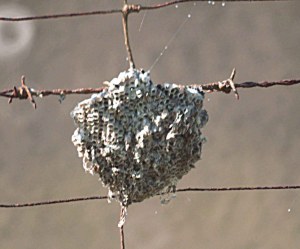
An old wasps nest attached to the wire fence that was probably concealed by reeds or long grass when it was built

The track leads between fields with the river on one side and a dry ditch on the other. There were numerous Chiffchaffs along here amongst the reeds, Stonechats perched up  atop stems and posts and Corn Buntings sang from the wire fence. Stephen had visited the site during the last week when there were large numbers of Snipe and Common Cranes here, but the field was being ploughed this morning, moving the Cranes on. We did however see Meadow Pipits, a Green Sandpiper and more Lapwings and there were still Snipe  in the field opposite, with Calandra Larks. With binoculars it was possible to see very large numbers of Storks gathered at the back of the fields and another perched Buzzard. By the time we turned around to walk back the sun had all but burnt off the mist and it was feeling much warmer. To our delight Calandra Larks were flying up high to sing and to display flights against the clear blue sky.

Calandra Lark, male displaying & singing

Calandra LarkMelanocorypha calandra-SPANISH: Calandria común

Calandra Larks are big, heavily built larks with a large head, stout Greenfinch-like bill and a black patch on neck-side. Characteristic in flight, with dark wings (all black below) with broad white trailing edge. Display sings in circling song flight, often very high up; the long black wings and closed tail give the impression of a much larger bird. A typical Steppe species favouring fertile grasslands, widespread over much of Spain and parts of Portugal, generally below 600m. There has been a noticeable decline in numbers in recent years due to modern agricultural practises. Feeds on seeds, shoots & insects. Calandras are thought to be non-migratory.

A Spoonbill was spotted flying, seeming to be trailing a leg. Back at the bottom of the track we heard Fan-tailed Warblers ‘zitting’ amongst the long grass, heard a Cetti’s Warbler from somewhere by the water and saw a pair of Mallard flying.

Driving along the main track we had some great views, a Swamp Hen (I still prefer Purple Gallinule), Coots, loads more Cattle Egrets, Corn Buntings and Stonechats. There were Little Egrets, Grey Herons, and a distant hovering Kestrel. We stopped to photograph 3 Cranes close by in a field, that turned out to be our best view of the day of Cranes on the ground.
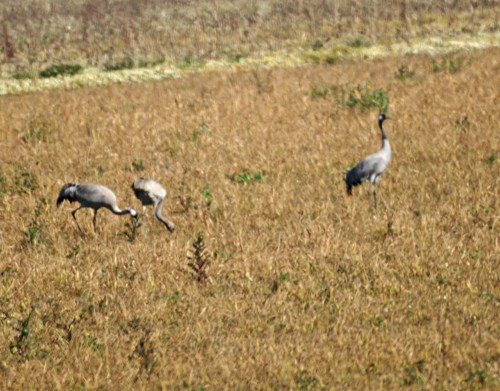
Three Common Cranes, our best view of the day

The convoy came to a halt to admire three beautiful Spoonbills that stood at the edge of a flooded field, settling down to take a rest.

Three Spoonbills on the edge of a distant flooded field

We stopped again a little further on as Golden Plovers, still in winter plumage and incredibly well camouflaged against the bare brown earth were spotted in a field together with yet more Lapwings. Visible only with the aid of a telescope, we may well have passed them by if they had not been pointed out to us.

There were Golden Plovers in the flat bare field beyond the reed-fringed river

Lapwings were everywhere today, flying and feeding on the ground

An elegantly poised Grey Heron alone in a stubble field

We turned right off the main track, crossed the bridge over the river and then drove down the length of straight track lined with small willow trees,  currently bearing catkins. The track surface here was full of potholes to avoid and from our position at the back of the convoy, the only birds we saw were a couple of Chiffchaffs and Goldfinch. We stopped briefly and getting out of the car inadvertently disturbed a bird we were hoping to see – a Great Spotted Cuckoo left the cover of the shrubs and flew low down, close to the hedge back along the way we had just driven.

The rest of our party had stopped a bit further on to watch a well-spotted Black-winged Kite perched at the top of a small tree. The beautiful bird then flew out across the field it had been scanning, hovered Kestrel-like over a spot on the ground then returned to its perch.
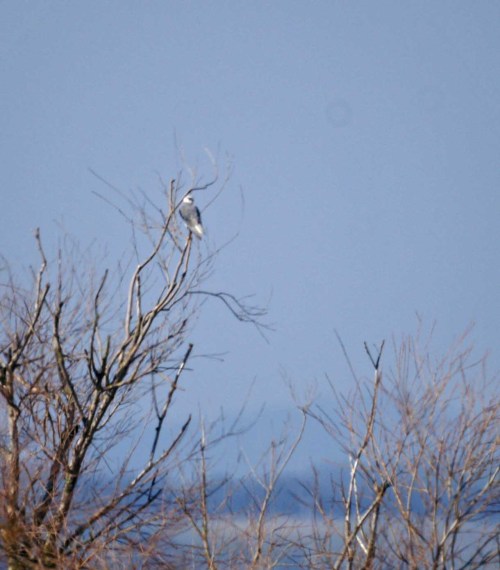
A distant view of a Black-winged Kite

The next spot was of a Little Owl that had been sitting up on one of the huge arms of one of the irrigating contraptions; it was long gone by the time we tail-enders arrived! We did see a Marsh Harrier here though,  quite distant above the hills to our left, but still good to see. Causing a little more excitement a Hen Harrier flew into view on the opposite side of the track, again distant, but it was possible to see it was a female that was then joined by another bird, probably the male. As we drove off we spotted a very tight flock of dark-coloured birds flying away from us that turned out to be Glossy Ibis.

We carried on up to the farm, leaving the cars once again to the scan around the very different terrain here. To one side there is rough pastureland where cows were grazing around clumps of flowering Asphodels; this is part of the Hen Harriers’ territory and they would have been around here when we saw them from lower down.

A huge field full of flowering Asphodels with grazing cattle, cork oaks and distant mountains – this is Hen Harrier territory

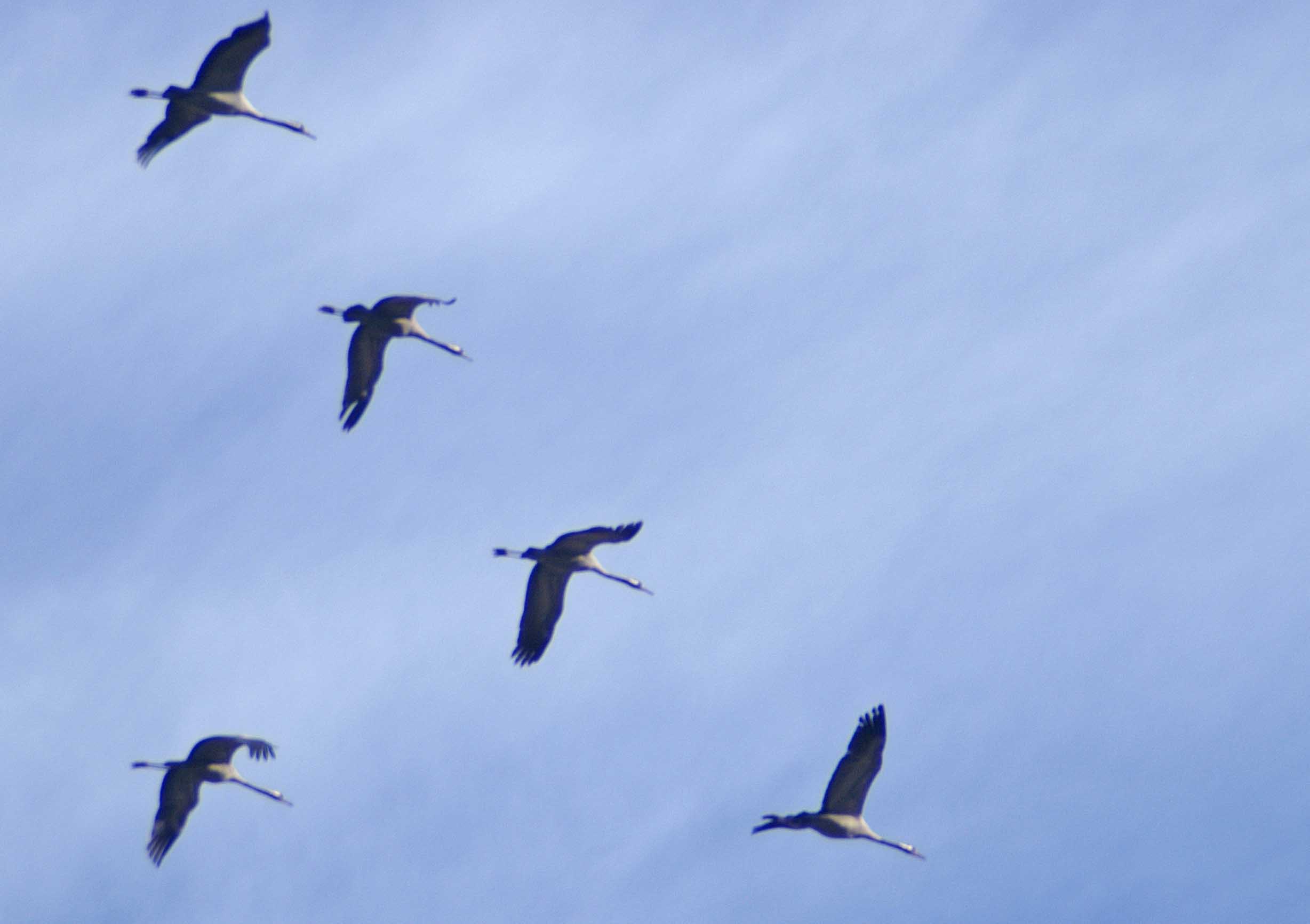
Parked close to a cow shed with a very muddy enclosed area in front of it that was full of curious cattle, the air around us was rather pungently fragranced, which some felt added to the campo atmosphere but which others found strangely offensive (townies!). But, where there are animals there are generally insects and small rodents, therefore birds. There were large numbers of Jackdaws all over the place that Stephen told us nest on the rock faces of a local quarry, and a little crowd of Chiffchaffs that were perching in the squares formed by a wire fence surrounded by yellow mustard-type flowers, diving out acrobatically to chase flies. A single Barn Swallow was spotted and a Booted Eagle that was perched up on a telegraph pole pointed out, 2 Buzzards circled, then a Hen Harrier flew in and scanned the area in front of us (pastureland surrounded with olive and cork oak trees and other scrubby vegetation). We heard the distinctive honking of Cranes flying and two separate groups headed straight for us then passed close over our heads. Lovely views of these large, elegant birds.

Cranes flying over our heads

Absorbed by the Cranes we had failed to notice that a huge flock of White Storks had gathered behind us and were beginning to wheel characteristically and drift across above us: a breathtaking display.

Wheeling White Storks

Moving along a short way we stopped again as Stephen spotted a Great Spotted Cuckoo that had been perched but that dropped to the ground, disappearing from view. Somehow someone picked up a Little Owl sitting in a tree above a bramble patch, but I could not see it, sorry.

So, onwards to lunch – which all GONHS outing regulars will know and appreciate is an essential part of the day’s proceedings. Stephen did us proud, guiding us to ‘Cortijo Los Monteros’, which is located on the Medina-Benalup road (km6). We all enjoyed our choices from the tasty and generously portioned, but very reasonably priced 3 course ‘menu del dia’, that we ate seated at a very long table in front of a huge roaring wood fire.

After lunch Stephen was taking us to a nearby reservoir. We stopped en route at a beautiful woodland spot along the road to look out for the rare Spanish Imperial Eagles that nested here for the first time last year, an unexpected event that has caused much excitement.

A cork oak tree reflected in a flower-covered pool which was well-populated with frogs

A lovely healthy-looking cow with a fearsome set of horns and dangly earrings grazed with her calf on the lush grass, guarded by her own personal ‘tick-picker’ (cattle egret).

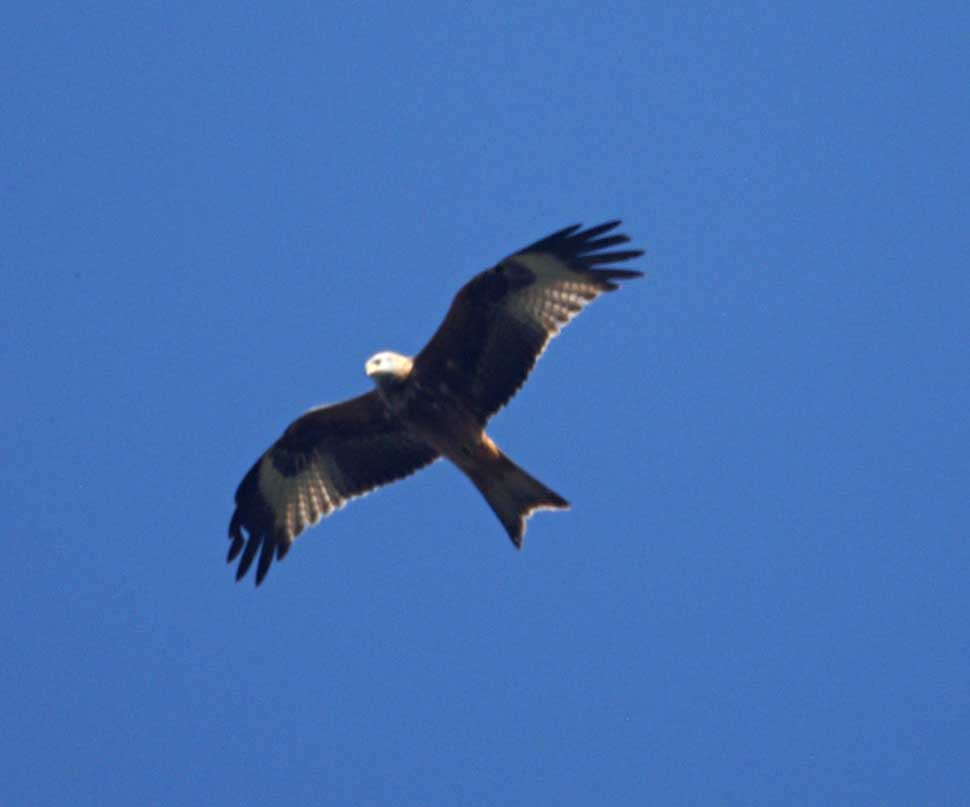
We had no luck with the Imperial Eagles, but we enjoyed the moments of peace and tranquillity of our surroundings and while some of us were content to wander around and take it all in, others were diligently scanning the sky for the elusive raptors. Stephen heard a Green Woodpecker, or Iberian Woodpecker as he referred to it and whistled back to it, hoping to bring it to us, but it could probably see we were quite a crowd and chose not to. More Buzzards and a Sparrowhawk  were spotted and then excitement was aroused by two beautiful Red Kites directly overhead. They seemed as interested in us as we were in them and they spent some time moving around us slowly, whilst peering down.
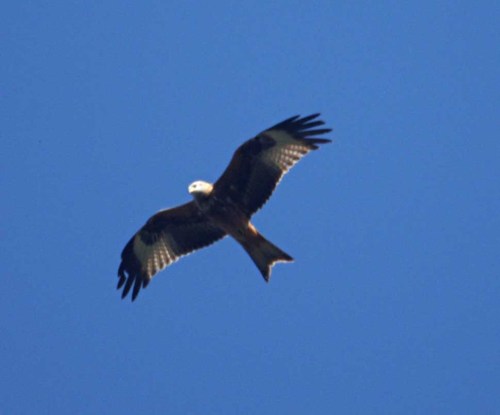
A stunning Red Kite, looking a bit frayed around the primaries peering down at the strange gathering of humans below it

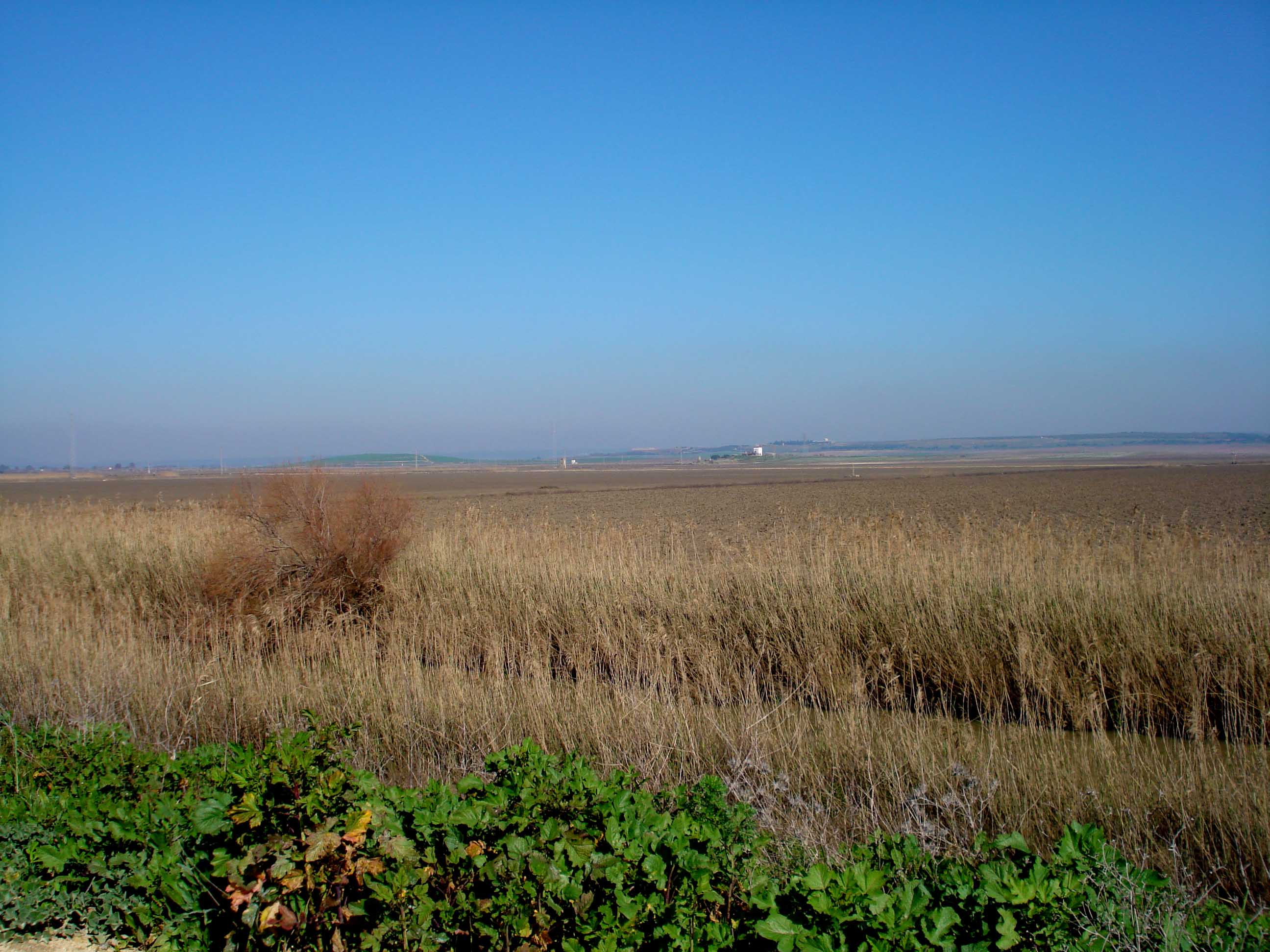
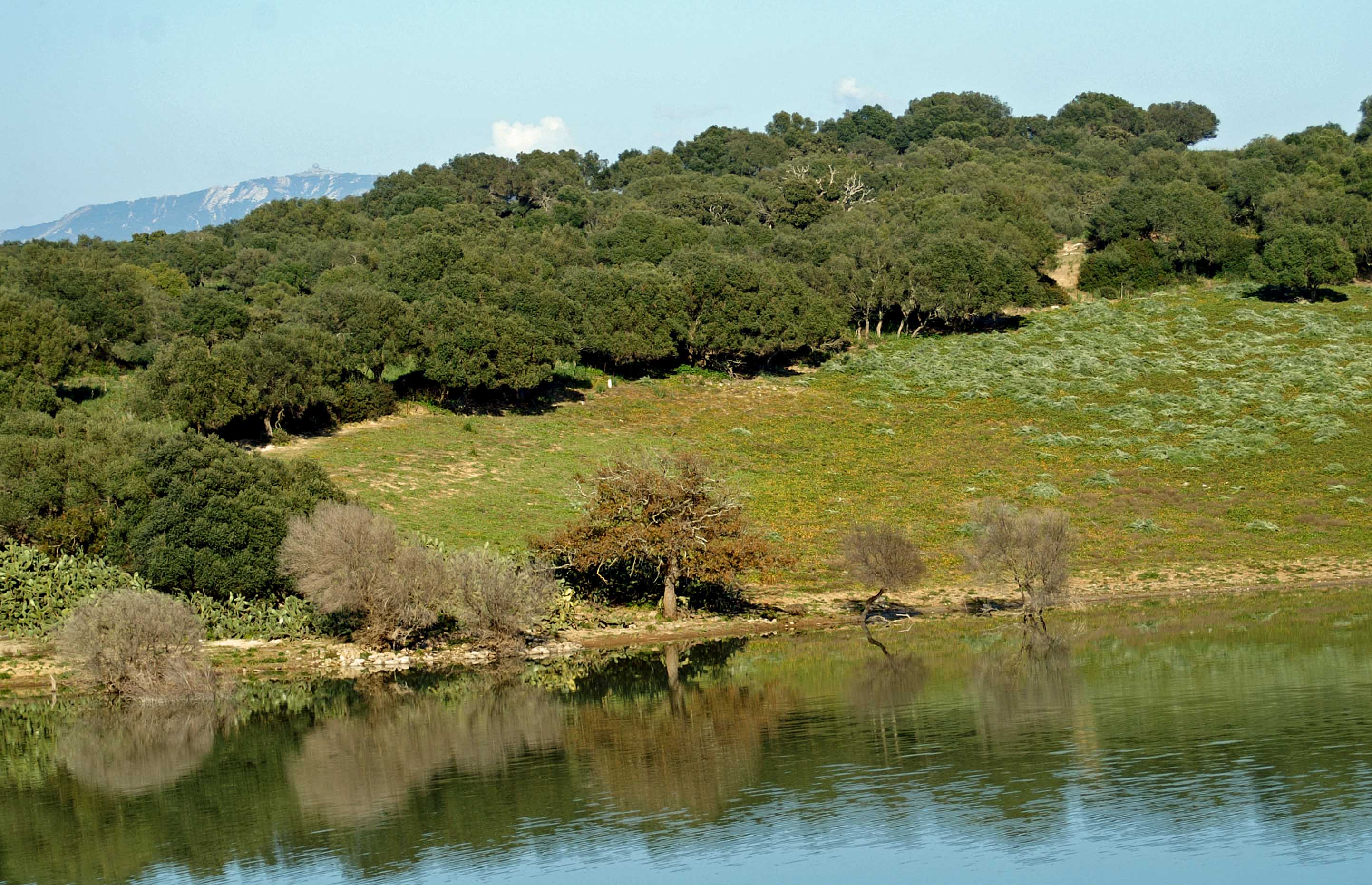
Arriving at the reservoir we got our bearings and realised we were at the far side of the huge expanse of water that lies to the left of the main AP-4 the Algeciras – Sevilla road, that we had all seen and wondered about dozens of times but had no idea how to access. Well now we know – it is the Barbate reservoir constructed in 1992 to prevent the agricultural land at the site we had just visited from flooding. That seems a little ironic as that site was historically a lake that was drained so the land could be put to agricultural use. The reservoir is absolutely huge, stated as covering 2,537 hectares, but now undoubtedly swelled by the recent heavy rainfalls. As with most reservoirs it appears to be a fairly sterile environment for birds, although apparently Osprey have nested there in previous years. There was not much to see here, we could hear Sardinian Warbler amongst the scrub growing on the bank we were standing on and some distant ducks were Mallard and possibly Pintails, but apart from a herd of goats grazing in an idyllic spot on a grassy hill near the water, there were no signs of activity. It’s a lovely spot though with views to Sierra del Algorrobo and their highest peak, el Picacho, the location for several previous GONHS outings.

A view across the reservoir

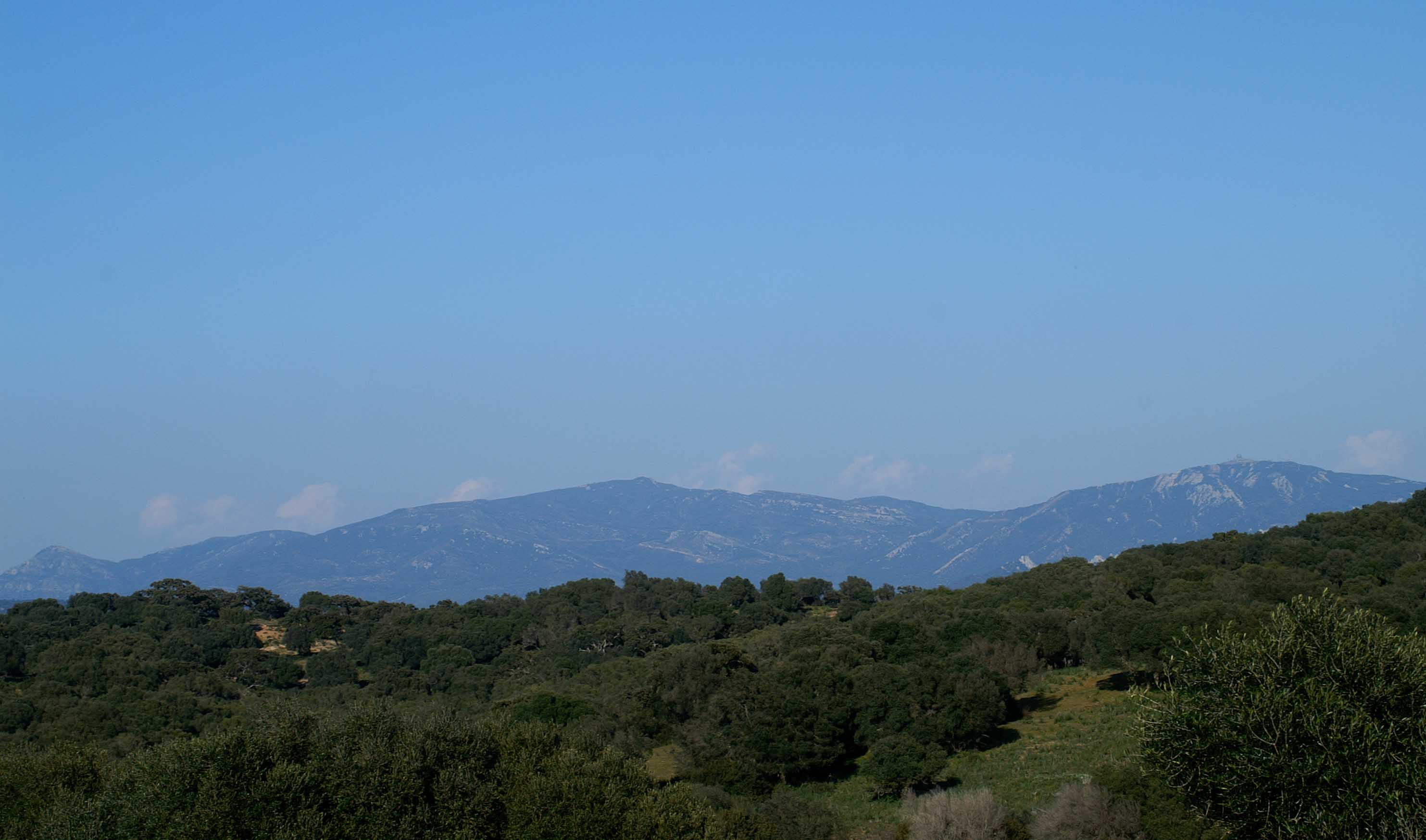
View to el Algorrobo mountains

Bird List for the day: Cormorant Phalacrocorax carbo, Cattle Egret Bubulcus ibis, Little Egret Egretta garzetta, Grey Heron Ardea cinerea, White Stork Ciconia ciconia, Spoonbill Platalea leucorodia, Glossy Ibis Plegadiss falcinellus, Mallard Anas platyrhyncos, Pintail Anas acuta,Red Kite Milvus milvus, Griffon Vulture Gyps fulvus, Hen Harrier Circus cyaneus, Marsh Harrier Circus aeruginosus, Sparrowhawk Accipiter nisus, Buzzard Buteo buteo, Booted Eagle Hieraaetus pennatus,Kestrel Falco tinnunculus, Red-legged Partridge Alectoris rufa, Pheasant Phasianus colchicus, Coot Fulica atra, Swamp Hen (Purple Gallinule Porphyrio porphyrio, Common Crane Grus grus, Golden Plover Pluvialis apricaria, Lapwing Vanellus vanellus, Green Sandpiper Tringa ochropus, Snipe Gallinago gallinago, Black-headed Gull Larus ridibundus, Lesser Black-backed Gull Larus fuscus, Woodpigeon Columba palumbus, Collared Dove Streptopelia decaocto, Great Spotted Cuckoo Clamator glandarius, Little Owl Athene noctua, Green Woodpecker Picus viridis (Iberian race sharpei)(heard), Crested Lark Galerida cristata, Calandra Lark Melanocorypha calandra, Barn Swallow Hirundo rustica, Meadow Pipit Anthus pratensis, Pied(White) Wagtail Motacilla alba, Black Redstart Phoenicurus ochruros, Stonechat Saxicola torquata, Fan-tailed Warbler Cisticola juncidis (heard), Cetti’s Warbler Cettia cetti (heard),Sardinian Warbler Sylvia melanocephala, Chiffchaff Phylloscopus collybita, Spotless Starling Sturnus unicolor, Jackdaw Corvus monedula, House Sparrow Passer domesticus, Chaffinch Fringilla coelebs, Goldfinch Carduelis carduelis, Linnet Carduelis cannabina, Corn Bunting Miliaria calandra (51 species)

Further information & links:

This blog has pages relating to La Janda, including directions for getting there and previous trip reports.

Stephen Daly keeps a photoblog that has loads of  stunning photographs of the many birds he encounters in the area, including Great Spotted Cuckoos, Black-winged Kite and Imperial Eagle:  andalucianguides.blogspot.com

Jay antics

11th February 2011

I hear Jays most mornings as they make their way around the neighbouring trees calling noisily to one another, and although I’ve had glimpses of them I haven’t had a really good view of one for ages, so I was very happy to see one call in for a quick drink at the bird bath this morning. They are such beautifully marked birds and are intelligent and full of character, it’s a pity they have the cannibalistic trait that make them a threat to the smaller birds.

A very handsome Jay taking a drink

JAYGarrulus glandarius-SPANISH:  Arrendajo Común

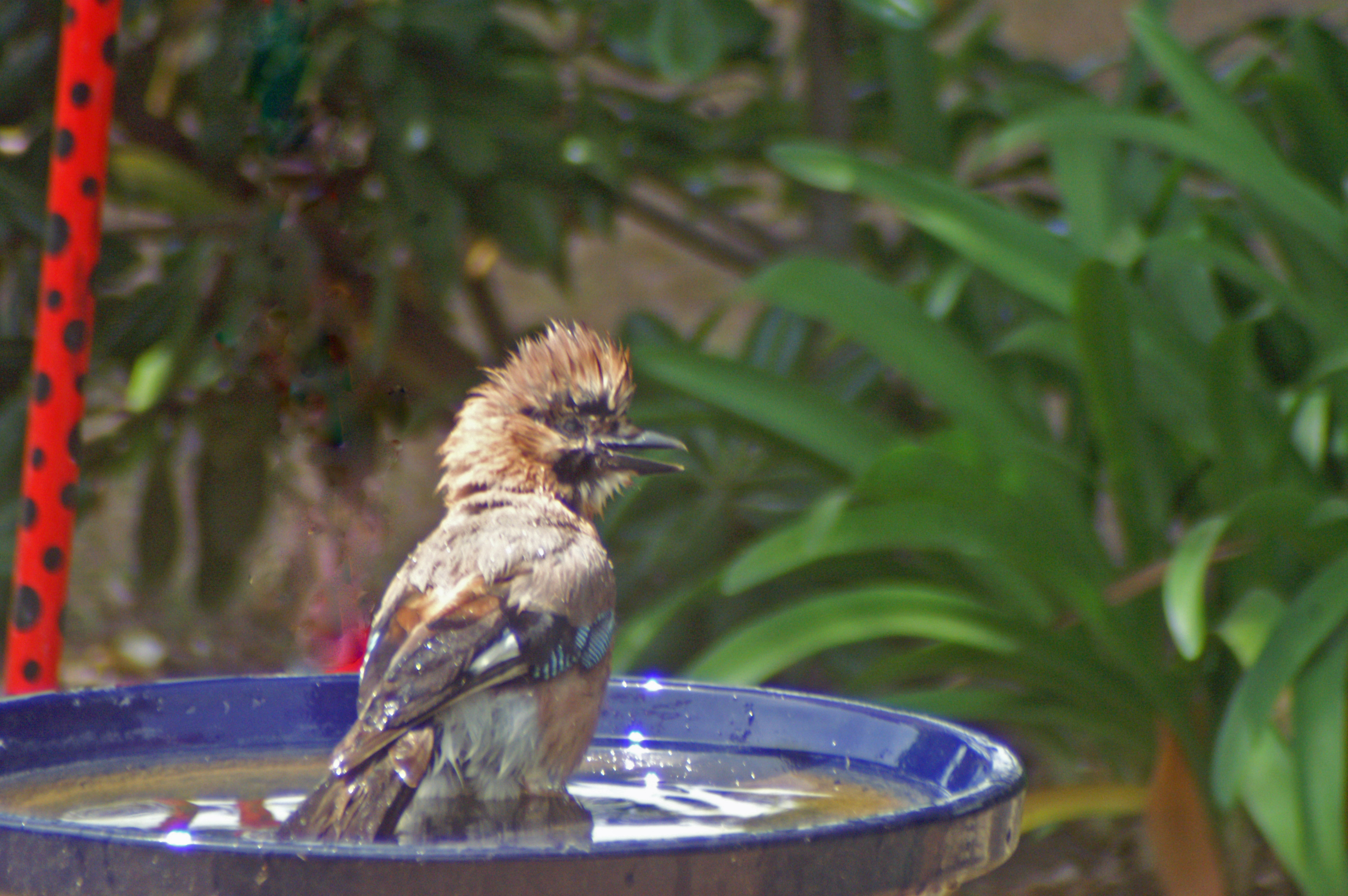
Occasionally a Jay will stay to bathe and turns a visit into a proper spectacle, it is such an amusing sight to behold that I’m putting in some pictures I’ve taken before when I’ve caught them in the act.

A Jay creating a maelstrom

A refreshed Jay with a new punk hairstyle

A hilltop castle,Lesser Kestrels and spring flowers

6 February 2011

In need of a change of scenery and some fresh air we decided to take a drive up to the old town of Castellar this afternoon. From Sotogrande we drove along the scenic A-2100 road to meet the A-405 San Roque – Jimena Rd, turning left towards San Roque then right on the roundabout that is signposted la Jarandilla (CA-9201) and very helpfully also has a pictural sign of a castle . The road passes through cork oak woodland that is on the eastern boundary of the Alcornocales Natural Park. We often walk here in the area I describe as ‘la Almoraima’, but today being a Sunday and a sunny one at that, meant the popular venta was very busy and the car parking area was full, so we carried on past and up the narrow winding mountain road to reach Castellar.
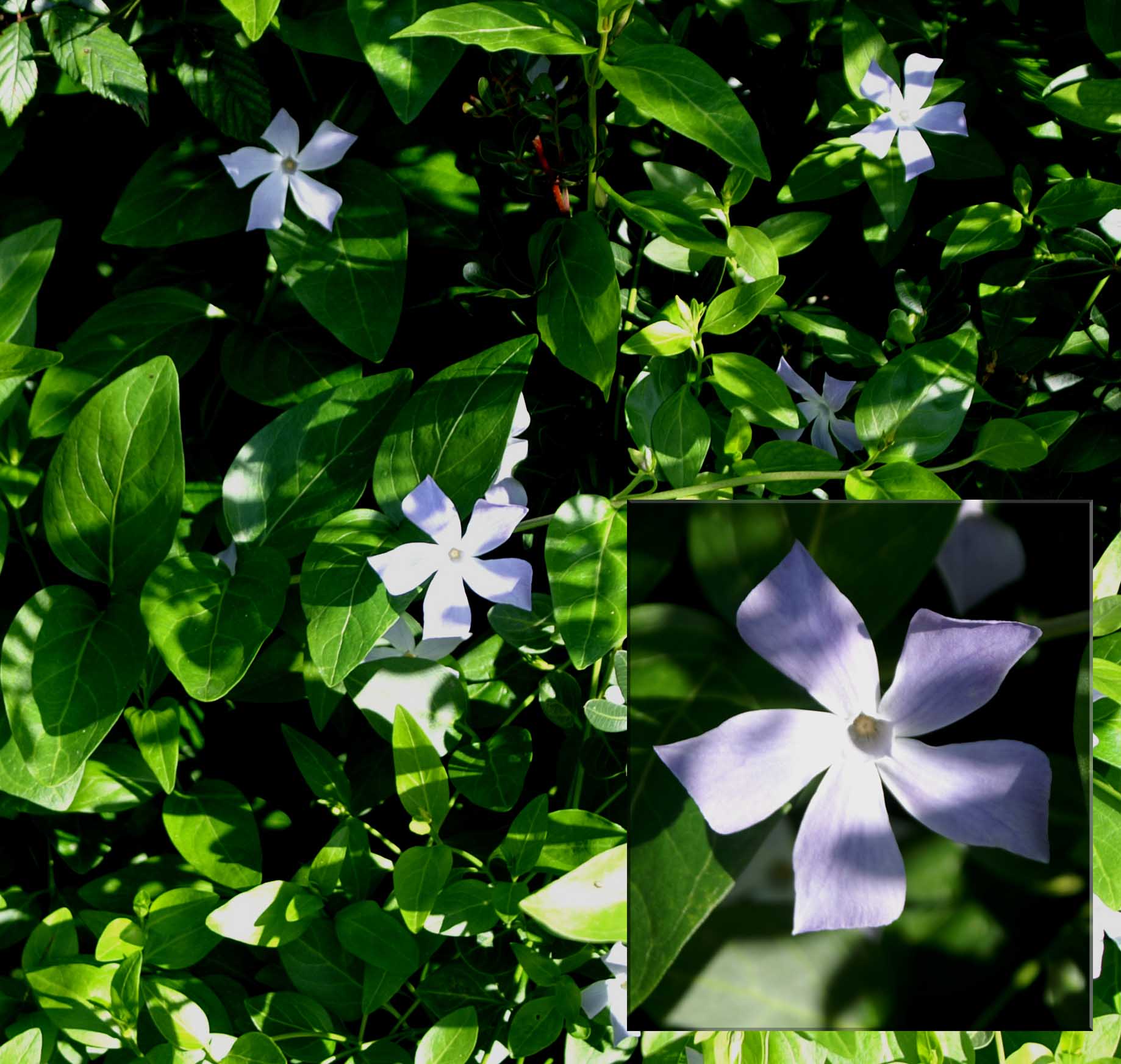
Early spring wildflowers are beginning to colour the roadsides; there are large patches of pretty blue periwinkles and in sheltered spots the sunny yellow flowers of Teline, or Southern Whin as it is also known are out.

6/2/11-Periwinkle-Vinca difformis forms often very large clumps along the roadsides

6/2/11-Teline - Teline monspessulana


A view of Castellar town from the valley below

The views from this road are stunning, particularly to the left as you travel upwards, when you have views of the huge reservoir or embalse de Guarranque, backed by mountains.


View of the reservoir, embalse Guadarranque, from Castellar town wall

Castillo de Castellar was an early 13th century Moorish castle, built high on a hilltop about 15kms inland from Algeciras. The old town of Castellar de la Frontera, which includes the castle, was inhabited but pretty much deserted in the 1970s when the new town Nuevo Castellar de la Frontera was built some 5kms distant. It was subsequently repopulated by a number of people, originating mainly from central and northern Europe, who were seeking an alternative lifestyle.

View through the archway leading into the enclosed old town

Today the walled ‘town’ is dramatically different and is more or less a holiday resort; much cleaner, painted up and in a better state of repair than previously, I think it has also lost much of its character. The old castle has been converted into a smart hotel and many of the old cottages upgraded to chic ‘casas rurales‘ or holiday cottages, so walking around the narrow cobbled alleyways now makes you feel like a bit of an intruder. On the plus side you can go into the hotel, buy a cup of coffee and take it outside to an open terrace that has wonderful views. The place gets busy at the weekends, I think mainly with people who have enjoyed lunch at the venta down below and then driven up to admire the spectacular 360° panorama of scenery spread out beneath from this accessible viewpoint. The views are breathtaking, extending to Gibraltar and beyond to Africa, around to the Sierra Bermeja and the Sierra Ronda and across the reservoir to the rocky peaks beyond. You are still within the boundaries of the Alcornocales Natural Park here, and the surrounding area is quite hilly and rocky, but few of the peaks exceed 350m in height.

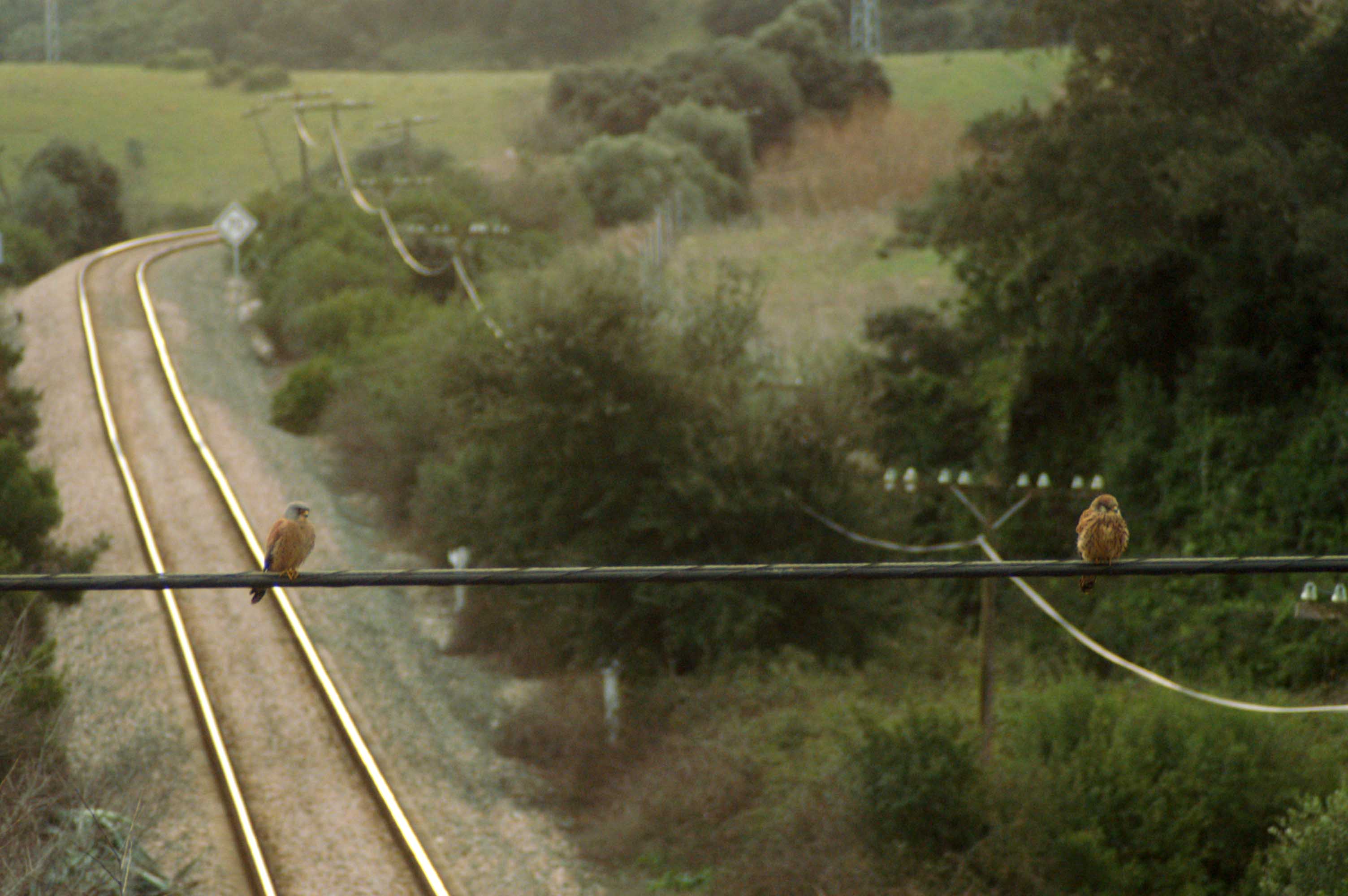
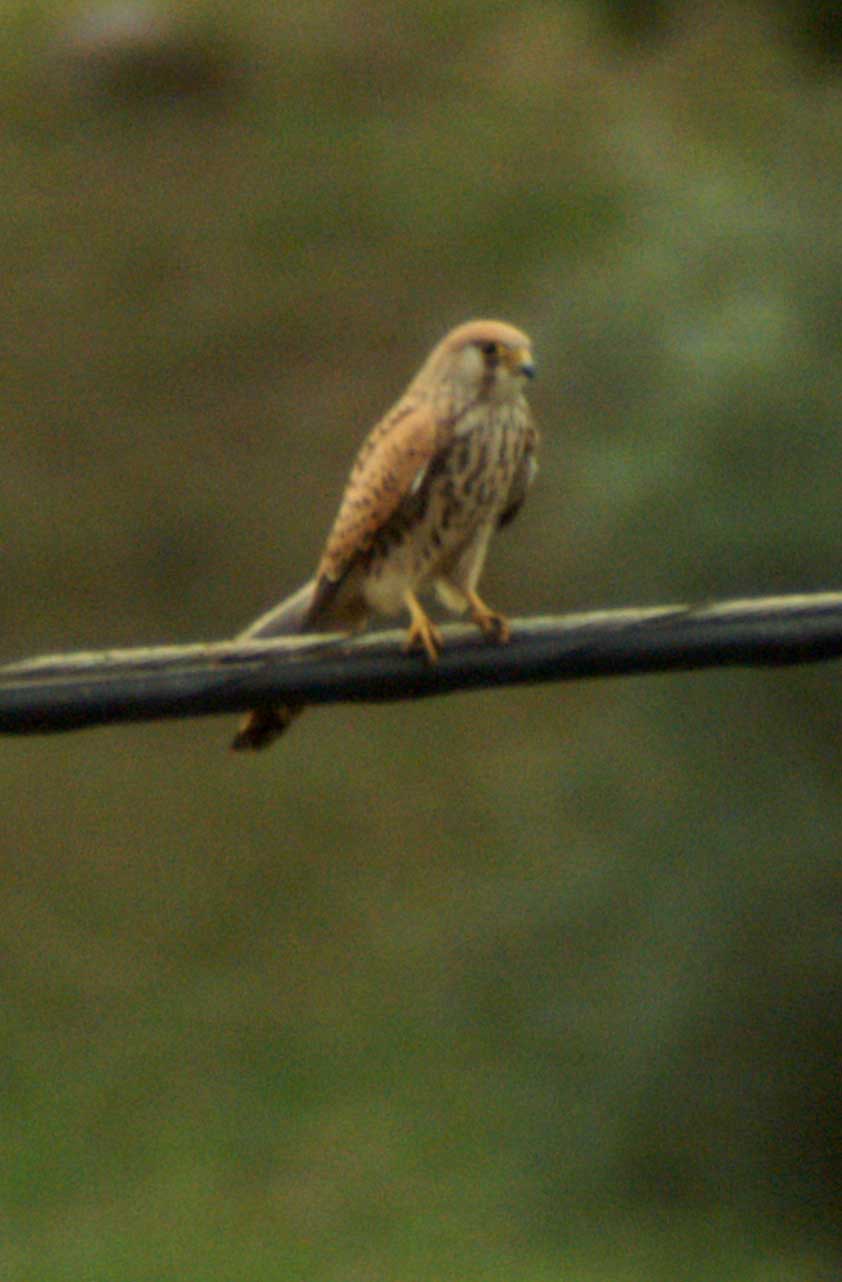
This is often a great place to get close-up views of Griffon Vultures that sometimes may be just a few metres above your head, although there were none to be seen today. We have also had good sightings of Blue Rock Thrush and Crag Martins are resident here but spend the winter months lower down nearer the coast; they’re not back yet, but doubtless will return very soon. In the front wall of the castle (sorry, hotel) are numerous holes, many of which are occupied by pigeons, but some are historically the nesting sites of a small colony of Lesser Kestrels. Prior to the breeding season it is possible to catch sight of these beautiful little raptors around the railway bridge on the A-450 that is located just before the turning to San Enrique and almost adjacent to the bridge that crosses the river Hozgarganta; we believe they must be from the colony that breeds up at the castle. The bridge is a tricky place to stop to  look over its edge as the road is fairly constantly busy, but there is a track to one side that you can pull in to and then walk from. I was lucky one February morning: I left home early to pick up my friend from Jimena and as I was driving a 4 x 4 that is higher up than a ‘normal’ car, I could see over the parapet that two kestrels were sitting on the power cables that cross the railway track. There was very little other traffic, so I managed to stop and take some quick shots from inside the car.


11/2/07-Lesser Kestrels perched above the railway track

Lesser KestrelFalco naumanni SPANISH -Cernícalo Primilla


Lesser Kestrel (m)

The adult male Lesser Kestrel differs from the Common Kestrel in having blue-grey greater secondary coverts, an unmarked rusty-red mantle and in his less patterned underwings.


Lesser Kestrel (female)

The female is very similar to a Common Kestrel female, but has a shorter tail, usually with slightly projecting central feathers and also paler underwings.

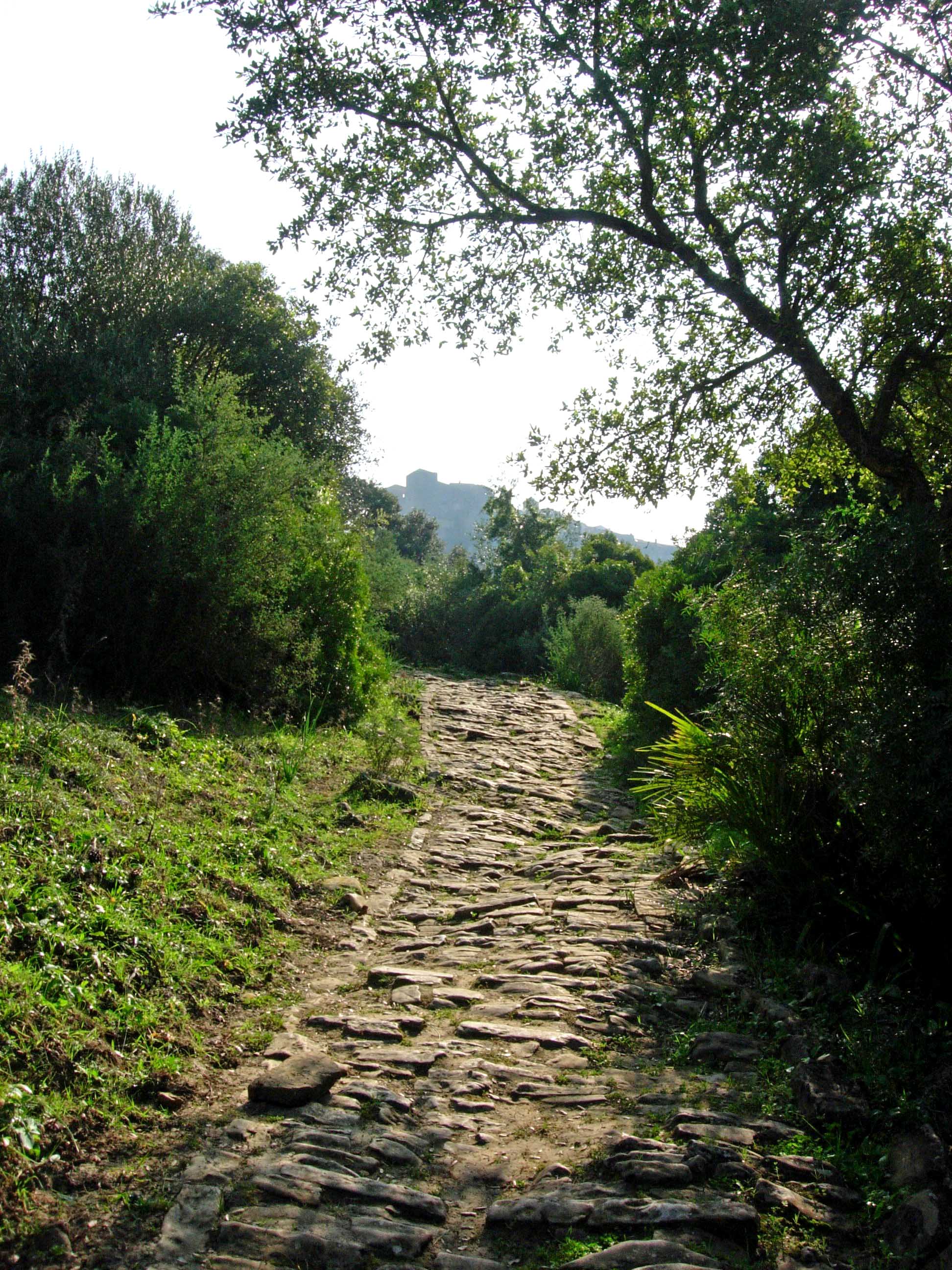
We took the short walk (signposted) from the road along the old cobbled track that leads to an old well. Both sides of the track are vegetated with cork oak trees, wild olive trees, lentisc mastic, dwarf palms and various other ‘scrub’ plants. Every few metres we walked we seemed to disturb a bird, I had glimpses of a Robin, several Sardinian Warblers, a Blackcap and Blue Tits. I heard a Chaffinch singing from a cork oak tree, but couldn’t spot him.

The cobbled track leading to the old well looking upwards towards the castle

Ripe wild olives and the feathery seedheads of December clematis

Andaluz Storksbill - Erodium primulaceum

A little patch of pretty pink Andaluz  Storksbill pushed through on a grassy bank; this is the plant that becomes conspicuous on roadsides where it can form large patches in early spring. It is generally a common plant from lowlands to hills, that thrives in sand, gravel and grassy fields, is found amongst scrub and in light woods.

Walking back up the track we spotted two birds high up above the castle, very pale undersides made my first thought Lesser Kestrels but I couldn’t be sure until we reached the front of the building and they were directly overhead with a third bird, calling distinctively.

6/2/11-Lesser Kestrel - has slightly projecting central tail feathers

Hopefully they will be joined by more and the breeding colony here will continue.

PS – I was reliably informed that the Kestrels were seen flying into at least two of their nest sites just the day before, although they were apparently having a bit of trouble with squatting pigeons.

Tiny Frogs with Big Voices

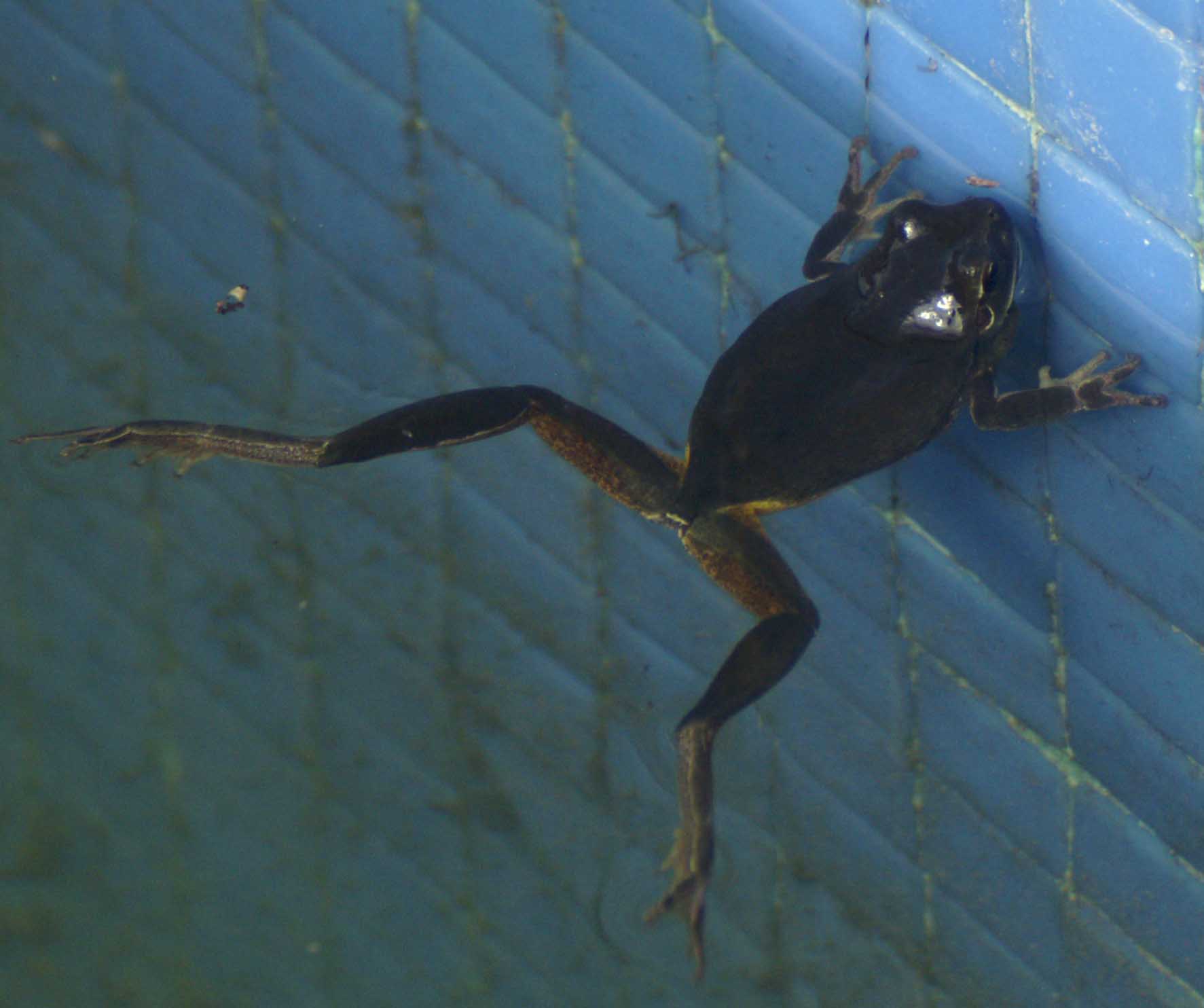
The warmer weather has woken up the local Tree Frogs. In terms of volume of croaking, they put me in mind as the wrens of the amphibian world – both creatures produce an astonishing and disproportionate level of sound from tiny bodies. At random times throughout the days I have heard the frogs calling raucously from their arboreal homes, but now they have become active after dark and calling from the vicinity of our swimming pool, (no chemicals, just two-thirds full of rainwater). I have been out with a torch to try to locate them, but they quickly fall silent and dive back under the water. However, I was out this afternoon rescuing large black beetles that had fallen into the pool and noticed what I first thought was a slimy black dead leaf  stuck against the tiles of the pool wall. It was a tiny, very dark coloured Tree Frog all hunched up and sunbathing. The tiles are a good measure of its size as they are 2cm x 2cm square, and the frog hardly stretches to two of them.

6/2/11-A very dark Tree Frog clinging to the side of the pool

It clung there, trying to ignore me taking his photograph, but after a few minutes of me trying to get a good angle, he plopped back into the water. He didn’t go far and stayed close to the surface, giving me a good view of his surprisingly long legs. As I walked around the pool to get nearer to him I spotted another frog  dive down to the bottom as I got close, so he’s not lonely in that huge space.

Tree frog displaying his surprisingly long legs

Stripeless Tree Frog Hyla meridionalis (Mediterranean Tree Frog)

Attractive little frogs, about 5cm long. Disc-like suckers on tips of fingers and toes enable them to climb through vegetation easily. Mainly nocturnal, but sometimes discovered sitting in full sun on foliage where they rely on their usually-effective camouflage as protection from predators.

The colouration of the frogs varies considerably and may be adapted according to the habitat. I have seen them in a range of shades from very bright to very dark green, but today’s are definitely the darkest to date.

5/3/07 We came upon this very bright green individual when opening up the table-tennis table, where he may have spent the winter. The photo shows the frog at just about his actual size.

It’s still early days in this year’s Tree frog courtship season, but last year’s, that was based around our pool again and reached its height in late March, was so charming and memorable, I feel it’s definitely worth repeating my journal entries here. It’s a good insight into an aspect of Tree Frog behaviour too:

March 2010

Around the middle of the month our normally peaceful evenings began to be disturbed by some very loud croaking sounds coming from the vicinity of our swimming pool (full of clean winter rainwater since the pump broke down last autumn). The sheer volume led us to believe that the sounds must be emanating from big frogs or toads, but each time we ventured outside to try to spot the croakers the noise stopped and we couldn’t see anything at all. This game of hide-and-seek the frog went on for several nights, then one sunny morning I went out with my camera to tour the garden and was amazed to see a tiny, very green frog sitting on top of the rubber duck that used to hold the floating thermometer. It was such a comical sight I was chuckling to myself for ages, especially as I realised that this tiny creature was probably also one of the participators in the nightly croaking contest. From its size and bright all-over green colour this could only be a Tree Frog, so he must have ventured down from his normal habitat and had staked out the pool as his pitch for attracting a mate.

28/3/10-Tree frog dozing on duck’s back

He was not at all phased by my presence or my photographing him and sat perfectly still, dozing in the warm sunshine for most of the afternoon, no doubt conserving energy for a night of raucous activity tonight.

The defender, vocal sac inflated ready to take on his opponent

That evening, when the cacophony had been underway for a while I went outside with a torch, hoping that now I knew where the sound was  coming from, I may be able to spot the frogs in action. Sure enough , there was ‘our’ little male, still sticking close to his duck ‘island’, his vocal sac inflated to such an extent that it almost doubled his size.

As we watched him we heard more croaking approaching us from the direction of the neighbouring cork oak trees, and then a soft ‘plop’ as a challenger dropped into the water on the opposite side of the pool. Shining the light onto the water we picked him out as he swam across the surface towards our little fellow, vocal sack fully inflated and croaking loudly.

28/3/10-The challenger approaching, fully inflated

A couple of hours later I ventured out for a last quick look and discovered the challenger sitting quietly and I thought, distinctly smugly, upon the duck-throne. That was a surprise, but for them the night was young and there was plenty of time for things to change…

28/3/10- A usurper on the throne

I’m looking forward to this year’s forthcoming events!


Balmy weather and bounty for birds

What a difference a week makes; following two weeks of rainy days and general wintry weather, this first week of February has been sunny and warm, with temperatures of 16ºC or more in sheltered spots, and there is a general sense that spring is on the way. The nights are still chilly, but the drier warmer mornings have coaxed the birds from their recent hiding places and they have been much more active and visible. Some have begun to sing regularly, in particular Wrens, Blue Tits and Serins. Thursday morning was quite magical, the first birds I heard were Jays squawking as they made their way through the cork oaks, and my first sighting was of 3 lovely Goldfinches feeding  on weed seeds and Blue Tits, one exploring the nooks, crannies and plants on the terrace, all the while keeping up contact with another nearby. The regular Blackbirds were about on the grass and a Short-toed Treecreeper arrived to scrutinize the trunks of some of the palm trees.

Goldfinch feeding on the seeds of groundsel

A Blue Tit in a sunny spot in a Cork Oak tree

A Short-toed Treecreeper exploring a palm tree trunk

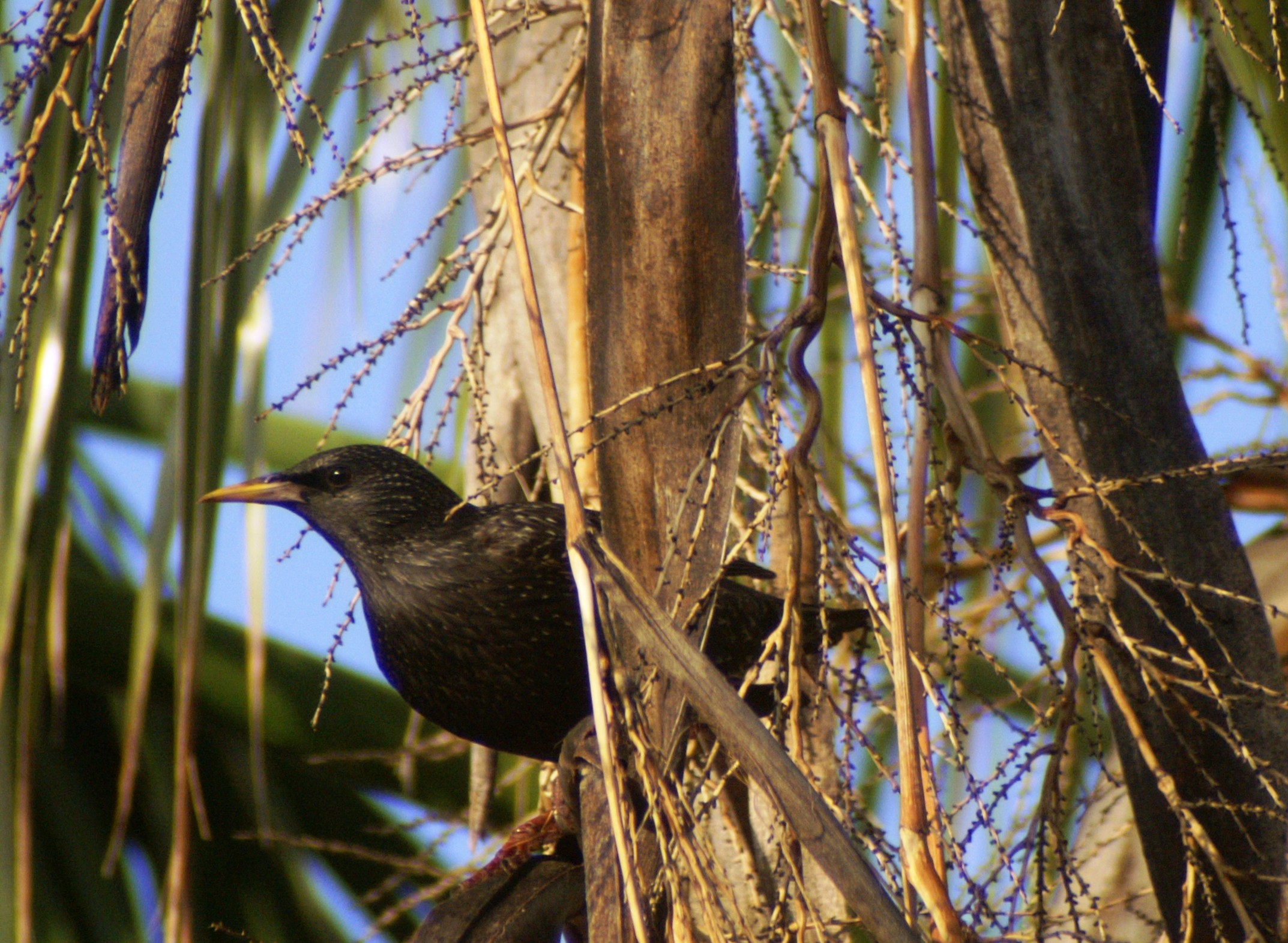
I could hear Spotless Starlings whistling and calling tunefully from high up in the palm trees at the back of the house and watched a Wren, first singing from various spots along the top of the garden wall, then poking about in the foliage growing against it. A very colourful Greenfinch appeared briefly on the fig tree; I haven’t seen one for ages.

Spotless Starling - (this is a young one)

A Wren singing from a shrub growing against the garden wall

Short-toed Treecreeper taking a drink or perhaps looking for insects

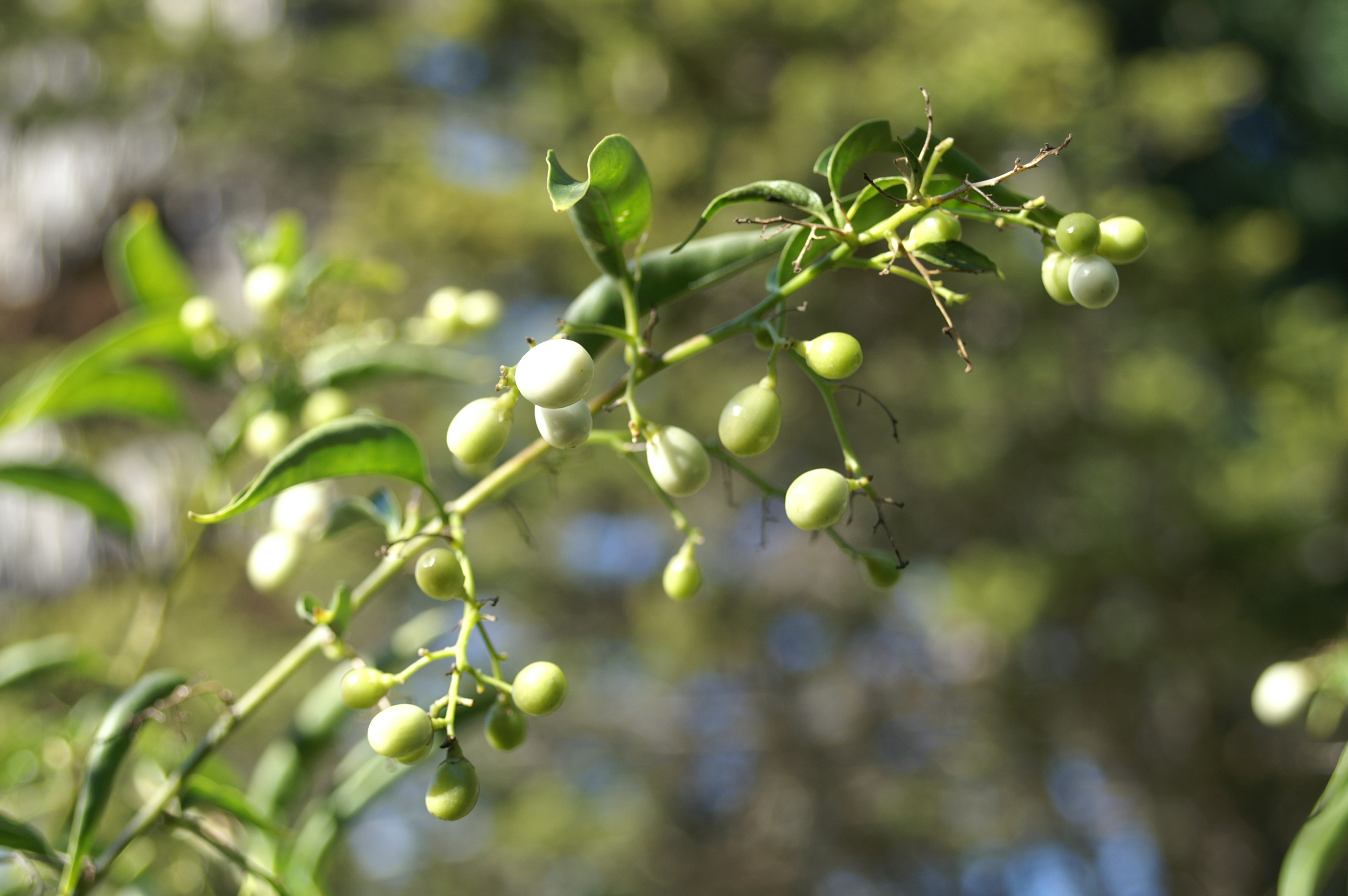
From the kitchen window I saw a pair of Blackcaps after the berries on the dama de noche shrub, two Chiffchaffs flitting about, and two female Chaffinches and half a dozen Housesparrows all pecking around on the ground. The Robin was out and about too, again I hadn’t seen one for a while another Treecreeper came in, landed on a yucca tree trunk, then flew across to the birdbath, something I’d not seen one do before. I think it was drinking, but it may have been looking for insects. (My picture was a bit rushed, but the bird was only there for a few seconds and it took me by surprise).

Cultivated garden plant: Night-scented Jessamine– Cestrum nocturnum Spanish: Dama de Noche (Lady of the night)

Berries of Dama de noche

A tropical and semi-tropical member of the Cestrum family, this Mediterranean classic is grown for the amazing night-time perfume that on a hot August night permeates the air (and our house) with its almost-overpowering scent. This is why it is grown, certainly not for its beauty; it is generally a leggy, untidy shrub and the flowers are small, lime green and held in clusters that during the day have no perfume. The small white berries appear in the late-autumn winter, which is why I don’t cut my plant back sooner – I wait until the Blackcaps have enjoyed them.

Blackcap enjoying the berry bounty of the 'dama de noche' shrub

Watching beautiful birds the easy way

I love to get out and see and photograph wildlife in a wild habitat, but I am so fortunate with the visitors I get to my own garden that I often get better views and insights into behaviour within the confines of my own garden walls. Last February I had some exceptional views of a variety of birds,  without even having to venture out of the house.

Firstly, at the beginning of February, there was the very handsome male Black Redstart. I happened to catch sight of him as I walked past a downstairs window where he was literally a metre or so away, using the leg of an upturned patio table as a perch from which to spy insects that were around on the grass below him. He must have been finding some as he was there for quite some time, making frequent drops to the floor and flying up again.

4/2/10-Black Redstart in the garden

Black Redstarts are resident all over this area throughout the winter months, arriving from their breeding areas in the mountains and more northerly parts around the middle to the end of October and staying until about the third week of March. Every year we have lived here we have enjoyed the company of a female of the species, who until the territory was claimed by a Robin a couple of years ago, would be seen on various perches in the garden close to the house. Now though, as soon as she appears the ever-vigilant Robin chases her away and she is restricted to sneak visits while he attends to business elsewhere. I love to see the Robin of course, but I miss seeing the little Black Redstart perched on the garden furniture, bobbing and quivering her rusty-red tail.

Female Black Redstarts are not as striking as the males, but have a bright and alert presence

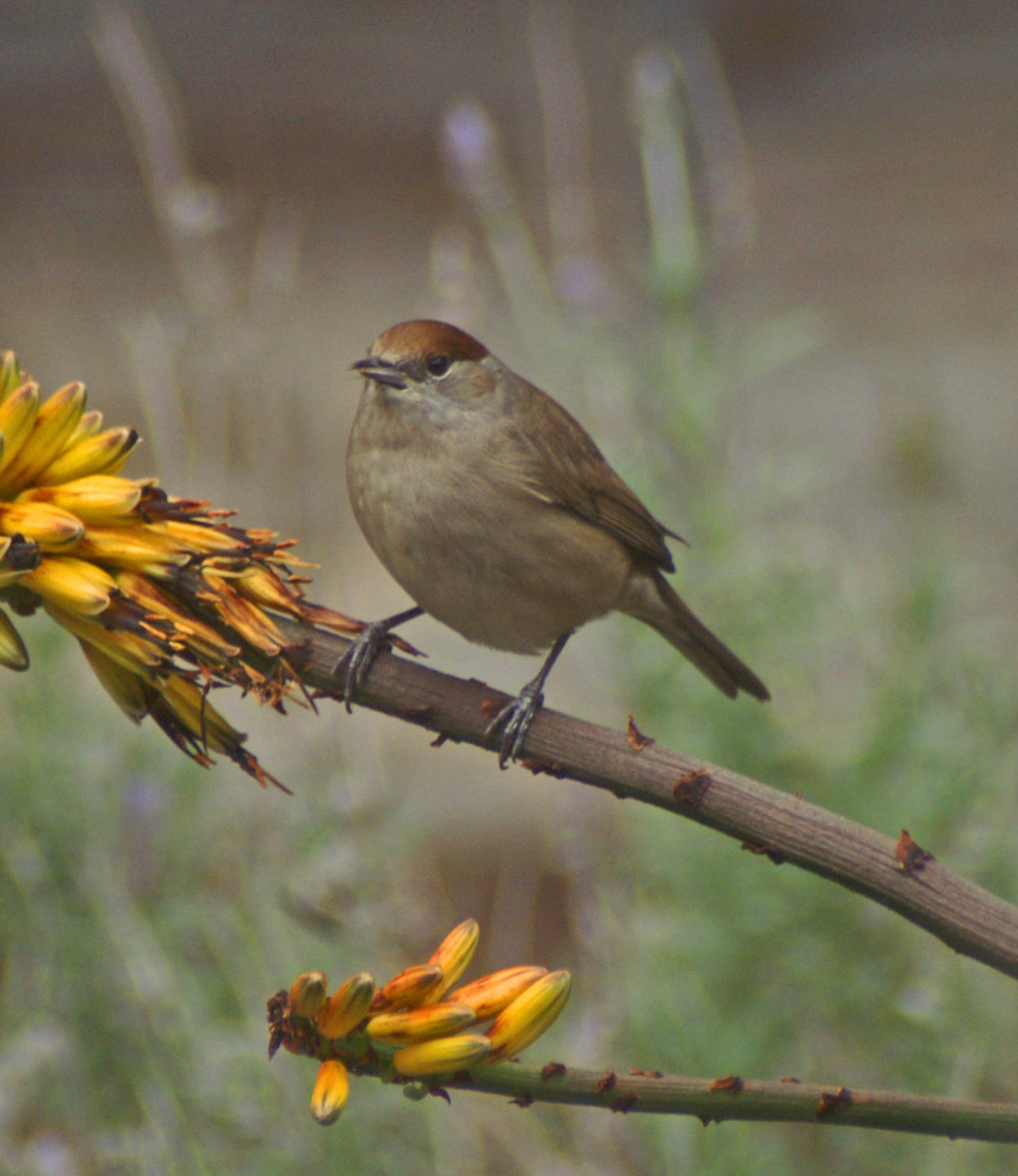
When we moved to Spain from South Wales 81/2 years ago,  I brought with me a smallish aloe cactus in a plant pot. The plant has thrived here outside in the garden and is now quite large, producing its first flower spike in February of last year. It soon attracted the attentions of a female Blackcap who began to visit the flower every day and as the plant is not far from my kitchen window, I had some lovely close views through the window without disturbing her in the least.

20/2/10-Blackcap female probing an aloe flower

Blackcap – Sylvia atricapella SPANISH – Curruca capirotada

Blackcap pairs are often closely bonded and frequently seen together as they forage for food, but this time it took a few days for the male to follow suit and even then he was much more wary and stayed for shorter lengths of time.


28/2/10- The male Blackcap followed a week or so later

Some birds seem to be  strongly attracted to yellow/orange coloured flowers, but I’ve never been sure what they are actually eating; I assume it’s a part of the flower itself, unless they harbour tiny insects. In Wales, every spring House Sparrows always tore my yellow crocuses and berberis flowers to shreds and then returned for the re-hot poker flowers later in the year.

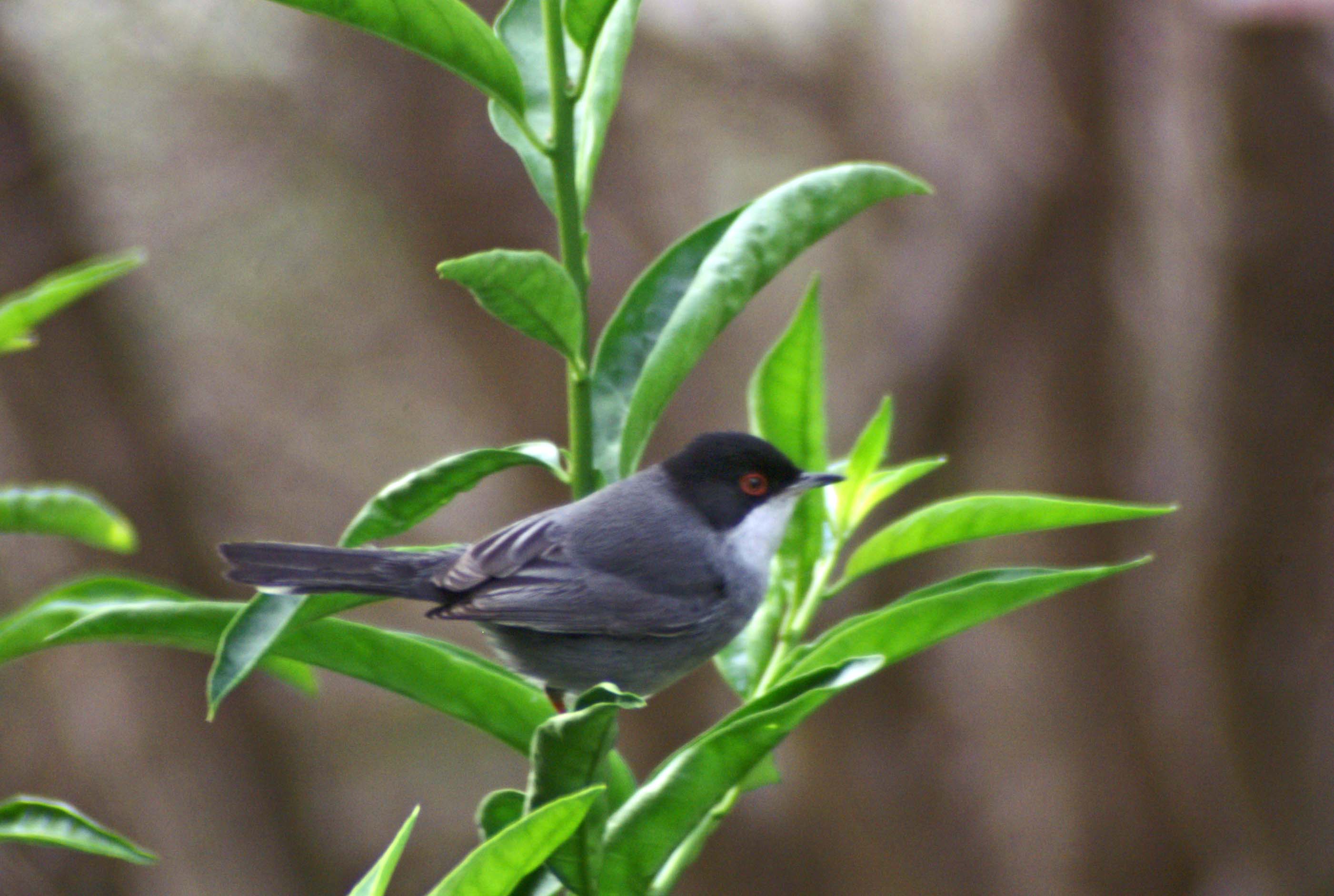
A pair of Sardinian Warblers are also regular visitors to the garden, but usually stay well concealed within the hedges and shrubs. I had some lovely views of the male as he visited the ‘Dama de Noche’ shrub that I can see from the kitchen window. Although his mate was never far away, she preferred to stay out of open view, although she did join him for a bath one morning.

26JAN-Sardinian Warbler (M)

Sardinian Warbler – Sylvia melanocephala  SPANISH -Curruca cabacinegra

My ‘bird bath’ is rather makeshift, being nothing more than an upturned flower pot with its saucer balanced on top, but it serves the required purpose and is very well used. I’ve noticed that small birds often bathe together and prefer quite shallow water.

The Egrets have landed

30th January 2011

LAGUNA de las CAMELLIAS, SOTOGRANDE PORT

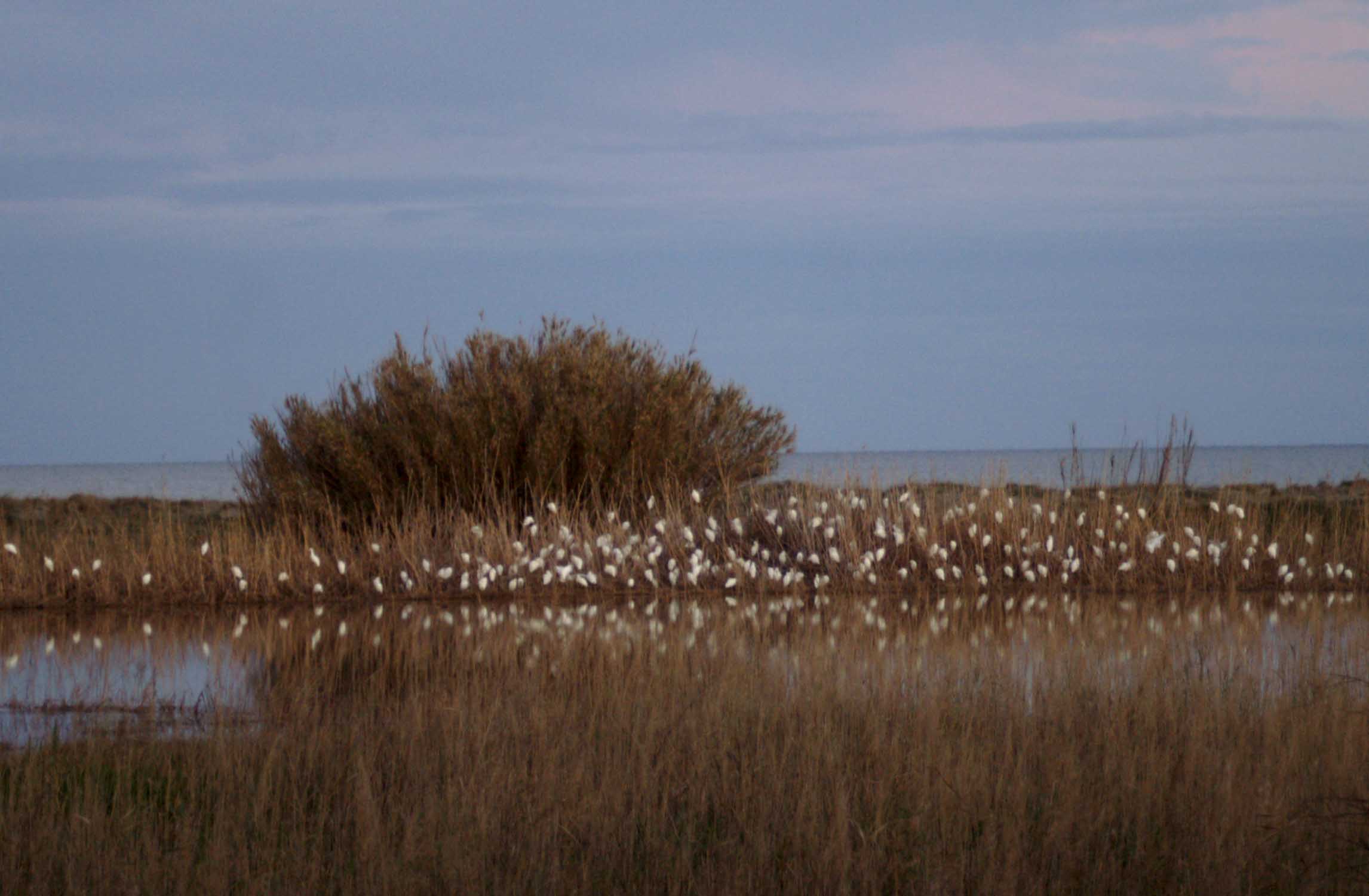
This lagoon, very close to the entrance of Sotogrande Port and backing onto the beach, Sotogrande Playa, is not very big (approx 250x60m), but it is more or less surrounded by reed beds. It is home to a number of resident species of birds that you may or may not see, but one species can be relied upon to provide a regular spectacle: this is the spot chosen by hundreds of Cattle Egrets as their night-time roost.

In the fading light, a White wagtail perched on top of a reed stem in the centre of the lagoon.

I arrived at the lagoon this evening at about 6.15pm as the sun was beginning to go down and tint the sky rose pink. There was not the slightest breath of a breeze, the sea and the surface of the lagoon were almost perfectly flat and the reeds motionless. I heard the calls of Cetti’s Warblers, two of them that seemed to be communicating, saw Chiffchaffs aplenty amongst the reeds,watched White Wagtails dart after flies from perches on reed stems and Crag Martins that skimmed close over the water. But although the light was beginning to fade, there were no Egrets.

A sunlit Cormorant flying to roost

I watched the sky and saw Starlings set off for their roosts, Cormorants in ones and twos passed by hurriedly on their way across to theirs, somewhere upriver and then a single Egret heading my way. It flew in as though to land, but then looped around and flew back in the direction it had come from. Three birds together then did exactly the same thing, then three more. I was baffled by this, wondering if perhaps the water-level, which is very high at the moment, had covered the bank they roost on and forced them to seek alternative accommodation.

Cattle Egret - Bubulcis ibis

Then suddenly they began to arrive in larger groups, flying in quite fast then parachuting down at speed to settle amongst the reeds on the banks of the lagoon like large snowflakes.

A group flying in, legs extended, preparing to drop down to land

The first arrivals were landing in reeds in front of the buildings on the outer edge of the port; although closer to people, this is probably the most sheltered spot. As more arrived, some were slotting amongst those already there while others were spreading further round the bank. In a matter of two minutes the concentration of birds trebled and the noise level increased as the birds jostled for position. I thought back to the birds I had seen earlier and though it possible that they had turned back to wait until a number of birds had settled, seeking the greater safety and security of a large group.

After two or three minutes the covering of birds had begun to thicken - there are about 150 of them in this initial stretch close to the front of buildings and sea wall

After a few minutes of watching I decided to walk a little further around the board-walk to try to find a clearer view and was surprised to discover a second, quite separate roost behind a flooded area of the reed bed that backs directly onto the beach.

A second roost, backing on to the beach

There were a smaller number of birds here, but still about 200-250 individuals.

By 6.50pm the majority of the birds had arrived, although there were still small groups of new arrivals dropping in from the darkening sky

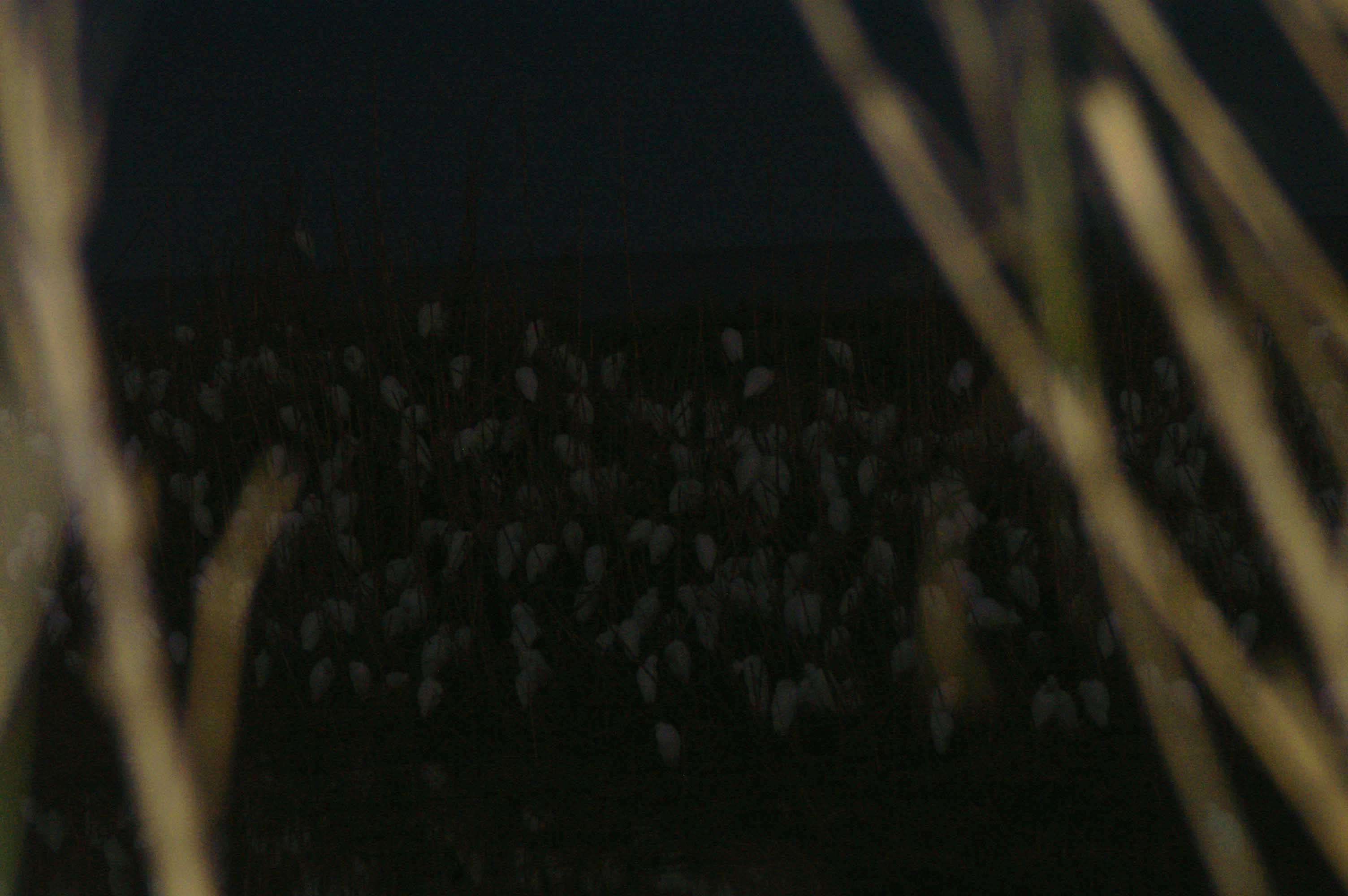
I stayed until it was almost dark and the birds were beginning to settle, although late arrivals set up protests and a few shifts of position. I’m not the best at counting large numbers of birds, but from rough counts from my photographs I would say there were at least five – six hundred birds in the two roosts, maybe even more. I have witnessed the sight on several occasions and it is always one worth making the effort to watch, even when it is as cold as it was last night.

A last picture of birds in the almost-dark


White Storks sitting out the rain

White Storks are a characterful and integral part of the local landscape and their residence here is actively encouraged, with many areas providing purpose-made platforms on top of pylons etc. A breeding colony thrives at San Roque de Estacion where nests occupy the tops of just about every available low-rise pylon set along the railway track. The numbers of birds here has increased noticeably over the eight years we have lived here and birds are having to move along the A-405 road towards Jímena de la Frontera to  find fresh nesting sites. Many of the birds remain here during the winter months rather than migrating to N Africa and can be seen around and about hunting in fields and even up on their nests. I love to see them and if I’m heading in that general direction, often make a longish detour to see what they’re up to and the sight is always included in tours for visitors that don’t know the area.

 WHITE STORK – Ciconia ciconia

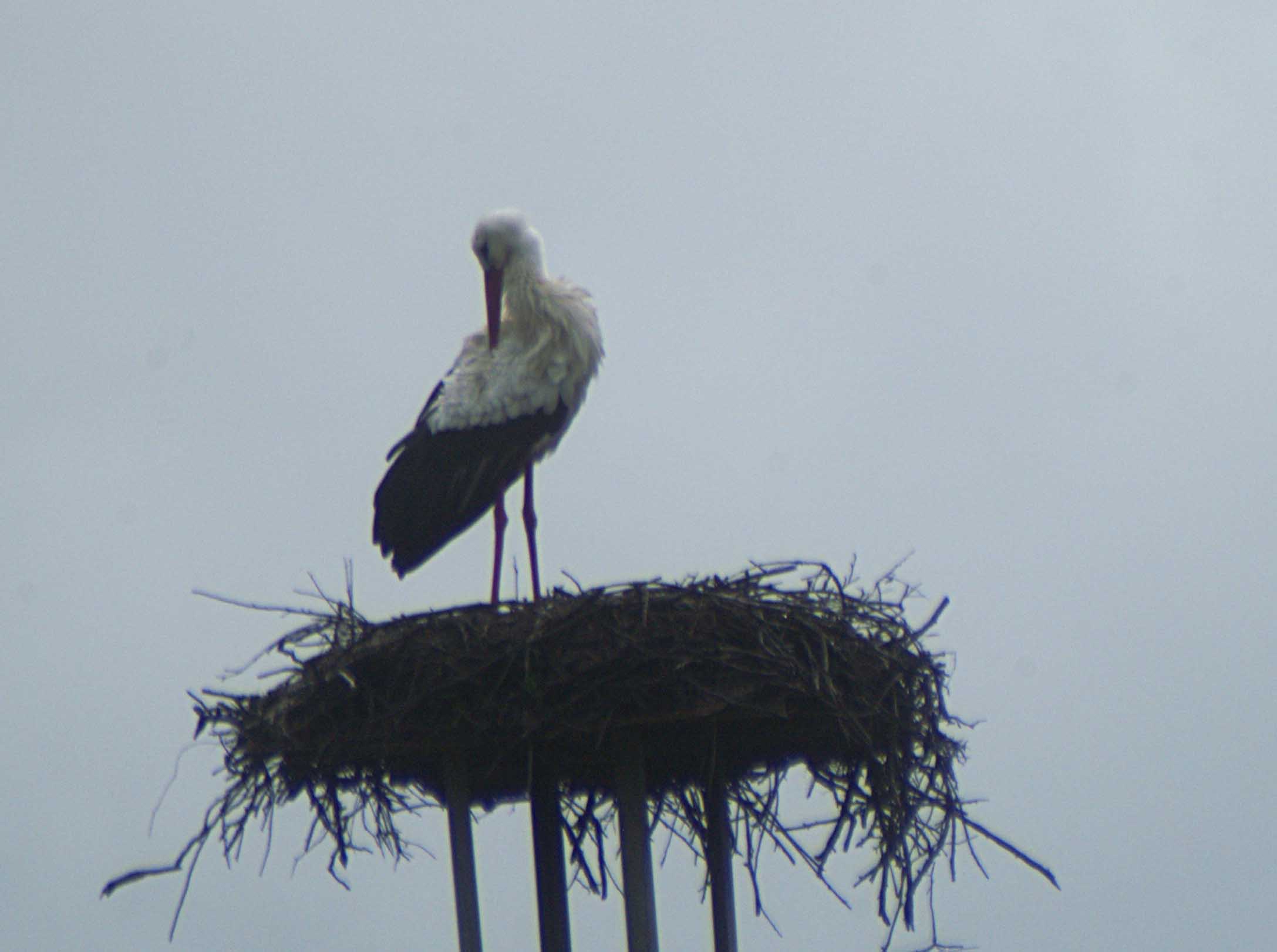
By now, late January, many of the birds have returned to their nests with their mates and occupy them pretty much constantly, guarding against the invasion of potential squatters. I went for a look yesterday and found that many of the nests were indeed occupied, by either one or two birds, although there were a few empty ones too. The birds stay put even in the rain and I took some photographs as they were drying off and preening between some heavy falls.

A damp bird preening its feathers

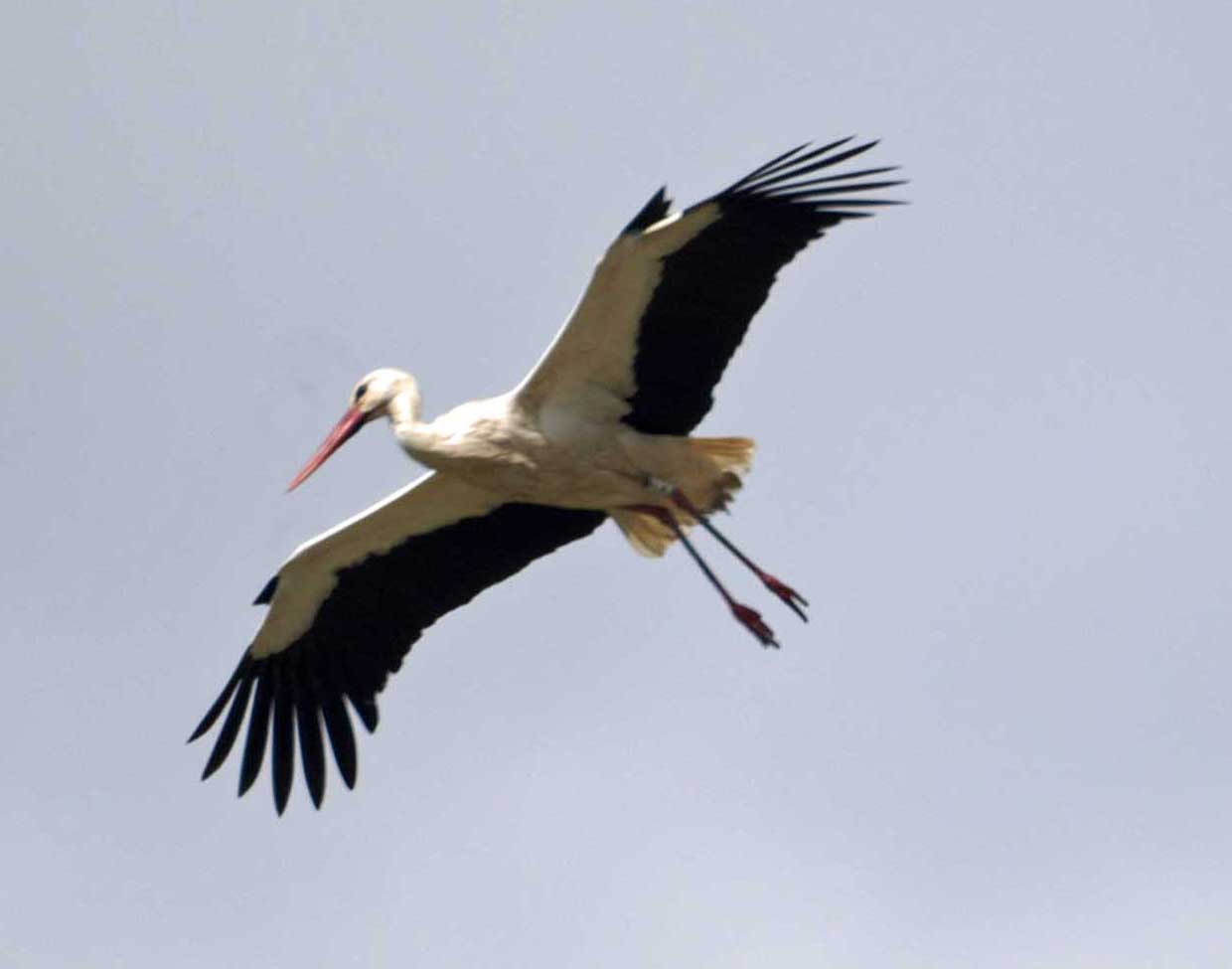
A White Stork (with leg ring) coming in to land

WHITE STORKCiconia ciconia Spanish : Cicueña Blanca

  • White storks (Ciconia ciconia) have been studied intensively over the years as their habits and survival are closely connected to how we treat or manage our environment. They are one of the key species used to promote public awareness in the fight for nature conservation.
  • White storks travel south to the warmer climates of Northern Africa for the winter and return to various parts of Europe to breed in summer. According to the last census, Poland is by the far the most popular host for White Storks with over 50,000 breeding pairs. Spain follows second as an attractive host with Portugal and France showing an increase in numbers.
  • Between the years 1970 and 1990, there was a sharp decline in the White Stork population and the census count was at its lowest in 1984. There has since been an increase in breeding pairs, particularly in the western part of their nesting regions but their numbers have not reached what it was before the decline. Their status is therefore listed as ‘depleted’.
  • Hazards: Out of the many factors that affect the White Stork’s survival, mankind has the largest impact. Development in areas that were previously natural breeding grounds displaces them. Uses of chemicals in modern agricultural practice depletes or poisons their food. Some suffer electrocution by high voltage power lines, especially those along the White Stork migratory path.
  • Reasons for Re-population: Between 1984 and 1994-05, the population increase along the western migratory path has been attributed to favourable winter climates. A number of White Storks also chose to winter in Southern Spain instead of crossing the Strait into Africa. Changes in their feeding habits also led to a rise in number of breeding storks along the Iberian Peninsula (more irrigated fields and large garbage dumps provided alternative feeding).

The Human Connection

White Storks build their lives close to humans, nesting near populated areas and even on rooftops whereas their counterpart the Black Stork, chooses to remain at a distance and not have human contact. It makes sense that how we live will naturally affect the life of the White Stork thus effectively changing the status of the White Stork from just being

Extract from Waterbirds around the world. The Stationery Office, Edinburgh, UK. 960 pp. Boere, G.C., Galbraith, C.A. & Stroud,  another bird to being a lighthouse, warning us of the changes in the environment. In paying attention to their survival, we also help protect the land in which we live.

SourcesD.A. (eds). 2006.

Ciconia ciconia, White Stork. http://www.birdlife.org.